What is the difference between W-2 and 1099? It’s a question that pops up for many, especially during tax season, but understanding the nuances can save you time, money, and a whole lot of headaches. These forms are your financial storytellers, revealing how you earned your income and how much tax you’ve already contributed to the system. They determine everything from your tax liability to eligibility for unemployment benefits. Let’s dive in and break down the essentials.
The W-2 form is primarily for employees, issued by their employers. It reports wages, salaries, and all taxes withheld from your paychecks throughout the year. Employers must follow specific guidelines for issuing these forms, including deadlines and methods of distribution, which is usually electronic or via mail. The form contains key information such as wages earned, federal income tax withheld, Social Security and Medicare taxes withheld, and employer contributions, each playing a crucial role in your tax return and potential refunds. The 1099-NEC, on the other hand, is for independent contractors, reporting payments for services. The distinction between the two forms is vital, as it determines the tax responsibilities, including self-employment taxes, and access to benefits.
How do employers use W-2 forms to report wages and withholdings effectively for their employees?
Let’s dive into how employers manage W-2 forms. These forms are super important for employees and the IRS. They summarize your earnings and taxes for the year, ensuring everything is accounted for accurately. Employers use them to report wages and withholdings to both employees and the government. It’s a key part of the tax system, and understanding the process is valuable.
Comprehensive Process for Issuing W-2 Forms
The process of issuing W-2 forms is pretty structured, designed to ensure accuracy and compliance with tax regulations. Employers go through several steps, from tracking earnings throughout the year to distributing the forms by a specific deadline. The whole thing is designed to make sure everyone pays their fair share of taxes.
Throughout the year, employers meticulously track employee earnings, including regular wages, salaries, tips, bonuses, and any other form of compensation. This information is usually collected through payroll systems, which are designed to calculate gross pay, deductions, and net pay for each pay period. These systems often integrate with time-tracking software to capture hours worked and calculate overtime pay accurately. Employers also must maintain detailed records of all employee benefits, such as health insurance premiums paid by the employer, retirement plan contributions, and any other taxable benefits provided. This information is crucial for accurately reflecting the employee’s total compensation and tax liabilities.
As the year winds down, employers start the process of preparing W-2 forms. This involves consolidating all the earnings and withholding data from the payroll system. This information is then used to populate the various boxes on the W-2 form, each representing a specific type of income, tax withheld, or employer contribution. For example, Box 1 reports the employee’s taxable wages, tips, and other compensation. Box 2 shows the amount of federal income tax withheld from the employee’s paychecks throughout the year. Box 3 and Box 4 report Social Security wages and the amount of Social Security tax withheld, respectively. Box 5 and Box 6 do the same for Medicare taxes. Other boxes include information on state and local taxes, retirement plan contributions, and any other relevant deductions or benefits.
Once the W-2 forms are prepared, employers must distribute them to employees and the Social Security Administration (SSA). The SSA uses the W-2 data to track employee earnings and to verify eligibility for Social Security benefits. Employers typically send the W-2 forms to employees by January 31st of the following year. This deadline gives employees enough time to prepare their tax returns. The forms can be delivered in several ways, including mailed paper copies, electronic delivery (such as through a secure online portal), or in some cases, hand delivery. Employers must also file the W-2 forms with the SSA electronically or on paper, depending on the number of forms they are required to file. Failure to comply with these distribution requirements can result in penalties from the IRS.
Key Information on a W-2 Form
Understanding the key information on a W-2 form is essential for both employees and the IRS. Here’s a look at five crucial pieces of information and their significance:
- Wages, Tips, Other Compensation (Box 1): This represents the total amount of taxable income an employee earned during the year. This figure is used to calculate federal income tax liability. For employees, this is the starting point for filling out their tax returns. For the IRS, it’s the foundation for verifying the accuracy of tax filings.
- Federal Income Tax Withheld (Box 2): This indicates the total amount of federal income tax that was withheld from an employee’s paychecks throughout the year. This amount is credited toward the employee’s tax liability. Employees use this number to determine if they are due a refund or if they owe additional taxes. The IRS uses this to reconcile the employee’s tax payments with their reported income.
- Social Security Wages (Box 3): This shows the total amount of wages subject to Social Security tax. The amount may be different from the wages reported in Box 1, depending on certain deductions and benefits. It is used to calculate the employee’s Social Security tax liability and the benefits they may be entitled to in the future. The IRS uses this information to track employee earnings for Social Security purposes.
- Social Security Tax Withheld (Box 4): This represents the total amount of Social Security tax withheld from an employee’s paychecks. This is a percentage of the wages reported in Box 3. Employees need this number to ensure they are credited with the correct amount of Social Security contributions. The IRS uses this to reconcile the employee’s Social Security contributions.
- Medicare Wages and Tips (Box 5): This shows the total amount of wages subject to Medicare tax. Similar to Social Security wages, this amount may differ from Box 1. This figure is crucial for calculating the employee’s Medicare tax liability. Employees use this information to verify the accuracy of their Medicare contributions. The IRS uses it to track employee earnings for Medicare purposes.
Deadlines and Methods for W-2 Distribution
Employers are bound by specific deadlines and methods when distributing W-2 forms, and failure to comply can lead to penalties. The process is designed to ensure employees receive their forms in a timely manner, allowing them to file their tax returns on time.
The deadline for employers to distribute W-2 forms to employees is January 31st of the year following the tax year. For instance, W-2 forms for the 2024 tax year must be distributed by January 31, 2025. This deadline is set to give employees enough time to prepare and file their tax returns. If the January 31st deadline falls on a weekend or holiday, the deadline is extended to the next business day. Employers must also file W-2 forms with the Social Security Administration (SSA) by the end of January, unless filing electronically, in which case the deadline is extended to the end of February.
Employers have several options for distributing W-2 forms, including both electronic and paper methods. Electronic delivery is becoming increasingly common, as it is convenient and environmentally friendly. Employees must consent to receive their W-2 forms electronically, and employers must provide a secure method for accessing the forms. This might involve a password-protected online portal or a secure email system. Paper copies can be mailed to the employee’s last known address. If the postal service returns the W-2 as undeliverable, the employer must make reasonable efforts to locate the employee and forward the form. Employers can also hand-deliver W-2 forms, but this method is less common.
Penalties for non-compliance with W-2 distribution requirements can be significant. The IRS imposes penalties for each W-2 form that is not filed or distributed correctly or on time. The penalty amount varies depending on how late the form is filed. The penalties range from $50 to $580 per form, depending on how late the filing is. For example, if an employer files a W-2 form more than 30 days late, the penalty is $50 per form. The penalties increase to $110 per form if the filing is more than 30 days late, but before August 1st. If the filing is after August 1st, the penalty increases to $290 per form. Intentional disregard of the filing requirements can result in a penalty of $580 per form. These penalties are designed to encourage employers to meet their tax reporting obligations.
What distinguishes the independent contractor’s 1099-NEC form from the employee’s W-2 form in terms of tax reporting responsibilities?
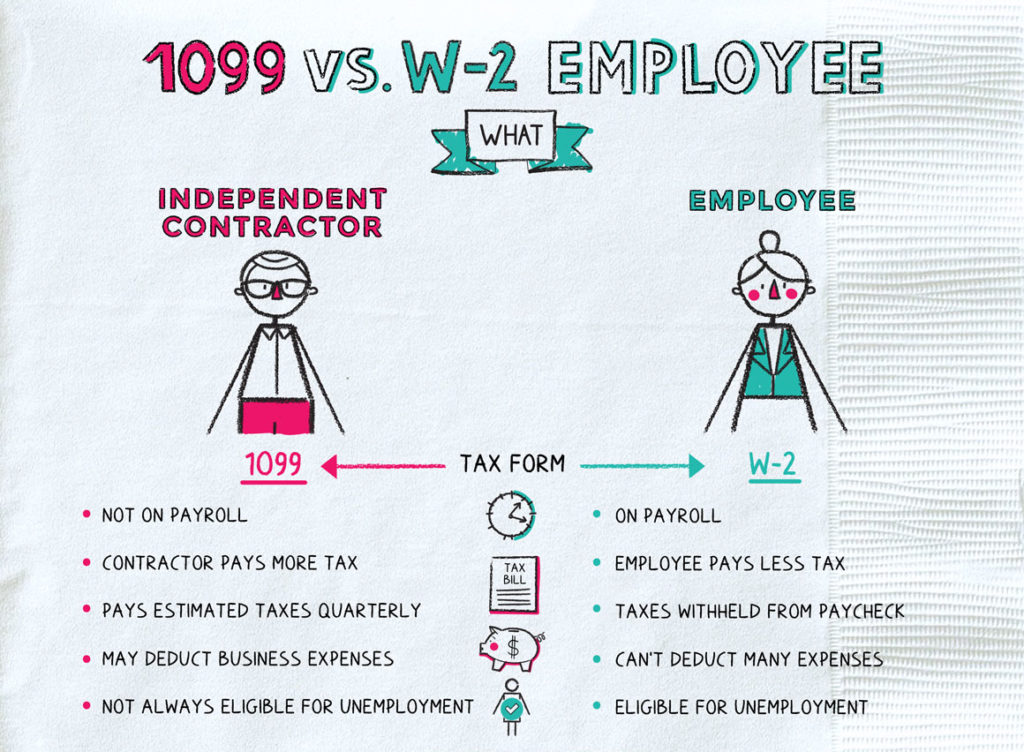
The tax reporting landscape differs significantly between employees and independent contractors. Understanding these differences is crucial for both workers and businesses to comply with tax laws and avoid potential penalties. The primary distinction lies in who is responsible for paying which taxes and how these payments are made. The IRS closely monitors these classifications to ensure proper tax collection and prevent misclassification, which can lead to substantial financial repercussions.
Tax Responsibilities: W-2 Employees vs. 1099-NEC Independent Contractors
The tax obligations of employees and independent contractors diverge significantly, particularly regarding self-employment taxes, estimated tax payments, and the roles of the IRS.
For employees receiving a W-2, taxes are generally withheld from their paychecks throughout the year. This includes federal income tax, Social Security tax, and Medicare tax. The employer is responsible for withholding these taxes and remitting them to the IRS on the employee’s behalf. The employer also pays a portion of the Social Security and Medicare taxes. Employees report their income and the taxes withheld on Form 1040, U.S. Individual Income Tax Return, and any applicable schedules.
Independent contractors, on the other hand, receive a 1099-NEC form, which reports their earnings. They are responsible for paying self-employment taxes, which cover both the employee and employer portions of Social Security and Medicare taxes. The IRS considers independent contractors to be self-employed, so they must pay both halves of these taxes.
Here’s how it breaks down:
* Self-Employment Tax: Independent contractors pay self-employment tax on their net earnings. This is calculated using Schedule SE (Form 1040), Self-Employment Tax. The current self-employment tax rate is 15.3% (12.4% for Social Security and 2.9% for Medicare).
* Estimated Tax Payments: Independent contractors are typically required to make estimated tax payments quarterly to the IRS. These payments cover their income tax liability and self-employment tax. The IRS provides Form 1040-ES, Estimated Tax for Individuals, to help with this process. Failing to pay estimated taxes can result in penalties.
* Role of the IRS: The IRS monitors the classification of workers and ensures that taxes are paid correctly. It receives information from both W-2 forms and 1099-NEC forms and uses this data to identify potential underreporting of income or tax liabilities. The IRS may audit individuals or businesses to verify the accuracy of their tax filings and compliance with tax laws.
To illustrate, consider a freelance graphic designer. If the designer is an employee, their employer withholds taxes. If the designer is an independent contractor, they are responsible for calculating and paying their own taxes, including both the employee and employer portions of Social Security and Medicare taxes, through quarterly estimated tax payments. This difference significantly impacts cash flow and financial planning.
Key Differences: W-2 vs. 1099-NEC
Understanding the key differences between W-2 employment and 1099-NEC independent contracting is essential for both workers and businesses. The following table provides a clear comparison of tax obligations, benefits, and control over work.
“`html
| Aspect | W-2 Employee | 1099-NEC Independent Contractor | Details | Examples |
|---|---|---|---|---|
| Tax Obligations | Federal income tax, Social Security, and Medicare taxes are withheld by employer. | Responsible for self-employment tax (Social Security and Medicare) and estimated income tax payments. | Employees typically have taxes withheld from each paycheck, while independent contractors must calculate and pay taxes quarterly. | A software engineer employed by a company has taxes automatically deducted. A freelance writer receives payments and must set aside money for taxes. |
| Benefits | Eligible for employee benefits (health insurance, retirement plans, paid time off). | Typically not eligible for employer-sponsored benefits. | Employees often receive benefits as part of their employment package, whereas independent contractors are usually responsible for obtaining their own benefits. | An employee receives health insurance through their employer. An independent contractor purchases their own health insurance. |
| Control Over Work | Employer controls the work; dictates hours, location, and methods. | Independent contractors have more control over their work; set their own hours, location, and methods. | Employees generally follow the employer’s instructions and work under their supervision, while independent contractors have more autonomy. | A retail employee works specific shifts assigned by the manager. A consultant sets their own meeting schedule and chooses how to approach the project. |
| Tax Forms | Receives a W-2 form from the employer. | Receives a 1099-NEC form from the payer. | The W-2 form summarizes wages and withholdings. The 1099-NEC form reports payments for services rendered. | An employee receives a W-2 at the end of the year. A freelancer receives a 1099-NEC from each client. |
“`
Financial Risks of Misclassification
Misclassifying a worker as an independent contractor when they should be classified as an employee can lead to significant financial risks. These risks include penalties, back taxes, and potential lawsuits.
Here are three potential financial risks:
* Penalties: The IRS can impose penalties on businesses that misclassify employees. These penalties can include failure-to-file penalties, failure-to-pay penalties, and accuracy-related penalties. The amount of the penalty varies depending on the severity of the misclassification and the amount of taxes owed. For example, a business that knowingly misclassifies employees may face higher penalties than a business that makes an honest mistake.
* Back Taxes: If the IRS determines that a worker has been misclassified, the business will be responsible for paying back taxes, including the employer’s share of Social Security and Medicare taxes, as well as federal and state unemployment taxes. This can be a substantial financial burden, especially for businesses with a large number of misclassified workers. For example, a company misclassifying 20 employees could face tens of thousands of dollars in back taxes.
* Potential Lawsuits: Misclassified workers may sue the business for unpaid wages, benefits, and other damages. They may argue that they were denied benefits they were entitled to as employees, such as health insurance, paid time off, and contributions to retirement plans. Lawsuits can be costly and time-consuming, and can damage a business’s reputation. A group of misclassified workers could potentially file a class-action lawsuit, leading to even greater financial exposure for the business.
In what ways do tax deductions and credits differ for individuals based on whether they receive a W-2 or a 1099-NEC form?

Understanding the tax landscape for employees and independent contractors is crucial. The tax deductions and credits available significantly impact an individual’s tax liability. The primary difference lies in how income is reported and the types of expenses that can be deducted. This distinction stems from the employer-employee relationship versus the independent contractor status.
Tax Deductions and Credits: W-2 vs. 1099-NEC
Employees with W-2 forms typically have fewer deductions directly available to them compared to independent contractors with 1099-NEC forms. However, employees can still claim certain deductions and credits. Independent contractors, on the other hand, have the advantage of deducting business expenses directly from their income.
The key difference lies in the treatment of business expenses. Employees can no longer deduct unreimbursed employee business expenses. Independent contractors, however, can deduct a wide array of business expenses, which can significantly reduce their taxable income. Both groups can often claim credits such as the Child Tax Credit or the Earned Income Tax Credit, provided they meet the eligibility criteria. The availability of certain credits can also depend on income thresholds.
Business Expenses for Independent Contractors
Independent contractors can deduct a variety of business expenses. These deductions can significantly lower their taxable income and overall tax liability. It’s essential to keep detailed records to support these deductions.
Here are some examples of deductible business expenses for independent contractors:
- Home Office Deduction: If a portion of your home is used exclusively and regularly for business, you may be able to deduct expenses related to that space. This can include mortgage interest, rent, utilities, insurance, and depreciation. You can calculate the deduction using either the simplified method (a set amount per square foot) or the actual expense method (calculating actual costs). Documentation requires keeping records of square footage, business use percentage, and related expenses.
- Vehicle Expenses: Costs associated with using a vehicle for business purposes are deductible. This includes expenses like gas, oil, repairs, insurance, and depreciation. You can choose between the standard mileage rate (based on miles driven) or the actual expense method (tracking all vehicle-related costs). Maintain a detailed mileage log to document business use.
- Business Supplies and Equipment: Costs for supplies and equipment necessary for your business are deductible. This includes items like computers, software, office supplies, and tools. Keep receipts and records of all purchases, and note their business use.
- Self-Employment Tax Deduction: Independent contractors pay self-employment tax, which includes Social Security and Medicare taxes. You can deduct one-half of your self-employment tax from your gross income. This is essentially the equivalent of the employer’s portion of these taxes.
Filing Process: W-2 vs. 1099-NEC
The filing process differs significantly for W-2 employees and 1099-NEC independent contractors. The forms used, schedules required, and potential tax implications vary.
W-2 employees report their income and withholdings on Form 1040, U.S. Individual Income Tax Return. Their employers have already withheld federal income tax, Social Security tax, and Medicare tax from their paychecks, as shown on the W-2. Employees typically do not need to calculate self-employment tax. They may also claim various deductions and credits on Schedule A (itemized deductions) or directly on Form 1040.
Independent contractors, who receive a 1099-NEC, report their income on Schedule C (Profit or Loss from Business). They must also calculate and pay self-employment tax on Schedule SE (Self-Employment Tax). This is because they are responsible for both the employee and employer portions of Social Security and Medicare taxes. Independent contractors can deduct business expenses on Schedule C, which reduces their taxable income. They may also be required to make estimated tax payments quarterly to the IRS to avoid penalties. The tax implications for independent contractors can be more complex due to self-employment taxes and the need to track and deduct business expenses.
What are the implications of receiving a W-2 or a 1099-NEC on eligibility for unemployment benefits and other social security programs?: What Is The Difference Between W-2 And 1099
Understanding the distinctions between W-2 and 1099-NEC forms is crucial, especially when it comes to unemployment benefits and social security programs. The type of form you receive directly impacts your eligibility and the processes you must follow. This information is vital for both employees and independent contractors to navigate the complexities of the social security system.
Unemployment Benefit Eligibility Based on Employment Status
Unemployment benefits are designed to provide temporary financial assistance to workers who have lost their jobs through no fault of their own. Eligibility hinges significantly on employment status, primarily defined by whether an individual receives a W-2 or a 1099-NEC form. W-2 employees typically qualify for unemployment benefits, while independent contractors (those receiving 1099-NEC forms) often face significant hurdles in accessing these benefits.
Generally, to qualify for unemployment benefits, a W-2 employee must meet certain criteria:
- They must have been employed for a specific period, earning a certain amount of wages, which varies by state.
- The job loss must be through no fault of their own, such as being laid off or terminated due to company downsizing.
- They must be actively seeking work and be available to accept suitable employment.
Independent contractors, on the other hand, are generally not eligible for unemployment benefits because they are not considered employees under the traditional employer-employee relationship. They are responsible for their own taxes and are, in essence, running their own businesses, even if it’s a one-person operation. However, there can be exceptions, particularly if an independent contractor was misclassified as such when they should have been classified as an employee. In such cases, they may have recourse to claim unemployment benefits, but this usually involves proving misclassification to the state’s unemployment agency, which can be a complex and time-consuming process. The burden of proof lies with the claimant.
Impact on Social Security Programs, What is the difference between W-2 and 1099
The type of tax form received also influences eligibility and contributions to other crucial social security programs, such as Medicare and Social Security retirement benefits.
Here are three real-world scenarios:
- Scenario 1: W-2 Employee Sarah works full-time as a marketing manager and receives a W-2. Her employer withholds Social Security and Medicare taxes from her paycheck. This means she’s automatically contributing to both programs. When she reaches retirement age, she’ll be eligible for Social Security retirement benefits, and she will also be eligible for Medicare.
- Scenario 2: 1099-NEC Independent Contractor John works as a freelance web developer and receives a 1099-NEC. He is responsible for paying self-employment taxes, which include both the employee and employer portions of Social Security and Medicare taxes. If John fails to pay these taxes, he will not receive credit for these contributions, potentially reducing his eligibility for Social Security benefits later on. If he pays his self-employment taxes, he’s still eligible for both programs, but the administrative process is different, and he bears a greater financial responsibility up front.
- Scenario 3: Misclassified Worker Maria believes she should have been classified as a W-2 employee, but her employer classified her as a 1099-NEC independent contractor. She is missing out on employer-paid portions of Social Security and Medicare taxes. She may not realize the implications of this classification until retirement or when she needs unemployment benefits. If she can prove misclassification, she can retroactively claim benefits, but the process is challenging.
Documentation Requirements for Unemployment Benefits
The documentation needed to claim unemployment benefits varies depending on the tax form received.
- W-2 Employees: Typically, W-2 employees will need to provide:
- Their Social Security card.
- A driver’s license or other government-issued photo ID.
- Information about their former employer, including the company name, address, and phone number.
- Documentation of their job separation, such as a termination letter or layoff notice.
- Wage statements (pay stubs) from the period of employment.
- 1099-NEC Independent Contractors: Independent contractors may face additional hurdles and will typically need to provide:
- Proof of self-employment, such as business licenses, contracts, or invoices.
- Documentation showing the loss of business or contract.
- Evidence of efforts to seek other work.
- Potentially, documentation to prove they were misclassified as independent contractors. This can include detailed information about the work performed, the level of control the “employer” had over the work, and the degree to which the worker relied on the “employer” for their livelihood.
How can individuals determine their correct employment classification, and what are the steps to take if they believe their classification is incorrect?

Figuring out whether you’re correctly classified as an employee (W-2) or an independent contractor (1099-NEC) is super important for both you and the company you work for. It impacts everything from taxes and benefits to your rights and protections. Let’s break down how to tell and what to do if something seems off.
Determining Employment Classification Factors
The IRS has a few key areas they look at to decide if someone’s an employee or an independent contractor. These factors often boil down to how much control the hiring entity has over the worker and the work itself.
- Behavioral Control: This looks at whether the hiring entity controls *how* the worker does their job. Do they dictate the methods, tools, and training? If the hiring entity closely supervises and directs the work, it leans toward employee status. If the worker has significant autonomy in how they complete the work, they’re more likely an independent contractor.
- Financial Control: This focuses on who controls the financial aspects of the work. Factors include who pays for expenses, who provides the tools and materials, and whether the worker can make a profit or loss. Independent contractors typically cover their own expenses, provide their own tools, and can potentially make or lose money based on their efficiency and business decisions. Employees generally don’t have these risks.
- Relationship of the Parties: This considers the nature of the relationship. Is there a written contract? Does the hiring entity provide benefits like health insurance or paid time off? Is the work a core part of the hiring entity’s business? A long-term, ongoing relationship with benefits points towards employee status. If the relationship is short-term, project-based, and without benefits, it leans towards independent contractor status.
Reporting Misclassification
If you think you’ve been misclassified, don’t just sit on it. There are steps you can take.
- Report to the IRS: The IRS is the primary agency that handles misclassification cases. You can file Form SS-8, Determination of Worker Status for Purposes of Federal Employment Taxes and Income Tax Withholding. This form allows the IRS to review your situation and make a determination.
- Report to Your State: Many states also have their own labor departments or agencies that handle wage and hour issues, including misclassification. Contact your state’s department of labor to find out how to file a complaint.
- Gather Evidence: Before you file a complaint, collect as much documentation as possible. This includes contracts, emails, pay stubs, and any other evidence that shows the nature of your working relationship. The more evidence you have, the stronger your case will be.
Misclassification Examples and Consequences
Worker misclassification can have serious consequences. Here are a few common examples:
- Example 1: The “Uber Driver” Scenario: A rideshare driver, despite being treated as an independent contractor, is often told what to do (where to go, which routes to take, etc.). The company controls much of the work process. Consequence: The company could face back taxes, penalties, and interest for failing to withhold income tax, Social Security, and Medicare taxes. The driver might also miss out on unemployment benefits and other employee protections.
- Example 2: The “Freelance Writer” Case: A writer is hired by a magazine and is given strict deadlines, edits, and specific topics to cover, but is classified as an independent contractor. Consequence: The magazine could be liable for unpaid employment taxes and might face lawsuits from the writer for back wages and benefits. The writer, meanwhile, might be unable to claim certain tax deductions available only to employees.
- Example 3: The “Construction Worker” Issue: A construction company classifies its laborers as independent contractors, even though they work under close supervision, use company-provided tools, and have a long-term working relationship. Consequence: The company could be audited by the IRS and state tax authorities, resulting in substantial fines and back taxes. The workers could be denied unemployment benefits and worker’s compensation.
End of Discussion
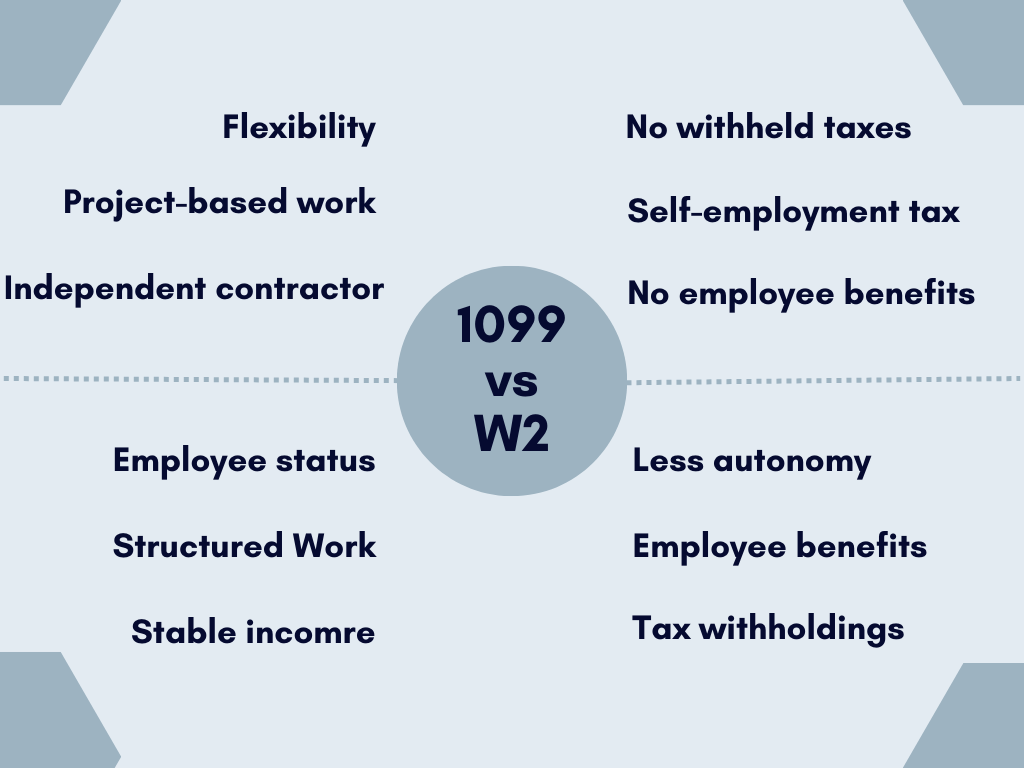
In essence, the choice between a W-2 and a 1099-NEC impacts everything from how you file your taxes to the deductions you can claim and the social safety nets available to you. Understanding the implications of each form is not just about avoiding penalties; it’s about making informed financial decisions. Whether you’re an employee or an independent contractor, knowing your rights and obligations ensures a smoother, more financially savvy experience. Now, you’re well-equipped to navigate the tax landscape with greater confidence.