Roth IRA explained for beginners, and if you’re just starting to think about your financial future, it can seem a little daunting. However, setting up a Roth IRA is a really smart move, and understanding how it works is the first step. Think of it as a special savings account designed specifically for retirement. It’s different from a regular savings account because the government offers some fantastic perks to encourage you to save for your golden years. This guide will walk you through everything you need to know, from the basics to the nitty-gritty, so you can confidently start building your retirement nest egg.
We’ll dive into the core concept of a Roth IRA, clarifying its primary purpose in a way that’s easy to grasp. You’ll learn how it stacks up against traditional IRAs, highlighting the cool tax advantages and the tax implications. We’ll also cover the eligibility requirements, including income limits, to help you figure out if you’re a good fit. Moreover, we’ll explore the advantages of using a Roth IRA for retirement planning, including the significant tax benefits, the power of compounding, and the contribution limits and rules. You’ll also learn how to open an account, what investment options are available, and how to avoid common mistakes. And we’ll cover the withdrawal rules, the impact of inflation, and estate planning considerations.
Understanding the basic concept of a Roth IRA for those just starting to learn about investing is crucial

Starting to invest can feel like navigating a maze, but understanding the fundamentals, like the Roth IRA, is a crucial first step. Think of a Roth IRA as a special savings account designed specifically for retirement. It offers a unique tax advantage that can significantly impact your financial future. This explanation will break down the core components, making it easier to grasp the benefits and determine if it’s the right choice for you.
Defining a Roth IRA and its Primary Purpose
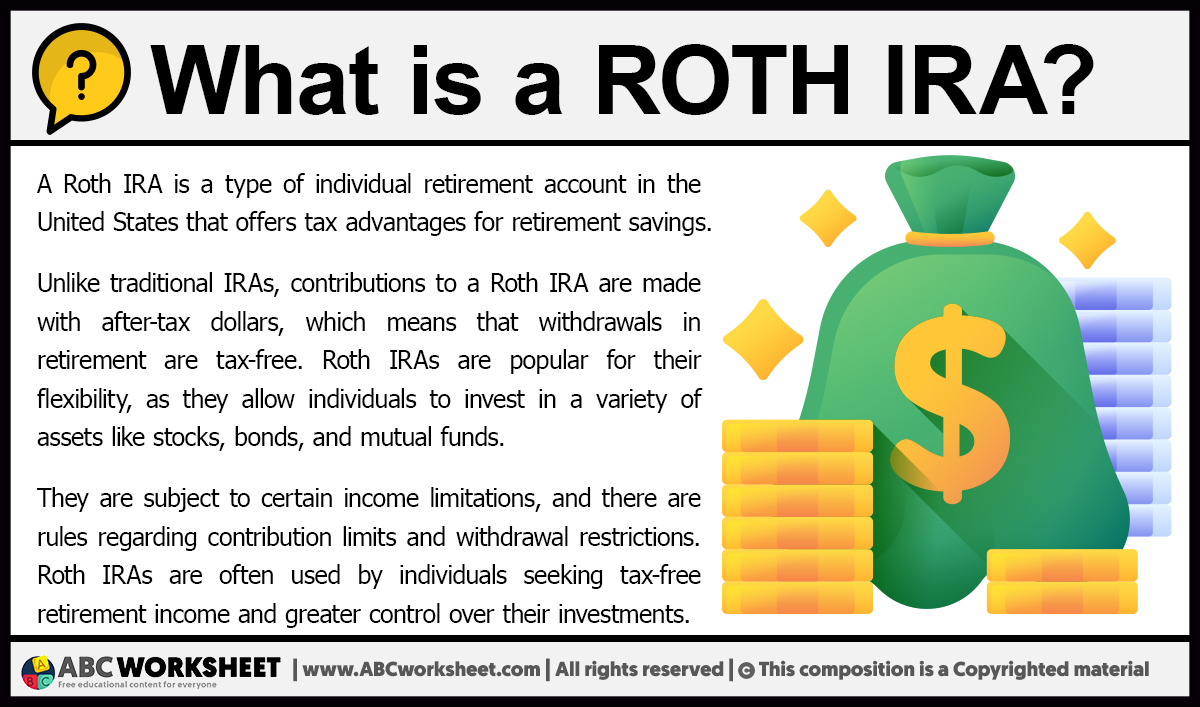
A Roth IRA, or Roth Individual Retirement Account, is a retirement savings plan where contributions are made with money you’ve already paid taxes on. The primary purpose is to provide tax-free growth and tax-free withdrawals in retirement. This contrasts with traditional retirement accounts, where taxes are often deferred until retirement. This means the money you put in has already been taxed, but any investment earnings, such as interest, dividends, or capital gains, grow tax-free. When you take the money out in retirement, you won’t owe any taxes on it. This feature makes a Roth IRA particularly attractive, especially for younger investors who anticipate being in a higher tax bracket in retirement. The idea is to pay taxes now, when your income might be lower, and avoid them later when your income could be significantly higher.
Tax Advantages and Differences from Traditional IRAs
The key difference between a Roth IRA and a traditional IRA lies in the tax treatment.
- Roth IRA: Contributions are made after-tax, meaning you don’t get a tax deduction in the year you contribute. However, your earnings grow tax-free, and qualified withdrawals in retirement are also tax-free.
- Traditional IRA: Contributions are often tax-deductible in the year you contribute, which can lower your taxable income. However, withdrawals in retirement are taxed as ordinary income.
Consider this simplified example:
Imagine you contribute $6,000 annually to a Roth IRA for 30 years and earn an average annual return of 7%. At retirement, you could potentially withdraw the entire balance, including all the earnings, without paying any taxes. This is a substantial advantage. In contrast, with a traditional IRA, you would pay taxes on the withdrawals, reducing the amount you actually receive.
The tax implications are significant. The Roth IRA offers tax diversification, which is beneficial in an uncertain tax future. If tax rates increase in the future, you’re protected. Conversely, with a traditional IRA, you are betting that your tax rate in retirement will be the same or lower than your current tax rate.
Eligibility Requirements: Income Limits
Eligibility for a Roth IRA depends on your modified adjusted gross income (MAGI). The IRS sets annual income limits. If your MAGI is above the limit, you may not be able to contribute the full amount, or even contribute at all. These limits change each year. It is crucial to check the IRS website for the most up-to-date information.
For example, in 2024, the income limits for Roth IRA contributions are as follows:
- Single Filers: If your MAGI is $146,000 or less, you can contribute the full amount. If your MAGI is between $146,000 and $161,000, you can contribute a reduced amount. If your MAGI is $161,000 or more, you cannot contribute to a Roth IRA.
- Married Filing Jointly: If your MAGI is $230,000 or less, you can contribute the full amount. If your MAGI is between $230,000 and $240,000, you can contribute a reduced amount. If your MAGI is $240,000 or more, you cannot contribute to a Roth IRA.
These limits are adjusted annually for inflation. It’s essential to stay informed about these limits, as they can directly impact your ability to utilize this valuable retirement savings tool.
Detailing the advantages of using a Roth IRA for retirement planning is very important

Let’s dive into why a Roth IRA can be a powerful tool for your retirement strategy. It’s all about making your money work smarter, not harder, especially when it comes to taxes. We’ll break down the key benefits and show you how they can translate into real-world advantages for your financial future.
Tax Advantages of a Roth IRA
The primary draw of a Roth IRA is its favorable tax treatment. This essentially means you’re paying taxes upfront, and then the money grows and is withdrawn tax-free in retirement. This can be a huge advantage, particularly if you anticipate being in a higher tax bracket in retirement.
Tax benefits are substantial and can significantly boost your retirement savings.
| Benefits | Explanation | Who is Best Suited For It |
|---|---|---|
| Tax-Free Growth | Investment earnings within a Roth IRA, such as interest, dividends, and capital gains, are never taxed, as long as the funds remain within the account. This allows your investments to grow at an accelerated rate, unburdened by annual tax liabilities. | Individuals who anticipate being in a higher tax bracket during retirement. This is especially beneficial for younger investors with a long time horizon. |
| Tax-Free Withdrawals in Retirement | Withdrawals in retirement, including both contributions and earnings, are entirely tax-free, provided certain conditions are met (e.g., the account has been held for at least five years and the account holder is at least 59 ½ years old). This means you won’t owe taxes on the money you take out, unlike traditional retirement accounts where withdrawals are taxed as ordinary income. | Anyone seeking to reduce their tax burden in retirement. This is especially advantageous for those who want predictable income streams without tax implications. |
| Potential for Tax Diversification | Having a Roth IRA alongside other retirement accounts, such as a traditional 401(k) or IRA, provides tax diversification. This allows you to manage your tax liability in retirement by strategically withdrawing from different accounts based on your tax situation. | Investors who want flexibility in managing their tax liabilities in retirement and are looking to diversify their tax exposure. |
The Power of Compounding in a Roth IRA
Compounding is the process where your investment earnings generate further earnings. Over time, this effect can be dramatic. The tax-free growth within a Roth IRA amplifies this power.
Consider this example: Suppose you contribute the maximum amount to a Roth IRA annually, and your investments earn an average of 7% per year. Let’s say you start at age 30 and contribute for 30 years.
At age 60, your Roth IRA could potentially hold a significant sum, much larger than if your earnings were subject to annual taxes.
This example doesn’t account for taxes on investment gains. In a traditional taxable account, you’d pay taxes on those gains annually, which would reduce the amount available to compound. With a Roth IRA, that tax burden is eliminated, allowing your investments to grow more rapidly. While investment returns can vary, the long-term benefits of tax-free compounding are clear. For example, according to the SEC (Securities and Exchange Commission), historically, the stock market has returned an average of 10% annually, although this does not guarantee future returns.
Explaining the contribution limits and rules for Roth IRAs is a necessary step
Understanding the contribution rules and limits is vital to maximizing the benefits of a Roth IRA. Knowing how much you can contribute each year, when you need to contribute by, and any special provisions like catch-up contributions, ensures you’re playing the game right and making the most of this powerful retirement savings tool. Let’s break down the key aspects.
Annual Contribution Limits
The Internal Revenue Service (IRS) sets annual contribution limits for Roth IRAs. These limits can change from year to year, so it’s essential to stay updated. For 2024, the contribution limit is $7,000. However, there’s a special provision for those aged 50 or older.
For individuals age 50 or over, the IRS allows for “catch-up” contributions. This means you can contribute an additional amount on top of the regular limit. In 2024, the catch-up contribution allows those 50 and older to contribute an extra $1,000, bringing their total possible contribution to $8,000. These catch-up contributions are designed to help older workers who may be behind on their retirement savings. Keep in mind that these limits apply to the total amount contributed across all your Roth IRAs if you have more than one. Exceeding these limits can result in penalties, so always stay within the IRS guidelines.
Contribution Deadlines
The deadline for making contributions to a Roth IRA for a specific tax year typically aligns with the tax filing deadline. This means you generally have until April 15th of the following year to make contributions for the previous tax year. For example, to contribute to your 2024 Roth IRA, you have until April 15, 2025 (or the tax filing deadline for that year if it’s been extended). This gives you some extra time to gather funds and make your contributions. Remember, contributions are considered to be made for the year in which they are contributed, not when you declare them. Therefore, even if you make your contribution in April, it can still be designated for the previous tax year, provided you’re within the deadline.
Here are the steps to make contributions to a Roth IRA:
- Open a Roth IRA Account: Choose a financial institution (bank, brokerage firm, etc.) that offers Roth IRAs. You’ll need to provide personal information and potentially fund the account with an initial deposit.
- Determine Your Contribution Amount: Decide how much you want to contribute, keeping in mind the annual contribution limits and your own financial situation.
- Fund Your Account: Transfer the funds into your Roth IRA account. This can be done via electronic transfer, check, or other methods offered by your financial institution.
- Designate the Tax Year: When making your contribution, specify the tax year for which the contribution is intended. For instance, if you are contributing in 2025, you might be contributing for either the 2024 or 2025 tax year, depending on when you make the contribution.
- Keep Records: Maintain records of all your Roth IRA contributions, including dates and amounts. This documentation will be helpful for tax purposes.
Navigating the process of opening a Roth IRA account should be simplified

Opening a Roth IRA might seem daunting at first, but the process is actually quite straightforward. Breaking it down into manageable steps makes it less intimidating, ensuring you can begin saving for retirement with confidence. This section will guide you through each stage, from selecting a financial institution to completing the necessary paperwork.
Choosing a Financial Institution
Your first step involves selecting where you want to open your Roth IRA. Several types of institutions offer these accounts, each with its own advantages. Researching these options will help you make an informed decision based on your individual needs and preferences.
The options available to you include:
- Brokerage Firms: These firms offer a wide range of investment options, including stocks, bonds, mutual funds, and ETFs. They often provide extensive research tools and educational resources. Examples include Fidelity, Charles Schwab, and Vanguard.
- Banks: Many banks offer Roth IRAs, typically investing in CDs or mutual funds. They might be a good option if you prefer the convenience of managing your finances in one place.
- Credit Unions: Similar to banks, credit unions provide Roth IRAs and may offer competitive interest rates or lower fees. They often prioritize member service.
Completing the Application
Once you’ve chosen your financial institution, you’ll need to complete an application. The application process generally involves providing personal information and agreeing to the terms and conditions of the account. It’s crucial to review all the details carefully.
Here’s a bulleted list of the documents and information you’ll typically need to provide:
- Personal Information: This includes your full name, address, date of birth, Social Security number, and contact information.
- Identification: You will likely need to provide a government-issued photo ID, such as a driver’s license or passport, for verification purposes.
- Beneficiary Information: You’ll be asked to designate beneficiaries who will inherit the assets in your Roth IRA upon your death.
- Employment Information: Some institutions may request information about your employment, such as your employer’s name and address.
- Funding Method: You’ll need to specify how you plan to fund your Roth IRA, such as through a transfer from another account or by making a contribution.
- Contribution Amount: You’ll indicate the amount you plan to contribute, up to the annual contribution limit set by the IRS. Remember, for 2024, the maximum contribution is $7,000, or $8,000 if you’re age 50 or older.
Exploring the investment options available within a Roth IRA can be helpful
Investing within a Roth IRA opens up a world of possibilities, offering a tax-advantaged way to grow your retirement savings. Understanding the investment choices available, from stocks and bonds to mutual funds and ETFs, is key to building a portfolio that aligns with your financial goals and risk tolerance. Choosing the right investments can significantly impact your long-term returns and help you reach your retirement dreams.
Investment Choices within a Roth IRA
Within a Roth IRA, you have a wide array of investment options to choose from. This flexibility allows you to tailor your portfolio to your specific needs and preferences. It’s important to understand the different investment vehicles and their associated risks and rewards before making any decisions.
- Stocks: Stocks represent ownership in a company. Investing in stocks can offer high growth potential, especially over the long term. However, they also come with higher volatility, meaning their prices can fluctuate significantly.
- Risks: Market fluctuations, company-specific risks (e.g., poor earnings, management issues), economic downturns.
- Rewards: Potential for high returns, capital appreciation, and dividend income.
- Bonds: Bonds are essentially loans you make to a government or corporation. They are generally considered less risky than stocks and provide a more stable income stream through interest payments.
- Risks: Interest rate risk (bond prices fall when interest rates rise), credit risk (the issuer may default on its payments).
- Rewards: Stable income, lower volatility compared to stocks, diversification benefits.
- Mutual Funds: Mutual funds pool money from multiple investors to invest in a diversified portfolio of stocks, bonds, or other assets. They are managed by professional fund managers.
- Risks: Market risk, fund management fees, and the specific risks associated with the underlying assets.
- Rewards: Diversification, professional management, and access to a variety of investment strategies.
- Exchange-Traded Funds (ETFs): ETFs are similar to mutual funds but trade on stock exchanges like individual stocks. They offer diversification and can track specific indexes, sectors, or investment strategies.
- Risks: Market risk, expense ratios, and tracking error (the fund’s performance may not perfectly match its underlying index).
- Rewards: Diversification, lower expense ratios compared to some mutual funds, and intraday trading flexibility.
A Beginner’s Diversified Portfolio Illustration
A diversified portfolio is crucial for mitigating risk and maximizing potential returns. For a beginner, a balanced approach is often recommended. This illustration provides a general framework. Remember, this is just an example, and you should adjust it based on your personal risk tolerance, time horizon, and financial goals.
Imagine a portfolio that looks like this:
| Investment Type | Allocation | Description |
|---|---|---|
| Total Stock Market ETF (e.g., VTI) | 50% | This ETF provides broad exposure to the entire U.S. stock market, offering diversification across various sectors and company sizes. |
| Total Bond Market ETF (e.g., BND) | 30% | This ETF invests in a diversified portfolio of U.S. investment-grade bonds, providing a stable income stream and helping to reduce overall portfolio volatility. |
| International Stock ETF (e.g., VXUS) | 15% | This ETF provides exposure to stocks of companies based outside the U.S., enhancing diversification by including global market performance. |
| Short-Term Inflation-Protected Securities (e.g., STIP) | 5% | This ETF holds short-term inflation-protected securities, acting as a hedge against inflation. |
Description: This portfolio balances growth potential with risk mitigation. The largest allocation is to a total stock market ETF, providing a foundation for long-term growth. The bond market ETF offers stability and income, while the international stock ETF diversifies exposure beyond the U.S. market. A small allocation to short-term inflation-protected securities helps protect against inflation risk. The percentages are merely examples, and they should be adapted based on an individual’s specific needs and risk tolerance.
Important Note: Investment decisions should be made in consultation with a qualified financial advisor, who can provide personalized advice based on your individual circumstances.
Addressing the common mistakes people make with Roth IRAs can provide valuable insights
It’s easy to make missteps when managing a Roth IRA. These errors can potentially hinder your retirement savings goals. Understanding these pitfalls will help you avoid them and make the most of your Roth IRA.
Common Roth IRA Mistakes
There are several frequent errors individuals commit when managing their Roth IRAs. These mistakes can range from simple oversights to more complex misunderstandings of the rules.
Contributing too much is a significant error. The IRS sets annual contribution limits. Exceeding these limits can result in penalties. Failing to understand the investment options available within a Roth IRA is another common mistake. Many people simply don’t know the different investment choices, which can lead to suboptimal returns. Making early withdrawals from a Roth IRA, especially before retirement age, can also be detrimental. While Roth IRAs offer flexibility, taking out money early can trigger taxes and penalties on earnings. Finally, not understanding the contribution rules based on income can lead to problems. High earners may not be eligible to contribute to a Roth IRA directly.
Withdrawal Rules for Contributions and Earnings
The withdrawal rules for Roth IRAs are distinct for contributions and earnings. Knowing these differences is crucial for effective planning.
Contributions to a Roth IRA can be withdrawn at any time, for any reason, tax-free and penalty-free. This is a major benefit of Roth IRAs. Your contributions are made with after-tax dollars. Since you’ve already paid taxes on the money, the IRS doesn’t tax withdrawals of your contributions. However, withdrawing earnings (the profits your investments have made) before age 59 ½ is generally subject to both taxes and a 10% penalty. There are some exceptions, such as for qualified first-time homebuyers (up to $10,000) or for certain hardship situations.
Here’s a breakdown:
* Contributions:
* Tax-free withdrawals.
* Penalty-free withdrawals.
* Withdrawals allowed at any time.
* Earnings:
* Generally, taxed as ordinary income upon withdrawal.
* Subject to a 10% penalty if withdrawn before age 59 ½ (with some exceptions).
* Withdrawals subject to rules and limitations.
For example, imagine you contribute $6,000 to your Roth IRA in 2024 and your investments grow to $8,000. If you withdraw $2,000 before age 59 ½, it’s considered a withdrawal of earnings. This $2,000 would be subject to income tax and a 10% penalty, unless it falls under an exception.
Tips to Avoid Common Roth IRA Mistakes, Roth IRA explained for beginners
Avoiding these common mistakes is achievable with careful planning and awareness. Here are some tips to guide you:
* Stay within Contribution Limits: Always check the annual contribution limits set by the IRS. In 2024, the contribution limit is $7,000 for those under 50, and $8,000 for those 50 and over. Overcontributing can result in penalties.
* Understand Investment Options: Explore different investment choices like stocks, bonds, mutual funds, and ETFs. Diversify your portfolio to manage risk and potentially increase returns. Research different options.
* Plan for Early Withdrawals: Consider the tax implications and penalties before making early withdrawals. Only withdraw earnings before retirement if absolutely necessary. Explore the exceptions.
* Know the Income Limits: Be aware of the income limitations for contributing to a Roth IRA. If your modified adjusted gross income (MAGI) is too high, you may not be able to contribute directly. Consider a “backdoor Roth IRA” if you exceed the income limits.
* Keep Accurate Records: Maintain detailed records of all contributions and withdrawals. This will help you track your investment performance and comply with IRS regulations.
* Seek Professional Advice: Consult with a financial advisor if you need help with your Roth IRA. A professional can provide personalized guidance and help you make informed decisions.
* Regularly Review and Rebalance: Review your investment portfolio periodically to ensure it aligns with your financial goals and risk tolerance. Rebalance your portfolio as needed to maintain your desired asset allocation.
Understanding the withdrawal rules for Roth IRAs is vital for anyone planning to use one
Roth IRAs offer significant tax advantages, but understanding the rules around withdrawals is crucial to avoid penalties and ensure your retirement savings stay on track. Knowing when and how you can access your funds can help you make informed decisions and maximize the benefits of this retirement savings vehicle. Making the wrong choices could lead to unnecessary taxes or penalties, so let’s break down the details.
Qualified and Non-Qualified Withdrawals
Withdrawals from a Roth IRA fall into two main categories: qualified and non-qualified. The tax treatment differs significantly between the two.
A *qualified withdrawal* is generally tax-free and penalty-free. To be considered qualified, the withdrawal must meet two criteria: it must be made after a five-year holding period, and it must be made for one of the following reasons: you are age 59 ½ or older, or due to death or disability. In essence, it’s a tax-free way to access your contributions and earnings in retirement.
A *non-qualified withdrawal*, on the other hand, does not meet these criteria. This type of withdrawal can be subject to taxes and penalties. The IRS has specific rules for how non-qualified withdrawals are taxed. The contributions you made to your Roth IRA are always considered to be withdrawn first, and those are tax-free. However, the earnings are taxed as ordinary income and may also be subject to a 10% early withdrawal penalty if you’re under age 59 ½.
Impact of Early Withdrawals
Taking money out of your Roth IRA early can significantly affect your retirement plans. Even though you can withdraw your contributions tax- and penalty-free, remember that this reduces the amount of money you have available to grow over time. The longer your money stays invested, the more it can benefit from compounding returns. For instance, if you withdraw $10,000 from your Roth IRA at age 30, that money will no longer be available to grow over the next several decades. This could mean missing out on substantial gains, potentially costing you tens or even hundreds of thousands of dollars by the time you reach retirement.
Consider a scenario: you contribute $6,500 annually to your Roth IRA starting at age 25. Assuming an average annual return of 7%, by age 65, your account could be worth over $700,000. If you withdraw $10,000 at age 30, that same amount could have grown to approximately $100,000 by age 65, drastically impacting your retirement savings.
Penalty-Free Withdrawal Scenarios
Certain situations allow for penalty-free withdrawals of earnings from your Roth IRA, even before age 59 ½. However, keep in mind that these withdrawals are still generally subject to income tax on the earnings portion.
Here are some common scenarios:
- For a first-time home purchase: You can withdraw up to $10,000 in earnings, tax- and penalty-free, to help with the purchase of your first home. This is a lifetime limit.
- For qualified higher education expenses: Withdrawals for qualified education expenses for yourself, your spouse, your children, or grandchildren are generally exempt from the 10% penalty.
- For certain medical expenses: If your medical expenses exceed 7.5% of your adjusted gross income (AGI), you may be able to withdraw funds to cover these expenses without penalty.
- Due to death or disability: Withdrawals due to death or disability are generally tax- and penalty-free.
- For the IRS levy: If the IRS levies your Roth IRA, the withdrawal is penalty-free, although taxes on earnings still apply.
Explaining the impact of inflation on Roth IRA investments is important for long-term planning: Roth IRA Explained For Beginners
Understanding how inflation affects your Roth IRA is key to securing your financial future. Inflation, the rate at which the general level of prices for goods and services is rising, can significantly diminish the purchasing power of your retirement savings over time. Failing to account for inflation can lead to a shortfall in retirement funds, meaning you may not be able to afford the lifestyle you envision.
The erosion of purchasing power due to inflation
Inflation acts like a silent thief, gradually eating away at the value of your money. Consider a scenario: You have $100,000 in your Roth IRA. If inflation averages 3% per year, the real value of your $100,000 will decrease over time. While the nominal amount remains the same, you’ll be able to buy fewer goods and services each year. This is because the prices of those goods and services will have increased. For example, a loaf of bread that costs $3 today might cost $3.09 next year, assuming 3% inflation. Over decades, these small increases compound, drastically reducing your purchasing power. This is why it’s essential to not only grow your Roth IRA but also to ensure your investments outpace inflation.
Investment strategies and performance under inflationary pressures
Different investment strategies within a Roth IRA can respond differently to inflation. Some assets tend to perform better during inflationary periods than others. The following table provides a simplified view of how different investment choices might fare:
| Investment Strategy | Description | Inflationary Pressure Impact | Mitigation Strategies |
|---|---|---|---|
| Stocks (Equities) | Investing in shares of publicly traded companies. | Generally, stocks can outpace inflation over the long term, as companies can often increase prices to maintain profitability. However, short-term performance can be volatile. | Diversify across different sectors and market capitalizations. Consider dividend-paying stocks that can provide a hedge against inflation. |
| Bonds | Investing in debt securities issued by governments or corporations. | Bonds are generally more susceptible to inflation. Rising interest rates, often a response to inflation, can decrease the value of existing bonds. | Consider Treasury Inflation-Protected Securities (TIPS), which are designed to protect against inflation. Shorten bond maturities to reduce interest rate risk. |
| Real Estate (REITs) | Investing in Real Estate Investment Trusts, which own and manage real estate properties. | Real estate often acts as an inflation hedge. Rental income and property values can increase with inflation. | Diversify across different types of REITs (e.g., residential, commercial, industrial). Consider REITs with strong occupancy rates and rental growth potential. |
| Cash and Cash Equivalents | Holding money in savings accounts or short-term, low-risk investments. | Cash loses purchasing power during inflationary periods, as returns typically do not keep pace with inflation. | Minimize cash holdings. Use cash for short-term needs only. |
Strategies for protecting against inflation
To protect your Roth IRA from inflation, consider several strategies:
- Invest in Inflation-Protected Securities: TIPS are specifically designed to protect against inflation. Their principal adjusts with inflation, and they pay interest twice a year.
- Allocate to Real Estate: Real estate, particularly through REITs, can provide an inflation hedge. As inflation rises, property values and rental income often increase.
- Diversify Your Portfolio: A well-diversified portfolio that includes stocks, bonds, and real estate can help mitigate the impact of inflation.
- Consider Commodities: Commodities, such as gold and oil, can sometimes serve as an inflation hedge. However, they can also be volatile.
- Rebalance Regularly: Regularly review and rebalance your portfolio to ensure your asset allocation aligns with your risk tolerance and investment goals.
By understanding the impact of inflation and implementing these strategies, you can better position your Roth IRA to protect your retirement savings and maintain your desired standard of living in the future.
The role of estate planning with Roth IRAs needs to be considered
Incorporating a Roth IRA into your estate plan is a smart move that ensures your assets are distributed according to your wishes and can provide tax advantages for your beneficiaries. Properly planning for your Roth IRA within your estate strategy is crucial for maximizing its benefits and protecting your loved ones. This involves understanding how Roth IRAs interact with inheritance rules and considering various planning strategies.
Inheritance Rules and Beneficiary Designations
The way a Roth IRA is inherited depends heavily on the beneficiary designation you make. It’s really about who you name to receive your money after you’re gone.
- Named Beneficiary: When you name a beneficiary, they inherit the Roth IRA directly. They have several options, which depend on the type of beneficiary:
- Spouse: A surviving spouse can treat the inherited Roth IRA as their own, allowing them to continue contributing (if eligible) and delaying required minimum distributions (RMDs) until they reach the appropriate age.
- Non-Spouse Beneficiary: Non-spouse beneficiaries, like children or other relatives, have different options. They can take the money out over a period of up to 10 years, which can help manage the tax implications. The exact rules have changed, so it’s essential to stay updated.
- Estate as Beneficiary: If you name your estate as the beneficiary, the Roth IRA becomes part of your probate estate, and it will be distributed according to the terms of your will. This might not be the most tax-efficient option.
- Trust as Beneficiary: Naming a trust as beneficiary offers more control over how and when the assets are distributed. This is particularly useful if you want to protect the assets from creditors or ensure they’re managed according to specific instructions.
Tax Implications for Beneficiaries
Beneficiaries of a Roth IRA typically don’t pay income tax on the distributions they receive, because the contributions were made with after-tax dollars, and the earnings grew tax-free. However, there are some important considerations.
- 10-Year Rule: For non-spouse beneficiaries, the IRS generally requires the entire account to be distributed within 10 years of the original owner’s death. This rule impacts the timing of when taxes are considered.
- Potential for Estate Taxes: While distributions from a Roth IRA are usually tax-free for beneficiaries, the value of the Roth IRA can still be included in the deceased’s taxable estate. This could potentially trigger estate taxes if the estate exceeds the applicable exemption amount.
- Inherited IRA Distributions: The IRS has specific rules for how beneficiaries must take distributions from an inherited IRA. Understanding these rules is essential to avoid penalties and manage the tax implications effectively.
Estate Planning Strategies
There are several estate planning strategies you can use with your Roth IRA. These strategies can help you maximize the benefits of your Roth IRA and ensure it aligns with your overall estate plan.
- Beneficiary Designations: Carefully selecting your beneficiaries is the first step. Consider naming primary and contingent beneficiaries. Regularly review and update these designations, especially after major life events like marriage, divorce, or the birth of a child.
- Trusts: Using a trust as the beneficiary of your Roth IRA can provide significant benefits. A trust can offer control over how and when the assets are distributed. It can also protect the assets from creditors or provide for beneficiaries who may not be able to manage the funds themselves. For instance, a Special Needs Trust can be set up to receive the Roth IRA assets for a beneficiary with disabilities, without jeopardizing their eligibility for government benefits.
- Coordination with Other Estate Planning Documents: Ensure your Roth IRA beneficiary designations align with your will, living trust, and other estate planning documents. This helps avoid conflicts and ensures your assets are distributed according to your wishes. For example, your will might state how other assets should be distributed, and the Roth IRA should be coordinated to work in concert with these other instructions.
- Professional Advice: Consult with a financial advisor and an estate planning attorney. They can help you create a personalized estate plan that considers your specific circumstances and goals. They can also provide guidance on the tax implications of your decisions.
Comparing a Roth IRA to other retirement savings options can provide a broader perspective
Choosing the right retirement savings vehicle can feel like navigating a maze. Understanding the differences between a Roth IRA and other popular options, like 401(k)s, traditional IRAs, and taxable brokerage accounts, is essential for making informed decisions that align with your financial goals. Each has its own set of advantages and disadvantages, making the “best” choice highly dependent on individual circumstances.
Roth IRA vs. Other Retirement Savings Vehicles
Deciding between different retirement savings options involves careful consideration of several factors, including tax implications, contribution limits, and investment flexibility. Here’s a comparison to help you understand the landscape.
* Roth IRA:
* Pros: Contributions are made with after-tax dollars, meaning qualified withdrawals in retirement are tax-free. This is particularly beneficial if you anticipate being in a higher tax bracket in retirement. There’s also flexibility – you can withdraw contributions (but not earnings) at any time without penalty.
* Cons: Contributions are limited based on your modified adjusted gross income (MAGI), and there are annual contribution limits. You don’t get an immediate tax deduction for contributions, unlike some other options.
* Ideal for: Individuals who expect their tax rate to be higher in retirement than it is now, or those who value tax-free withdrawals above all else.
* Traditional IRA:
* Pros: Contributions may be tax-deductible in the year they are made, potentially lowering your current tax bill. Earnings grow tax-deferred until retirement.
* Cons: Withdrawals in retirement are taxed as ordinary income. There are also contribution limits, and if you or your spouse are covered by a retirement plan at work, your ability to deduct contributions may be limited based on your income.
* Ideal for: Individuals who anticipate being in a lower tax bracket in retirement than they are now, or those who want to reduce their current taxable income.
* 401(k):
* Pros: Often offers employer matching contributions, which is essentially free money. Contribution limits are typically higher than those for IRAs. Contributions are made pre-tax, reducing your current taxable income.
* Cons: Investment options are usually limited to those offered by your employer’s plan. Withdrawals in retirement are taxed as ordinary income. Access to funds before retirement may be restricted, and early withdrawal penalties may apply.
* Ideal for: Employees who have access to an employer-sponsored plan, especially those with generous matching contributions.
* Taxable Brokerage Account:
* Pros: No contribution limits. You have complete flexibility in terms of investment choices and when you can access your funds.
* Cons: Contributions are made with after-tax dollars, and investment gains (dividends, interest, and capital gains) are taxed annually. Withdrawals are not tax-advantaged for retirement.
* Ideal for: Individuals who have maxed out their tax-advantaged retirement accounts and still want to save for retirement or other long-term goals.
Here’s a simplified look at the key differences between a Roth IRA and a traditional 401(k):
* Tax Treatment:
* Roth IRA: Contributions are made with after-tax dollars; qualified withdrawals in retirement are tax-free.
* Traditional 401(k): Contributions are made pre-tax; withdrawals in retirement are taxed as ordinary income.
* Employer Matching:
* Roth IRA: No employer matching.
* Traditional 401(k): Often offers employer matching contributions.
* Contribution Limits:
* Roth IRA: Subject to annual contribution limits, which may change each year.
* Traditional 401(k): Generally has higher annual contribution limits than Roth IRAs.
* Investment Choices:
* Roth IRA: Investment options are usually more flexible, allowing you to choose from a wider range of stocks, bonds, and mutual funds through your brokerage.
* Traditional 401(k): Investment options are typically limited to those offered by your employer’s plan.
* Income Limits:
* Roth IRA: Contribution eligibility may be limited based on your modified adjusted gross income (MAGI).
* Traditional 401(k): No income limits on contributions.
Choosing the right retirement savings vehicle depends on your individual circumstances. Consider your current and expected future tax bracket, your risk tolerance, your investment timeline, and whether your employer offers a retirement plan. Consulting with a financial advisor can help you create a personalized retirement plan that aligns with your financial goals.
Final Review
So, there you have it – a comprehensive look at Roth IRAs, broken down for beginners. We’ve explored the ins and outs, from understanding the fundamentals to navigating the investment landscape and planning for the future. Remember, starting early and staying consistent are key. A Roth IRA can be a powerful tool for securing your financial independence in retirement. With the knowledge you’ve gained, you’re now equipped to make informed decisions and take control of your financial destiny. So go forth, invest wisely, and enjoy the peace of mind that comes with knowing you’re building a brighter tomorrow.