Navigating the terrain of shared finances with a partner can feel like charting unknown waters. How to split finances with a partner, however, doesn’t have to be a source of stress. It’s about establishing a foundation of open communication, understanding each other’s financial perspectives, and developing strategies that work for both of you. It’s a journey that involves navigating various methods of dividing responsibilities, from shared accounts to individual contributions, each with its own set of advantages and challenges. The goal? To build a solid financial partnership that promotes trust, reduces conflict, and fosters shared financial goals.
This comprehensive guide delves into the essential aspects of financial collaboration, offering practical advice and real-world examples to help you and your partner build a thriving financial future. We’ll explore the significance of transparent communication, the different ways to structure your financial arrangements, and the tools you can use to manage expenses and track your progress. Moreover, you’ll learn how to address shared responsibilities, align your financial aspirations, and plan for life’s significant milestones, all while safeguarding your financial well-being. Get ready to transform financial discussions from stressful to supportive.
Understanding the Importance of Open Communication when Dividing Finances with a Partner: How To Split Finances With A Partner
Sharing finances with a partner can be a significant step in a relationship, but it requires more than just combining bank accounts. It demands open, honest, and ongoing communication. Successfully navigating the financial aspects of a partnership hinges on a foundation of mutual understanding and clear expectations. Without this, even the strongest relationships can face significant strain.
Communication, in the context of finances, is the cornerstone of a successful partnership. It is the bedrock upon which trust is built and maintained. When partners avoid discussing money, or rely on assumptions, they create fertile ground for misunderstandings, resentment, and ultimately, conflict. Silence on financial matters can lead to a situation where one partner feels blindsided, taken advantage of, or unheard. This lack of transparency can erode the trust that is essential for a healthy relationship. Furthermore, unspoken expectations can create resentment. For example, if one partner assumes the other will cover a larger portion of the expenses, without explicitly discussing it, the latter partner might feel burdened and undervalued, leading to dissatisfaction and arguments. Regular and open dialogue allows couples to align their financial goals, manage their resources effectively, and navigate challenges together. By proactively addressing financial issues, partners can foster a sense of teamwork and shared responsibility, strengthening their bond.
Misunderstandings and Relationship Damage
Financial misunderstandings can inflict serious damage on a relationship, leading to emotional distress and relationship breakdown. Here are three specific scenarios:
* Scenario 1: Hidden Debt. Imagine Sarah discovers that her partner, Mark, has accumulated a significant amount of credit card debt without her knowledge. This revelation could trigger feelings of betrayal, anger, and distrust. Sarah might feel that Mark has been dishonest and that he doesn’t respect her input in their financial decisions. The emotional consequences could include a sense of insecurity, anxiety about their financial future, and a loss of intimacy. Mark, in turn, might feel ashamed, defensive, and isolated, potentially leading to arguments and a breakdown in communication.
* Scenario 2: Unequal Contribution. Consider a couple, John and Emily, who decide to share expenses. Emily, a high-earning professional, assumes that John, who has a lower income, will contribute a smaller percentage to their shared expenses. However, John feels pressured to keep up and silently resents the arrangement. This leads to unspoken resentment and frustration. Emily, unaware of John’s feelings, might continue to make financial decisions based on her assumptions, further exacerbating the problem. The emotional consequences for John could be feelings of inadequacy, stress, and anger. Emily might experience confusion and hurt when John’s resentment surfaces, potentially leading to arguments and a strained relationship.
* Scenario 3: Disagreement on Spending Habits. Let’s say David is a saver, and his partner, Lisa, enjoys spending money on entertainment and leisure activities. They haven’t discussed their differing financial philosophies. David starts to feel anxious about Lisa’s spending habits, worrying about their future financial security. Lisa, unaware of David’s concerns, feels judged and restricted. This can lead to frequent arguments and a sense of incompatibility. David might experience anxiety and stress, while Lisa could feel resentful and misunderstood. This conflict over spending habits could create tension and undermine their shared goals.
A Communication Framework for Financial Discussions
To foster open and honest financial communication, couples can use a structured framework. This framework provides a guide for discussing financial goals, expectations, and concerns, ensuring both partners feel heard and understood.
* Define Financial Goals: Start by identifying both short-term and long-term financial goals. This includes discussing savings goals (e.g., down payment on a house, retirement), investment strategies, and any major purchases they want to make together.
* Establish Spending Habits: Discuss individual spending habits, including fixed expenses (rent/mortgage, utilities) and discretionary spending (entertainment, hobbies). This helps identify any potential areas of conflict and allows for the creation of a budget.
* Determine Financial Contributions: Decide how expenses will be divided. Options include a percentage-based system, equal contributions, or a combination of both. Clearly Artikel how each partner will contribute to shared expenses and savings.
* Review Regularly: Schedule regular meetings (e.g., monthly or quarterly) to review their budget, track progress towards their financial goals, and discuss any changes in their financial situation or needs.
* Address Concerns: Create a safe space to voice financial concerns without judgment. Both partners should feel comfortable sharing their anxieties, disagreements, and questions. Active listening is crucial to ensure that each partner feels heard and understood.
* Plan for Unexpected Events: Discuss how they will handle unexpected financial events, such as job loss, medical emergencies, or major home repairs. Having a plan in place can reduce stress and conflict in challenging times.
* Maintain Transparency: Be open and honest about all financial matters, including income, debt, and spending habits. Transparency builds trust and prevents misunderstandings.
Identifying Different Approaches to Splitting Financial Responsibilities in a Relationship
Dividing finances is a cornerstone of a healthy partnership. It requires open communication and a clear understanding of each person’s financial situation and goals. Choosing the right approach is not a one-size-fits-all situation; it depends on individual circumstances, income levels, spending habits, and long-term objectives. This section explores various methods couples can employ when dividing finances, along with their respective pros and cons.
Methods for Dividing Finances, How to split finances with a partner
There are several common methods couples use to manage their finances, each with its own advantages and disadvantages. Understanding these different approaches is crucial for finding the arrangement that best suits your needs and promotes financial harmony.
- Proportional Contribution: This method involves splitting expenses based on each partner’s income. For example, if one partner earns 60% of the combined income, they would contribute 60% towards shared expenses.
- Advantages: It is often perceived as fair, especially when there’s a significant income disparity. It allows both partners to maintain a similar standard of living and can reduce feelings of resentment.
- Disadvantages: It can be complex to calculate and track. It requires ongoing monitoring and adjustments as incomes change. It might lead to arguments about what constitutes a “shared expense.”
- Shared Accounts: With this approach, couples combine all or most of their income into a joint account and use it to pay all expenses.
- Advantages: Simplifies budgeting and bill payment. Fosters a sense of unity and shared financial goals. It can be easy to manage and provides full transparency.
- Disadvantages: It can be challenging for couples who have vastly different spending habits or are not fully aligned on financial priorities. It requires a high level of trust and can make it difficult for individuals to maintain financial independence.
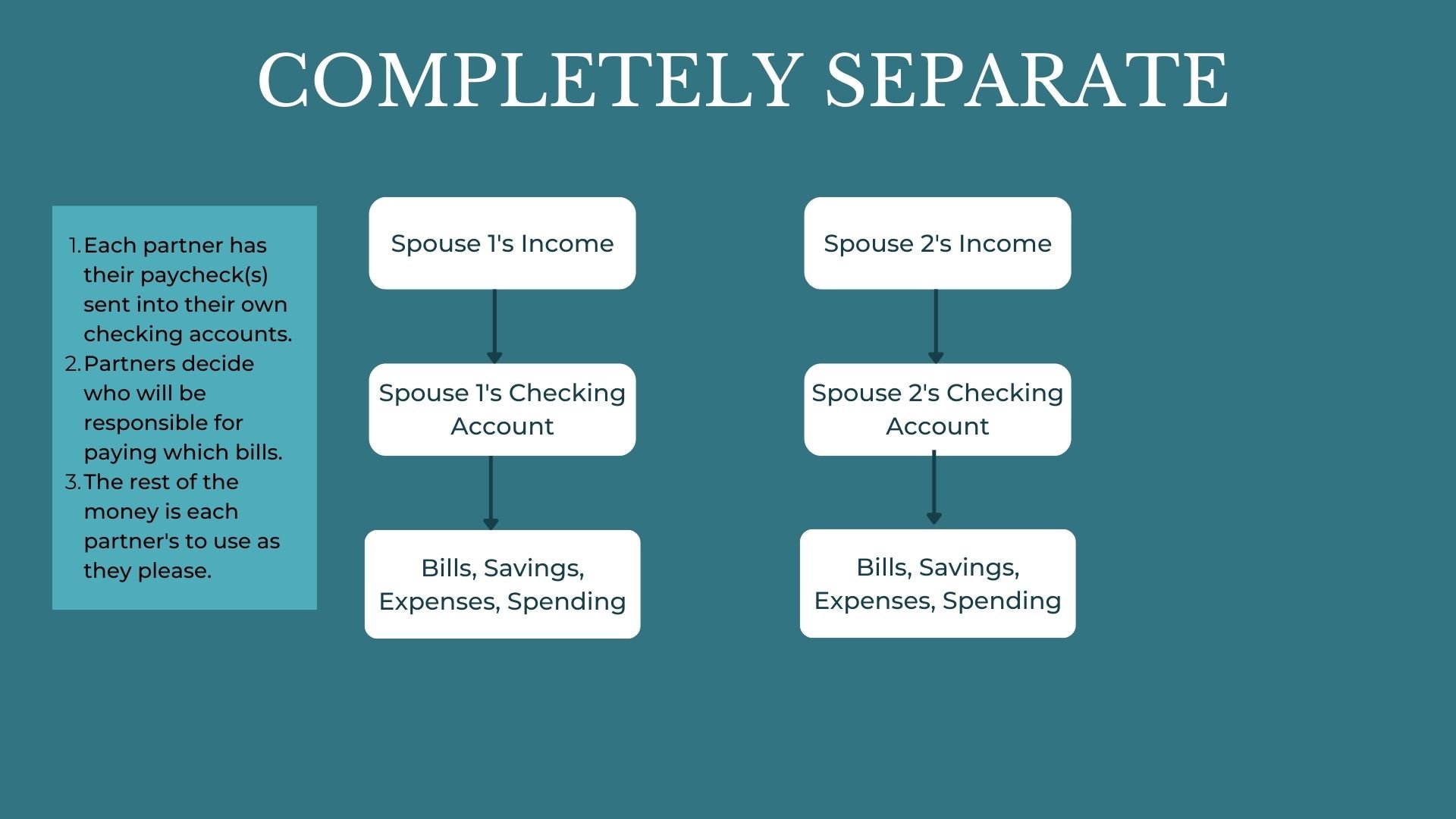
- Individual Accounts with Shared Expenses: In this arrangement, each partner maintains their own individual bank accounts, and they contribute a pre-agreed amount to a shared account for specific expenses like rent, utilities, and groceries.
- Advantages: Offers a balance between financial independence and shared responsibility. It allows each partner to maintain control over their individual spending and savings.
- Disadvantages: Requires careful planning and budgeting to ensure all shared expenses are covered. It can be more complex to manage than a shared account. It might require more communication to coordinate financial decisions.
- Hybrid Approach: This is a combination of the above methods, often tailored to fit a couple’s specific needs. For example, a couple might have a shared account for major expenses and individual accounts for personal spending and savings.
- Advantages: Provides flexibility and allows couples to customize their financial arrangement. It can accommodate varying income levels and spending habits.
- Disadvantages: Can be the most complex to set up and manage. Requires excellent communication and a willingness to compromise. It may be harder to track overall financial health.
Comparison of Financial Arrangements
The following table provides a comparative analysis of the financial arrangements discussed above, highlighting factors like fairness, transparency, and ease of management.
| Financial Arrangement | Fairness | Transparency | Ease of Management | Best Suited For |
|---|---|---|---|---|
| Proportional Contribution | Generally considered fair, especially with income disparity. | Requires clear tracking and communication. | Can be moderately complex to calculate and monitor. | Couples with significant income differences who value equity. |
| Shared Accounts | Can be perceived as fair if incomes are relatively similar. | High; all transactions are visible. | Simple for bill payments, but complex if spending habits differ. | Couples with shared financial goals and compatible spending habits. |
| Individual Accounts with Shared Expenses | Can be fair if contributions are agreed upon and adhered to. | Requires clear communication about shared expenses. | Moderately complex; requires coordination and budgeting. | Couples who value financial independence and shared responsibility. |
| Hybrid Approach | Can be tailored to be fair, depending on the specifics. | Varies depending on the combination of methods used. | Can be complex; requires good organization and communication. | Couples seeking flexibility and customization. |
Real-Life Examples of Financial Approaches
Here are three real-life examples of how couples have successfully implemented different financial approaches, showcasing the rationale behind their choices and the outcomes they achieved.
- Example 1: The Proportional Contribution Couple. Sarah, a software engineer, earns significantly more than her partner, Mark, a teacher. They decided on a proportional contribution method. They calculate their shared expenses (rent, utilities, groceries, etc.) and Sarah contributes 70% while Mark contributes 30%. This approach allows them to live comfortably, ensures fairness based on income, and reduces any feelings of financial imbalance. They maintain individual savings accounts and discuss major purchases together.
- Example 2: The Shared Account Couple. John and Emily, both working professionals with similar incomes, opted for a shared account. They deposit all their earnings into this account and use it to pay all expenses, including housing, food, travel, and entertainment. This simplifies their finances, promotes a strong sense of teamwork, and allows them to save for their future goals together. While they have separate small “fun money” accounts, most of their financial life is integrated.
- Example 3: The Hybrid Approach Couple. David and Jessica, a couple with different spending styles, chose a hybrid approach. They have a joint account for mortgage payments, utilities, and groceries. They contribute equally to this account. They each maintain their individual accounts for personal spending, savings, and investments. This approach allows them to share the responsibilities of essential expenses while also preserving their financial autonomy and allowing for their different spending preferences. They review their finances together monthly to ensure they are on track with their shared financial goals.
Establishing a Budget and Tracking Expenses as a Team to Achieve Financial Harmony
Creating a joint budget and meticulously tracking expenses is not just about numbers; it’s about building a solid foundation of financial stability and reducing potential conflicts within your partnership. Shared financial visibility empowers both partners to understand where their money goes, aligning spending habits with common goals and promoting a sense of teamwork. This proactive approach can transform financial management from a source of stress into a collaborative effort that strengthens the relationship.
Creating a Joint Budget and Tracking Expenses
A well-structured budget and diligent expense tracking are crucial for financial success as a couple. This process fosters transparency, facilitates goal setting, and minimizes misunderstandings regarding money matters. By working together, partners can create a financial roadmap that reflects their shared values and aspirations.
Here’s a simple step-by-step process for creating a basic budget template:
* Step 1: Calculate Total Combined Income: Determine the total monthly income for both partners after taxes. This figure forms the basis of your budget. For instance, if Partner A earns $4,000 per month and Partner B earns $3,000 per month, your total combined income is $7,000.
* Step 2: Identify Fixed Expenses: List all fixed expenses, which are bills that remain relatively constant each month. Examples include:
- Rent/Mortgage
- Utilities (electricity, water, gas)
- Internet and phone bills
- Loan payments (student loans, car loans)
- Subscription services (streaming, gym memberships)
- Insurance premiums (health, car, home)
Calculate the total amount spent on fixed expenses.
* Step 3: Estimate Variable Expenses: Estimate variable expenses, which fluctuate each month. These include:
- Groceries
- Dining out
- Transportation (gas, public transport)
- Entertainment
- Personal spending (clothing, hobbies)
Review past spending habits to get an accurate estimate.
* Step 4: Establish Savings Goals: Determine how much you want to save each month for short-term and long-term goals.
- Emergency fund
- Down payment on a house
- Retirement
- Vacations
Allocate a specific amount to each savings goal. Aim to save at least 10-15% of your combined income.
* Step 5: Allocate Remaining Funds: Subtract total fixed expenses, variable expenses, and savings from your total income. The remaining amount is available for flexible spending.
* Step 6: Review and Adjust: Review your budget monthly. Track your actual spending against your budget, and make adjustments as needed.
Expense-Tracking Tools and Apps
Selecting the right expense-tracking tool can significantly simplify the budgeting process. Several options are available, each with its own features, benefits, and drawbacks. Consider these three popular choices:
* Mint: This is a free app and website that automatically tracks income and expenses by connecting to your bank accounts and credit cards.
- Features: Automated transaction categorization, budgeting tools, bill payment reminders, investment tracking.
- Benefits: Easy to use, offers a comprehensive overview of your finances, provides insights and recommendations.
- Drawbacks: Relies on secure connections to financial institutions, which can sometimes have technical issues. Limited customization options compared to some other tools.
- Cost and Accessibility: Free, accessible on web, iOS, and Android.
* YNAB (You Need a Budget): This is a paid budgeting software that emphasizes the “envelope” method, where every dollar is assigned a job.
- Features: Zero-based budgeting, detailed reporting, goal tracking, debt payoff planning, educational resources.
- Benefits: Highly effective for budgeting and debt management, promotes proactive financial planning, offers excellent customer support.
- Drawbacks: Requires a more hands-on approach and commitment to the budgeting process. Subscription-based, so there is a recurring cost.
- Cost and Accessibility: Subscription-based, with different pricing tiers. Accessible on web, iOS, and Android.
* Personal Capital: This is a free financial dashboard that provides investment tracking and budgeting features.
- Features: Net worth tracking, investment portfolio analysis, budgeting tools, retirement planning tools.
- Benefits: Excellent for tracking investments and overall financial health, offers a clear visual representation of your finances, provides valuable insights.
- Drawbacks: Primarily focused on investments, so budgeting features are less robust than dedicated budgeting apps.
- Cost and Accessibility: Free, accessible on web, iOS, and Android.
By utilizing these tools and following a structured approach to budgeting, couples can create a solid financial foundation and work together to achieve their shared financial goals.
Addressing Shared Expenses and Responsibilities Effectively in a Partnership
Successfully navigating shared expenses is a cornerstone of a healthy partnership. It requires open communication, mutual respect, and a willingness to find solutions that work for both individuals. This section explores the intricacies of managing common costs and dealing with the inevitable unexpected financial bumps in the road.
Managing Shared Expenses
The allocation of shared expenses like rent, utilities, groceries, and entertainment demands a thoughtful approach. Fair allocation doesn’t always mean a 50/50 split; it should reflect each partner’s income and financial contributions.
- Rent/Mortgage: The most common approach is a proportional split based on income. If one partner earns significantly more, they contribute a larger percentage.
- Utilities: Consider dividing these costs equally, as consumption can vary. However, if one partner works from home and uses more electricity, a slightly adjusted split might be fairer.
- Groceries: Options include splitting the bill equally, rotating grocery shopping duties, or assigning specific grocery categories to each partner.
- Entertainment: Agree on a budget for entertainment and decide how to split the costs. Consider creating a joint entertainment fund.
Unexpected costs are inevitable, and it’s essential to have a plan. Discussing potential scenarios and establishing a contingency fund is crucial.
Handling Unexpected Expenses
Unforeseen financial burdens can strain any relationship. Preparing for these possibilities is vital. Here are three common scenarios and practical approaches:
- Car Repairs: Car repairs can be expensive. Decide how to cover the cost based on ownership and usage. If the car is jointly owned, a 50/50 split is often fair. If one partner primarily uses the car, they might contribute a larger portion. Consider a payment plan if the cost is substantial.
- Medical Bills: Unexpected medical expenses can be a significant strain. Discuss how to cover these costs in advance. If you have a joint health insurance plan, review your coverage and deductibles. Consider using savings, creating a payment plan with the healthcare provider, or exploring options like a personal loan if necessary.
- Home Repairs: Home repairs can arise unexpectedly. For jointly owned properties, the cost is usually split equally. For rental properties, the landlord typically covers repairs, but discuss any potential contributions to avoid misunderstandings.
Scenario: Surprise Home Repair Bill
Sarah: “Hey Mark, I got the bill for the roof repair. It’s a lot more than we expected!”
Mark: “Oh wow, that’s a shock. How much is it?”
Sarah: “$2,000. It’s going to hit our budget pretty hard.”
Mark: “Okay, let’s talk about this. Since we split everything 50/50, would it be okay if we each pay $1,000? We can adjust our grocery budget for this month.”
Sarah: “That sounds fair. Maybe we can also cut back on eating out for a while to help.”
Mark: “Sounds good. We’re in this together.”
Navigating Financial Goals and Saving Strategies as a Couple
When couples join forces, their financial aspirations often intertwine. It’s crucial to understand how to approach shared goals and craft a roadmap toward achieving them together. Aligning on objectives, whether it’s securing a down payment on a home, planning for retirement, or even that dream vacation, is the cornerstone of financial success as a partnership. This shared vision not only provides motivation but also strengthens the bond by fostering a sense of teamwork and mutual support.
Aligning Financial Goals
Successfully navigating financial goals as a couple requires open communication and a shared understanding of priorities. Begin by discussing individual financial aspirations and identifying common ground. Perhaps one partner prioritizes early retirement, while the other values frequent travel. The key is to find a balance that accommodates both needs.
Consider the time horizon for each goal. Short-term goals, like saving for a new appliance or a weekend getaway, often require a more immediate focus. Long-term goals, such as retirement or a down payment on a house, necessitate a strategic, long-term approach.
Create a timeline for each goal. Determine when you want to achieve each objective and break it down into smaller, manageable steps. This provides a sense of progress and helps maintain motivation. Regular check-ins, perhaps monthly or quarterly, are essential to track progress, adjust strategies if necessary, and celebrate successes.
The most crucial element is to view financial planning as a collaborative effort. By combining resources, sharing responsibilities, and supporting each other’s aspirations, couples can significantly increase their chances of achieving their financial goals.
Effective Saving Strategies for Couples
Implementing effective saving strategies is vital for reaching shared financial goals. Here are five practical approaches couples can adopt to build their savings and secure their financial future:
- Automatic Transfers: Set up automatic transfers from your checking accounts to your savings or investment accounts. This “pay yourself first” approach ensures that savings become a regular habit, making it easier to reach your financial targets. For instance, if you aim to save $500 per month for a down payment, automate transfers of $125 weekly or $250 bi-weekly.
- Budgeting for Fun: Allocate a portion of your budget specifically for entertainment and leisure activities. This not only allows you to enjoy life but also prevents overspending in other areas, keeping your overall financial plan on track. This can be as simple as setting aside a fixed amount each month for date nights or weekend outings.
- Debt Management: Prioritize paying down high-interest debt, such as credit card balances or personal loans. Reducing debt frees up more cash flow for savings and investments. Consider using the debt snowball or debt avalanche method to tackle your debts strategically.
- Investing Early and Often: Start investing as early as possible, even with small amounts. Compound interest is a powerful tool. A young couple who invests $200 monthly in a diversified portfolio with an average annual return of 7% could accumulate a significant sum over several decades.
- Setting Clear Financial Milestones: Establish specific, measurable, achievable, relevant, and time-bound (SMART) financial milestones. For example, instead of “save for retirement,” set a goal to “accumulate $500,000 in retirement savings by age 55.” Regularly review and celebrate these milestones to stay motivated.
Image Description
The image portrays a cozy, well-lit living room setting. A couple, seemingly in their late 20s or early 30s, is seated at a small, modern desk. They are focused on a laptop screen. The woman, with shoulder-length brown hair, leans slightly forward, pointing at a graph displayed on the screen. Her expression is a mixture of concentration and excitement, and a subtle smile plays on her lips. The man, with short dark hair, is positioned beside her, also looking at the screen. He has his arm around her, and his expression reflects a similar blend of focus and satisfaction.
The laptop screen showcases a colorful graph illustrating their shared savings progress. The graph likely visualizes their savings growth over time, with clear labels and data points. The room is decorated with a minimalist aesthetic, featuring a neutral color palette, a few potted plants, and soft, natural light streaming through a nearby window. A half-empty coffee mug sits on the desk, suggesting a productive work session. The overall impression is one of teamwork, financial planning, and a shared sense of accomplishment.
Planning for Major Life Events and Their Financial Implications as a Team

Life is full of exciting milestones, and each one can dramatically reshape your financial landscape. From tying the knot to welcoming a new addition to the family, these events require thoughtful planning and adjustments to ensure your financial well-being. Understanding how these major life changes affect your finances is crucial for building a secure future together.
Impact of Major Life Events on Financial Arrangements
Major life events can significantly alter a couple’s financial arrangements, necessitating careful consideration and adaptation. Marriage, for instance, often leads to the consolidation of finances or the blending of financial philosophies. Purchasing a home involves significant upfront costs, ongoing mortgage payments, and potential property taxes, demanding a revised budget and savings strategy. Having children introduces substantial new expenses, including childcare, healthcare, and future education costs. Career changes, whether promotions, job losses, or starting a business, can impact income, savings, and investment strategies. These events necessitate open communication, financial planning, and a willingness to adjust to changing circumstances. Ignoring these financial implications can lead to stress and conflict within the relationship.
Examples of Successful Adaptations to Major Life Events
Couples can successfully adapt their financial strategies to accommodate major life events through proactive planning and collaboration.
* Example 1: Marriage and Debt Consolidation: Sarah and John got married and decided to consolidate their individual debts, including student loans and credit card balances. They created a joint budget and allocated a portion of their combined income to debt repayment. They refinanced their student loans to secure a lower interest rate, freeing up more cash flow. They also implemented the “snowball method” to pay off their credit card debt, starting with the smallest balance to gain momentum. This strategy reduced their debt burden and improved their financial stability as a married couple.
* Example 2: Buying a Home and Investment Adjustments: Emily and David purchased their first home. They adjusted their budget to accommodate mortgage payments, property taxes, and home maintenance expenses. To do this, they reduced their discretionary spending on dining out and entertainment. They also re-evaluated their investment portfolio, shifting a portion of their investments from more aggressive growth stocks to more conservative, income-generating assets to provide stability. They also established an emergency fund to cover unexpected home repairs.
* Example 3: Having Children and Budgeting for Childcare: Maria and Carlos welcomed their first child. They revised their budget to include childcare costs, diapers, and other baby-related expenses. Maria took a period of parental leave, which reduced their income temporarily. They created a separate savings account for their child’s future education, and explored options such as 529 plans. They cut back on non-essential spending and explored ways to increase their income, such as side hustles or part-time work, to meet the financial demands of parenthood.
Essential Financial Considerations for Couples Planning to Have Children
Planning for children involves numerous financial considerations that couples should address.
It is important to understand that having a child represents a significant financial commitment.
- Childcare Costs: Childcare expenses, including daycare, nannies, or after-school programs, can be a substantial ongoing cost. Research local childcare options and factor these costs into your budget.
- Parental Leave: Determine the availability and duration of paid or unpaid parental leave for both parents. Plan for potential income loss during this period and establish an emergency fund to cover expenses.
- Healthcare Expenses: Factor in increased healthcare costs associated with prenatal care, delivery, and ongoing healthcare for the child. Ensure you have adequate health insurance coverage.
- Diapers, Formula, and Supplies: Estimate the cost of diapers, formula (if applicable), baby food, clothing, and other essential supplies. Create a budget for these recurring expenses.
- Future Education Expenses: Start saving early for your child’s future education. Explore options such as 529 plans, Coverdell Education Savings Accounts, or other investment vehicles.
- Life Insurance: Consider purchasing life insurance to provide financial protection for your child in the event of a parent’s death. Evaluate the coverage needed to cover expenses such as childcare, education, and living costs.
- Estate Planning: Create or update your estate plan to include guardianship provisions for your child and to designate beneficiaries for your assets.
Protecting Finances
Navigating finances as a couple goes beyond simply managing daily expenses and setting savings goals. It also involves proactively safeguarding your financial well-being against unforeseen circumstances and planning for the future. Addressing debt, securing appropriate insurance coverage, and establishing legal protections are critical components of a comprehensive financial strategy, providing a safety net and peace of mind for both partners.
Addressing Debt, Insurance, and Legal Considerations Together
Protecting your financial future as a couple requires a multi-faceted approach. This includes actively managing existing debt, ensuring adequate insurance coverage, and establishing essential legal documents. Ignoring these aspects can leave you vulnerable to significant financial setbacks, impacting your present and future security. Open communication and collaborative decision-making are paramount to successfully navigating these critical areas.
Debt management is crucial. Couples should work together to assess their combined debt, including credit card balances, student loans, and mortgages. Creating a debt repayment plan, whether through consolidation or a focused payoff strategy, can alleviate financial stress and improve your credit scores. Remember, that a higher credit score can translate into better interest rates on loans and mortgages, saving you significant money over time.
Insurance provides a vital safety net. Understanding the different types of insurance and their benefits is essential for protecting your assets and loved ones. Health insurance covers medical expenses, while life insurance provides financial support to the surviving partner in the event of a death. Property insurance protects your home and belongings against damage or loss.
Legal considerations, such as wills and estate planning, are equally important. These documents ensure your assets are distributed according to your wishes and provide for your loved ones in the event of your incapacitation or death.
Comparative Overview of Insurance Types for Couples
Choosing the right insurance coverage is a critical step in financial planning. Couples should carefully consider the different types of insurance available and tailor their coverage to their specific needs and circumstances. The following overview highlights key insurance types and their benefits:
- Health Insurance: Provides coverage for medical expenses, including doctor visits, hospital stays, and prescription medications. The Affordable Care Act (ACA) offers various plans with different levels of coverage. For example, a couple in their 30s with no pre-existing conditions could expect to pay between $800 and $1,200 per month for a comprehensive health insurance plan, depending on their location and the specific plan chosen. The benefits include financial protection against high medical bills and access to necessary healthcare services.
- Life Insurance: Offers financial protection to the surviving partner and/or dependents in the event of a death. There are two main types: term life insurance, which provides coverage for a specific period, and whole life insurance, which provides lifelong coverage and has a cash value component. A 30-year-old couple with a mortgage and children might consider a 20-year term life insurance policy with a combined death benefit of $1 million. The benefits are ensuring financial stability for the surviving partner, covering debts, and providing for future expenses.
- Property Insurance: Protects your home and belongings against damage or loss due to covered perils, such as fire, theft, or natural disasters. Homeowners insurance also provides liability coverage if someone is injured on your property. For instance, a couple owning a home in a moderate-risk area could expect to pay between $1,500 and $3,000 per year for homeowners insurance. The benefits are protecting your financial investment in your home and belongings and covering potential liability claims.
- Disability Insurance: This type of insurance replaces a portion of your income if you are unable to work due to a disability. It can be especially important for couples with significant financial obligations.
Essential Steps for Creating a Will and Estate Plan
Creating a will and estate plan is a crucial step in protecting your assets and ensuring your wishes are carried out. This process can seem daunting, but breaking it down into manageable steps makes it more accessible. Consulting with legal and financial professionals is highly recommended to ensure your plan is comprehensive and legally sound.
- Assess Your Assets: Compile a comprehensive list of all your assets, including real estate, investments, bank accounts, and personal property. This information will form the basis of your estate plan.
- Choose an Executor: Select a trusted individual to manage your estate and carry out the instructions in your will. Consider factors like reliability, organizational skills, and availability.
- Determine Beneficiaries: Decide who will inherit your assets. This may include your partner, children, other family members, or charitable organizations.
- Create a Will: A will Artikels how your assets will be distributed after your death. It should be drafted with the assistance of an attorney to ensure it meets legal requirements in your state.
- Establish Powers of Attorney: Grant someone the authority to make financial and healthcare decisions on your behalf if you become incapacitated.
- Consider a Living Trust: A living trust can help you manage your assets while you’re alive and provide for their distribution after your death, potentially avoiding probate.
- Review and Update Regularly: Your will and estate plan should be reviewed and updated periodically, especially after major life events like marriage, the birth of a child, or significant changes in your financial situation.
It is generally recommended to review your estate plan every three to five years, or whenever major life changes occur.
- Seek Professional Advice: Consult with an attorney and a financial advisor to ensure your estate plan is legally sound and aligned with your financial goals.
Outcome Summary

In essence, successfully learning how to split finances with a partner is about more than just numbers; it’s about fostering a partnership built on mutual respect, clear communication, and shared goals. Throughout this journey, you’ve gained insights into various financial approaches, budget creation, and expense tracking, all designed to promote financial stability and reduce conflicts. From navigating unexpected expenses to planning for major life events, the principles of financial harmony we’ve covered will empower you and your partner to tackle challenges and celebrate successes together. By embracing these strategies, you’re not just managing finances; you’re cultivating a deeper connection and building a stronger foundation for your future.