Fixed rate vs adjustable rate mortgage difference – sounds a bit dry, doesn’t it? But hold on, because understanding the ins and outs of these two mortgage types is like having a superpower when it comes to homeownership. We’re talking about the bedrock of your housing journey, the foundation upon which your financial future is built. Getting it right can save you a mountain of stress and money; getting it wrong? Well, let’s just say it could lead to some sleepless nights. So, buckle up, and let’s unravel the mysteries of fixed versus adjustable rates, exploring the nitty-gritty details that will empower you to make the smartest choice for your unique situation.
At their core, the primary distinction lies in how their interest rates behave. Fixed-rate mortgages offer the comfort of predictability; your interest rate, and therefore your monthly payment, stays the same throughout the loan’s life. Adjustable-rate mortgages (ARMs), on the other hand, start with an introductory rate, often lower, but then fluctuate based on market conditions. This fluctuating nature opens the door to potential savings, but also introduces an element of uncertainty. Understanding terms like “index,” “margin,” and “caps” is crucial when navigating the ARM landscape. The index is a benchmark interest rate, the margin is added to the index to determine your rate, and caps limit how much your rate can increase. These components directly impact your payments, which may increase or decrease, depending on market trends.
Fixed-rate mortgages provide a sense of stability, making budgeting easier. You know exactly what you’ll pay each month, no surprises. However, you might start with a slightly higher interest rate. ARMs can be appealing due to their lower initial rates, potentially saving you money upfront. The catch? Your payments could rise significantly if interest rates climb. For example, consider someone who plans to sell their house in five years. An ARM might be a good fit. But, if you plan to stay put for the long haul, a fixed-rate mortgage is probably the better option. The mortgage type decision also depends on market conditions. When interest rates are low, a fixed-rate mortgage can lock in a favorable rate. When rates are expected to fall, an ARM might be the way to go.
Now, let’s dive deeper. Fixed-rate mortgages come in various terms, like 15-year or 30-year options, each affecting your monthly payments and overall interest paid. There are features like the ability to refinance, and the potential for prepayment penalties. Getting a fixed-rate mortgage involves steps from application to closing. ARMs, too, have different types, such as 5/1 ARMs and 7/1 ARMs. The first number indicates how long the initial rate is fixed, and the second indicates how often the rate adjusts. They also have features like interest rate caps and payment caps, which limit rate and payment increases. To compare, imagine a 5/1 ARM: for the first five years, your rate is steady, then it adjusts annually. An amortization schedule shows how the interest rate and payment might change. Comparing the total cost is essential. Consider how interest rate fluctuations impact your expenses. Factors like early payoff options and refinance opportunities affect the total cost. You need to consider various interest rate scenarios to see the potential financial impact.
Understanding the Fundamental Differences Between Fixed and Adjustable Rate Mortgages is essential for making informed decisions.
Deciding between a fixed-rate mortgage and an adjustable-rate mortgage (ARM) is a big step, and understanding the core differences is key. These two types of mortgages have distinct interest rate structures that significantly impact your monthly payments and long-term financial planning. Making the right choice hinges on your financial situation, risk tolerance, and long-term goals.
Interest Rate Structures of Fixed-Rate vs. Adjustable-Rate Mortgages
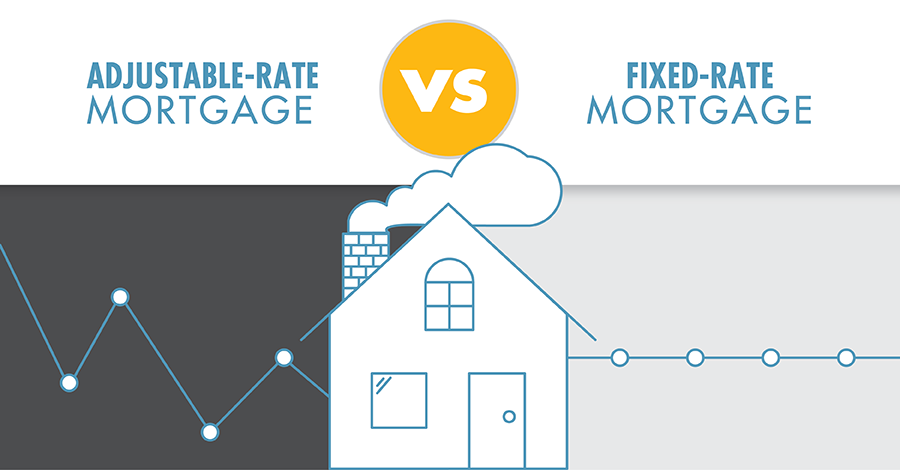
The primary difference lies in how their interest rates are determined. A fixed-rate mortgage maintains the same interest rate throughout the loan term, providing predictable monthly payments. An adjustable-rate mortgage, on the other hand, starts with an introductory, often lower, interest rate that can change periodically based on market conditions.
The mechanics of a fixed-rate mortgage are straightforward. The interest rate is established at the beginning of the loan and remains constant. This means your principal and interest payment will be the same every month, offering stability and ease of budgeting. For example, if you take out a $300,000 fixed-rate mortgage at 6% for 30 years, your principal and interest payment will remain the same throughout the entire 30-year period, regardless of economic fluctuations.
An adjustable-rate mortgage (ARM) has a more dynamic structure. The initial interest rate is typically lower than that of a fixed-rate mortgage. However, this rate is only introductory and will adjust after a set period, often 5, 7, or 10 years. After this initial period, the interest rate resets periodically, usually annually, based on an index plus a margin. This means your monthly payment can go up or down, depending on market interest rates. The uncertainty inherent in ARMs is a significant factor to consider.
The implications of these differing rate structures on a borrower’s monthly payments can be substantial. With a fixed-rate mortgage, you gain predictability. You know exactly what your payment will be each month, allowing for accurate budgeting and financial planning. This is especially helpful during times of economic uncertainty.
ARMs, while potentially offering lower initial payments, introduce variability. If interest rates rise, your monthly payments will increase. If interest rates fall, your payments will decrease. For instance, consider a $300,000 ARM with an initial rate of 4% and a 5/1 ARM structure. This means the rate is fixed for the first 5 years and adjusts annually thereafter. If the rate resets to 6% after five years, your monthly payment will increase. This can significantly impact your budget. Conversely, if rates fall to 2% at the reset, your monthly payment would decrease. This flexibility can be beneficial, but it also carries the risk of higher payments.
Understanding Index, Margin, and Caps in Adjustable-Rate Mortgages
Several key terms are crucial to understanding how ARMs work. These terms dictate how your interest rate and, consequently, your monthly payment, will change over time.
* Index: An index is a benchmark interest rate that reflects market conditions. It serves as the basis for the ARM’s interest rate. Common indexes include the Secured Overnight Financing Rate (SOFR), the London Interbank Offered Rate (LIBOR) (though this is being phased out), and the Constant Maturity Treasury (CMT) rates. The index rate is added to the margin to determine the interest rate on your ARM.
* Margin: The margin is a percentage added to the index to determine the fully indexed interest rate of the ARM. The margin is a fixed number throughout the loan term. It represents the lender’s profit and risk premium. For example, if the index is 3% and the margin is 2.5%, the interest rate would be 5.5%.
* Caps: Caps limit how much the interest rate or monthly payment can change, protecting borrowers from extreme increases. ARMs typically have several types of caps:
* Initial Rate Cap: This limits how much the interest rate can increase from the initial rate at the first adjustment.
* Periodic Rate Cap: This limits how much the interest rate can increase at each subsequent adjustment period.
* Lifetime Rate Cap: This limits how much the interest rate can increase over the entire loan term.
* Payment Cap: This limits how much your monthly payment can increase, though it can lead to negative amortization if the payment cap is lower than the interest accruing.
Consider a 5/1 ARM with an initial rate of 4%, an index of SOFR, a margin of 2.75%, an initial rate cap of 2%, a periodic rate cap of 1%, and a lifetime cap of 5%. After the initial five-year fixed period, the interest rate adjusts annually. If the SOFR index is at 3% at the first adjustment, the new rate would be 5.75% (3% + 2.75%). However, because of the periodic rate cap of 1%, the rate could only increase by a maximum of 1% from the initial rate of 4%, meaning the new rate would be 5%. The lifetime cap ensures the rate never goes above 9% (4% + 5%).
Examining the Advantages and Disadvantages of Fixed-Rate Mortgages offers valuable insight.
Choosing the right mortgage is a major financial decision, and understanding the nuances of different mortgage types is critical. Fixed-rate mortgages, in particular, present a compelling option for many homebuyers. They offer a sense of security and predictability, but they also come with certain trade-offs that potential borrowers should carefully consider. This section delves into the advantages and disadvantages of fixed-rate mortgages to provide a clear understanding of their benefits and potential drawbacks.
Benefits of Fixed-Rate Mortgages
One of the most significant advantages of a fixed-rate mortgage is the stability and predictability it provides. This is especially valuable in today’s fluctuating economic environment.
- Predictable Monthly Payments: The primary appeal of a fixed-rate mortgage lies in its consistent monthly payments. The principal and interest portions of your payment remain the same throughout the entire loan term, typically 15 or 30 years. This predictability allows homeowners to budget effectively and manage their finances with greater ease. You know exactly how much you’ll owe each month, making it simpler to plan for other expenses, such as groceries, utilities, and entertainment. This is a significant advantage, particularly for first-time homebuyers or those on a tight budget.
- Protection Against Rising Interest Rates: With a fixed-rate mortgage, you’re shielded from the risk of rising interest rates. Even if market interest rates increase significantly, your mortgage rate remains unchanged. This can be a considerable advantage during periods of economic uncertainty or when the Federal Reserve is expected to raise interest rates. For instance, if you secured a 30-year fixed-rate mortgage at 6% and market rates later rise to 8%, your payment remains at the lower rate, saving you money compared to refinancing at the higher rate.
- Long-Term Financial Planning: The stability of fixed-rate mortgages supports long-term financial planning. Homeowners can confidently project their housing costs over the loan’s life, which is helpful when making long-term investment decisions, such as retirement planning or saving for college. Knowing your housing costs will remain constant allows you to make informed decisions about other financial goals.
Drawbacks of Fixed-Rate Mortgages
While offering considerable stability, fixed-rate mortgages also have potential downsides that prospective borrowers must consider. These drawbacks are often related to the potential for missed opportunities and the initial cost.
- Potentially Higher Initial Interest Rates: Fixed-rate mortgages often come with a higher initial interest rate compared to adjustable-rate mortgages (ARMs). This is because lenders assume the risk of fluctuating interest rates over the loan term. While the rate is fixed, the initial rate may be higher than what you might qualify for with an ARM.
- Limited Refinancing Opportunities: If interest rates decrease significantly after you obtain a fixed-rate mortgage, refinancing might be necessary to take advantage of lower rates. However, refinancing involves costs, such as appraisal fees, closing costs, and origination fees, which can offset the savings from a lower interest rate. For example, if you obtained a 30-year fixed-rate mortgage at 6% and rates later drop to 4%, refinancing could save you money, but only after considering the costs involved.
- Opportunity Cost: If interest rates remain low or decrease, you may miss out on potential savings compared to borrowers with ARMs who benefit from lower rates. However, this is balanced by the security provided by a fixed rate.
Comparison Table: Fixed-Rate Mortgage Pros and Cons
Here is a comparison table that summarizes the key advantages and disadvantages of fixed-rate mortgages. This table uses a responsive design, making it easily viewable on different devices.
| Key Factor | Advantages | Disadvantages | Considerations |
|---|---|---|---|
| Payment Stability | Consistent monthly payments throughout the loan term. | No payment flexibility if rates decline. | Essential for budgeting and long-term financial planning. |
| Interest Rate Risk | Protection against rising interest rates. | Potentially higher initial interest rate compared to ARMs. | Assess your risk tolerance and future financial outlook. |
| Long-Term Cost | Predictable long-term housing costs. | Missed opportunities if rates decrease significantly without refinancing. | Evaluate the potential for future interest rate changes and refinancing costs. |
| Financial Planning | Supports long-term financial planning and investment decisions. | Requires careful consideration of potential refinancing costs. | Suitable for those seeking financial certainty and stability. |
Exploring the Advantages and Disadvantages of Adjustable-Rate Mortgages is crucial for a complete perspective.: Fixed Rate Vs Adjustable Rate Mortgage Difference
Deciding between a fixed-rate and an adjustable-rate mortgage (ARM) requires careful consideration of your financial situation and risk tolerance. While fixed-rate mortgages offer predictability, ARMs can provide benefits, but also introduce potential risks. Understanding both sides is key to making the best choice for your needs.
Potential Advantages of Adjustable-Rate Mortgages
ARMs can be attractive because of their potential for lower initial interest rates. This can lead to lower monthly payments in the early years of the loan, which can be beneficial for borrowers who are on a tight budget or who anticipate increases in their income.
- Lower Initial Interest Rates: ARMs typically start with a lower interest rate than fixed-rate mortgages. This lower rate can translate into significant savings on monthly payments, especially in the initial years of the loan. For example, if a borrower takes out a $300,000 mortgage with a 30-year term, an ARM starting at 5% might have a monthly payment of $1,610, while a fixed-rate mortgage at 6% would have a monthly payment of $1,799. This difference of $189 per month can free up cash flow for other expenses or investments.
- Potential for Payment Decreases: If interest rates decline after the initial fixed-rate period of an ARM, the interest rate on the mortgage may decrease, resulting in lower monthly payments. This is a significant advantage if market conditions are favorable. However, it’s essential to understand that this is not guaranteed and depends on the movement of the index the ARM is tied to.
- Opportunity for Short-Term Ownership: ARMs can be a good choice for borrowers who plan to own their home for a shorter period, such as five or seven years. If the borrower sells the home or refinances before the interest rate adjusts significantly upward, they can benefit from the lower initial payments without experiencing the full impact of potential rate increases.
Inherent Risks Associated with Adjustable-Rate Mortgages
The primary risk associated with ARMs is the potential for interest rate increases. This can lead to higher monthly payments, potentially making it difficult for borrowers to afford their mortgage. It’s crucial to understand how interest rates are calculated and how frequently they can adjust.
- Interest Rate Increases: The interest rate on an ARM is tied to an index, such as the Secured Overnight Financing Rate (SOFR), plus a margin. As the index rises, the interest rate on the mortgage increases. This can lead to a significant increase in monthly payments, especially if the increase happens during a period of rising interest rates in the broader economy.
- Impact on Monthly Payments: When the interest rate increases, the monthly payments also increase. The extent of the increase depends on the loan’s terms, including the index used, the margin, and any caps on interest rate adjustments. Borrowers must be prepared for the possibility of higher payments and ensure they can afford them. Consider the following:
A $300,000 mortgage with a 5/1 ARM (fixed for 5 years, then adjusts annually) starting at 5% has a monthly payment of $1,610. If the rate adjusts to 7% after the fixed period, the monthly payment increases to $1,995.
- Payment Shock: If interest rates increase substantially, borrowers could experience “payment shock,” where the increase in their monthly payments becomes unmanageable. This can lead to financial hardship and potentially even foreclosure. Borrowers should always calculate the maximum potential payment based on the loan’s terms, including the highest possible interest rate, to determine affordability.
Suitable Scenarios for Adjustable-Rate Mortgages
ARMs can be a good fit for certain borrowers and specific financial situations.
- Short-Term Homeownership: If you plan to live in the home for a short period (e.g., five to seven years), an ARM can be advantageous. The lower initial rate allows you to benefit from lower payments without facing the risk of significant rate increases.
- Anticipated Income Increases: If you expect your income to increase significantly in the near future, an ARM might be suitable. The lower initial payments can free up cash flow, and you can comfortably absorb any potential payment increases as your income rises.
- Declining Interest Rate Environment: If you believe interest rates will decline, an ARM could be a good choice. As rates fall, your ARM’s interest rate and monthly payments will likely decrease.
Unsuitable Scenarios for Adjustable-Rate Mortgages
Conversely, there are situations where an ARM would be a poor choice.
- Long-Term Homeownership Plans: If you plan to live in your home for many years, a fixed-rate mortgage is generally a better option. The predictability of fixed payments provides financial stability. An ARM’s potential for rate increases could lead to significantly higher payments over the long term.
- Uncertain Income: If your income is unstable or you anticipate potential job loss, an ARM is risky. Higher payments due to rate increases could make it difficult to meet your mortgage obligations.
- Risk-Averse Borrowers: If you are uncomfortable with the uncertainty of fluctuating payments, an ARM is not a good choice. The peace of mind offered by fixed, predictable payments is worth the slightly higher initial interest rate for many risk-averse borrowers.
Assessing the Impact of Market Conditions on Mortgage Choices is a necessary step in the decision-making process.
Making the right mortgage choice is significantly influenced by the prevailing economic climate. Understanding how economic factors, such as inflation and Federal Reserve policies, affect the attractiveness of fixed-rate and adjustable-rate mortgages is essential for sound financial planning. This knowledge empowers borrowers to make informed decisions that align with their financial goals and risk tolerance.
Influence of Economic Factors
Economic indicators play a pivotal role in shaping mortgage market dynamics. Inflation and the Federal Reserve’s interest rate policies are two of the most significant factors impacting the appeal of fixed-rate and adjustable-rate mortgages.
- Inflation’s Impact: Inflation erodes the purchasing power of money. When inflation rises, the cost of goods and services increases, including the cost of housing. Borrowers often seek protection from inflation. Fixed-rate mortgages offer this protection because the principal and interest payments remain constant, regardless of inflation. Adjustable-rate mortgages, on the other hand, are more vulnerable to inflation, as rising inflation can lead to higher interest rates when the mortgage adjusts.
- Federal Reserve’s Role: The Federal Reserve (the Fed) uses monetary policy to manage inflation and stimulate economic growth. The Fed’s primary tool is adjusting the federal funds rate, which influences other interest rates, including mortgage rates. When the Fed raises interest rates to combat inflation, both fixed-rate and adjustable-rate mortgages generally become more expensive. However, the impact differs. Fixed-rate mortgages immediately reflect the increase in the initial interest rate, while adjustable-rate mortgages adjust over time, based on the terms of the loan. Conversely, when the Fed lowers interest rates to boost the economy, both mortgage types tend to become more affordable.
Performance During Interest Rate Fluctuations
The performance of fixed-rate and adjustable-rate mortgages varies significantly during periods of rising and falling interest rates. Historical examples provide valuable insights into these dynamics.
- Rising Interest Rates: During periods of rising interest rates, fixed-rate mortgages become more attractive initially because they lock in a fixed interest rate, protecting borrowers from future increases. Borrowers with adjustable-rate mortgages face higher monthly payments as their rates adjust upwards. For example, during the late 1970s and early 1980s, when inflation was high, interest rates soared. Homeowners with fixed-rate mortgages were insulated from these increases, while those with adjustable-rate mortgages saw their payments increase dramatically.
- Falling Interest Rates: When interest rates decline, adjustable-rate mortgages can offer lower monthly payments compared to fixed-rate mortgages. However, fixed-rate mortgages can become more attractive if borrowers refinance to take advantage of the lower rates. For instance, in the early 2000s, the Federal Reserve lowered interest rates to stimulate the economy. Borrowers with adjustable-rate mortgages benefited from lower payments, while those with fixed-rate mortgages could refinance to obtain lower rates.
Visual Representation of Market Interest Rates and Mortgage Popularity
The relationship between market interest rates and the popularity of fixed-rate and adjustable-rate mortgages can be illustrated using a line graph.
The graph has two lines representing the popularity of each mortgage type over time and a third line showing market interest rates.
The x-axis represents time, labeled in years (e.g., 1980, 1990, 2000, 2010, 2020). The y-axis represents both interest rates (on the left side) and the percentage of mortgage applications (on the right side). The interest rate axis starts at 0% and goes up to 15%, while the mortgage application percentage axis starts at 0% and goes up to 100%.
Interest Rate Line: This line is depicted in black. During periods of economic downturn, the line dips downwards, showing a decrease in interest rates. Conversely, during periods of economic expansion, the line rises, showing an increase in interest rates.
Fixed-Rate Mortgage Popularity Line: This line is shown in blue. When the interest rate line is rising (indicating higher interest rates), the blue line (fixed-rate popularity) also rises, reflecting an increased demand for the security of fixed rates. When the interest rate line is falling, the blue line dips, indicating a decline in the popularity of fixed-rate mortgages.
Adjustable-Rate Mortgage Popularity Line: This line is shown in red. This line behaves in the opposite manner to the fixed-rate mortgage popularity line. When the interest rate line is rising, the red line dips, reflecting a decrease in demand for adjustable-rate mortgages. When the interest rate line is falling, the red line rises, indicating an increase in the popularity of adjustable-rate mortgages.
This graph visually demonstrates the inverse relationship between market interest rates and the popularity of adjustable-rate mortgages, and the direct relationship between market interest rates and the popularity of fixed-rate mortgages.
Evaluating Personal Financial Circumstances for Mortgage Selection is vital for individual success.

Choosing the right mortgage is a huge decision, and it’s not just about the interest rate. It’s about how that rate fits with your current financial situation, your comfort level with risk, and your long-term plans. A mismatch can lead to financial strain down the road.
Understanding your financial stability, risk tolerance, and long-term financial goals is key to making an informed choice between a fixed-rate and an adjustable-rate mortgage. A borrower with a stable income, a low debt-to-income ratio, and a solid credit score generally has more flexibility. They might be comfortable with the potential for rate fluctuations of an ARM if they are confident in their ability to handle increased payments. Conversely, someone with a less stable income or a higher debt burden might find the predictability of a fixed-rate mortgage more appealing, providing peace of mind knowing their payments won’t change. Your long-term financial goals also matter. Are you planning to stay in the home for a long time? If so, the stability of a fixed-rate mortgage could be beneficial. If you anticipate moving in a few years, an ARM with a lower initial rate might be a good option.
Assessing Risk Tolerance
Your risk tolerance, or how comfortable you are with uncertainty, plays a significant role in mortgage selection. Consider these different risk profiles:
- Conservative Borrower: This individual prioritizes stability and predictability. They’re typically averse to taking on risk. A fixed-rate mortgage is generally the better choice here. This person values knowing their payments won’t change, even if it means a slightly higher interest rate upfront.
- Moderate Borrower: This person is willing to accept some risk, especially if there’s a potential reward. They might be comfortable with an ARM, especially if the initial rate is significantly lower and they believe they can handle potential payment increases. This borrower might also have a financial cushion to fall back on.
- Aggressive Borrower: This individual is comfortable with a higher level of risk, seeking potentially higher returns. They might be more inclined towards an ARM, especially if they anticipate refinancing before the rate adjusts or believe they can weather any potential payment increases.
Essential Questions for Mortgage Decision-Making
Before making a mortgage decision, consider these crucial questions:
- Budget and Affordability:
- What is your monthly income and expenses?
- What is the maximum monthly mortgage payment you can comfortably afford?
- Have you factored in property taxes, homeowner’s insurance, and potential HOA fees?
- Financial Planning:
- What is your credit score?
- How much cash do you have available for a down payment and closing costs?
- Do you have any other significant debts?
- What are your retirement savings like?
- Future Plans:
- How long do you plan to stay in the home?
- Do you anticipate any changes in your income or employment in the near future?
- Are you planning any major life events, such as having children or changing careers?
Delving into the Specific Terms and Features of Fixed-Rate Mortgages is very important for comprehension.
Understanding the nuances of fixed-rate mortgages is key to making informed decisions about homeownership. This involves a deep dive into the available terms, associated features, and the process of securing one. Let’s break down these elements to provide a comprehensive understanding of what to expect.
Available Terms and Their Impact, Fixed rate vs adjustable rate mortgage difference
The terms available for fixed-rate mortgages significantly influence both your monthly payments and the total interest you’ll pay over the life of the loan. Choosing the right term depends on your financial goals and risk tolerance.
- 15-Year Fixed-Rate Mortgage: This option offers a shorter repayment period, which translates to higher monthly payments. However, you’ll pay significantly less interest over the life of the loan. This is because the principal is paid down more quickly. For instance, consider a $300,000 mortgage at a 6% interest rate. With a 15-year term, your monthly payment would be approximately $2,531, and you’d pay a total of about $155,547 in interest.
- 30-Year Fixed-Rate Mortgage: This is the most common term. It provides lower monthly payments, making homeownership more accessible. However, you’ll pay more interest over the loan’s lifetime. Using the same $300,000 mortgage and 6% interest rate, the monthly payment would be approximately $1,799, but the total interest paid would be about $347,587.
- Other Terms: Some lenders may offer other terms, such as 20-year or 10-year fixed-rate mortgages. These options fall between the 15-year and 30-year terms in terms of monthly payments and total interest paid.
Consider the following formula:
M = P [ i(1 + i)^n ] / [ (1 + i)^n – 1]
Where:
- M = Monthly Payment
- P = Principal Loan Amount
- i = Monthly Interest Rate (Annual interest rate / 12)
- n = Number of Months (Loan term in years * 12)
This formula illustrates how changes in the interest rate and loan term directly impact the monthly payment.
Features Associated with Fixed-Rate Mortgages
Fixed-rate mortgages come with specific features that borrowers should understand. These features impact flexibility and potential costs.
- Refinancing: The ability to refinance your mortgage is a significant feature. Refinancing allows you to replace your existing mortgage with a new one, potentially securing a lower interest rate, changing the loan term, or accessing your home’s equity. This can be a useful strategy if interest rates decline or if your financial situation improves. However, refinancing involves costs, such as appraisal fees, origination fees, and closing costs, which should be considered.
- Prepayment Penalties: Some fixed-rate mortgages include prepayment penalties, which are fees charged if you pay off your mortgage early. These penalties are less common now than in the past, but it’s crucial to check the terms of your mortgage agreement. Prepayment penalties can limit your flexibility if you plan to sell your home or make extra payments to reduce your principal. If your mortgage has a prepayment penalty, consider how it could affect your plans.
The Process of Obtaining a Fixed-Rate Mortgage
Securing a fixed-rate mortgage involves a structured process, from application to closing. Understanding each step helps ensure a smoother experience.
- Pre-approval: Before you start house hunting, get pre-approved for a mortgage. This involves providing your financial information to a lender, who will assess your creditworthiness and income. Pre-approval gives you a clear understanding of how much you can borrow and strengthens your offer when you find a home.
- Application: Once you’ve found a home, you’ll formally apply for a mortgage. You’ll need to provide detailed financial documentation, including income verification, asset statements, and credit reports. The lender will review this information and assess the risk associated with lending to you.
- Underwriting: The underwriting process involves a thorough review of your application and supporting documentation. The underwriter will verify your income, assets, and credit history. They’ll also assess the property’s value through an appraisal.
- Closing: If your application is approved, you’ll proceed to closing. This is when you sign the final loan documents and receive the keys to your new home. You’ll also pay closing costs, which include fees for the appraisal, title insurance, and other services.
Common requirements include:
- Credit Score: Lenders typically require a minimum credit score. A higher credit score generally results in a lower interest rate.
- Debt-to-Income Ratio (DTI): This ratio compares your monthly debt payments to your gross monthly income. Lenders use DTI to assess your ability to repay the loan.
- Down Payment: The amount you put down on the home. The down payment amount can affect the interest rate and the need for private mortgage insurance (PMI).
Understanding the Specific Terms and Features of Adjustable-Rate Mortgages is essential for prudent choices.
Adjustable-rate mortgages (ARMs) can seem a little intimidating at first glance, but understanding their specific terms and features is key to making a smart decision. These mortgages offer initial lower interest rates than fixed-rate mortgages, but the rate can change over time. Knowing how these changes work, and what protections are in place, will help you navigate the ARM landscape.
Types of Adjustable-Rate Mortgages
The structure of an ARM is often described using a set of numbers, such as 5/1 or 7/1. These numbers provide important information about how the interest rate will adjust over the life of the loan.
The first number in an ARM designation indicates the initial fixed-rate period, the time during which the interest rate remains constant. For example, a 5/1 ARM has a fixed rate for the first five years. The second number, following the slash, represents the frequency of the rate adjustments after the initial fixed period. In a 5/1 ARM, the rate adjusts once per year after the initial five-year period. A 7/1 ARM would have a fixed rate for the first seven years and then adjust annually. Other common ARM structures include 3/1, 5/5, and 7/5, among others. The longer the initial fixed period, the higher the initial interest rate will generally be.
Features of Adjustable-Rate Mortgages
ARMs have several features designed to protect borrowers from excessive rate increases. These features, primarily interest rate caps and payment caps, provide a degree of predictability.
* Interest Rate Caps: These caps limit how much the interest rate can increase or decrease. They typically come in two forms:
* Initial Rate Cap: This cap limits how much the interest rate can increase from the initial rate during the first adjustment period.
* Periodic Rate Cap: This cap limits how much the interest rate can increase or decrease during any subsequent adjustment period.
* Lifetime Rate Cap: This cap limits how much the interest rate can increase over the entire life of the loan. This is the difference between the initial rate and the highest rate the loan can reach.
* Payment Caps: These caps limit how much the monthly payment can increase or decrease. Payment caps don’t directly control the interest rate, but they affect how much the borrower pays each month. If the interest rate increases significantly, the payment cap might not fully cover the increased interest, potentially leading to negative amortization, where the loan balance increases.
Understanding these caps is critical. They offer some security, but they don’t eliminate the risk of rising payments.
Example of a 5/1 ARM Amortization Schedule
Initial Loan Amount: $300,000
Initial Interest Rate: 6.0%
Initial Monthly Payment: $1,798.65
Caps: 2/1/5 (Initial cap: 2%, Periodic cap: 1%, Lifetime cap: 5%)
Year 1-5: 6.0% interest rate, $1,798.65 monthly payment.
Year 6:
- New Interest Rate (Example): 7.0% (Increased by 1%, adhering to the periodic cap)
- New Monthly Payment (Example): $1,995.80
Year 7:
- New Interest Rate (Example): 8.0% (Increased by 1%, adhering to the periodic cap)
- New Monthly Payment (Example): $2,201.27
Year 8:
- New Interest Rate (Example): 8.5% (Increased by 0.5%, adhering to the periodic cap and lifetime cap, since the initial rate was 6.0% and the lifetime cap is 5%, therefore the highest possible rate is 11.0%)
- New Monthly Payment (Example): $2,291.68
Note: These figures are illustrative and do not reflect actual loan amortization schedules, which can vary. The actual impact of interest rate changes on monthly payments depends on the loan amount, the remaining term, and the specific terms of the ARM.
Comparing the Total Cost of Ownership Between Fixed and Adjustable Rate Mortgages helps in long-term financial planning.
Choosing between a fixed-rate mortgage (FRM) and an adjustable-rate mortgage (ARM) isn’t just about the initial interest rate; it’s a deep dive into long-term financial planning. Understanding the total cost of ownership involves considering various factors that influence your overall expenses throughout the loan’s life. This comparison is critical for making a decision that aligns with your financial goals and risk tolerance.
Factors Affecting Total Cost
Several elements significantly impact the total cost of each mortgage type, extending beyond the interest rate. These factors include early payoff options, refinance opportunities, and the potential for interest rate changes.
- Early Payoff Options: Both FRMs and ARMs typically allow for early payoff, which can significantly reduce the total interest paid. However, some loans may have prepayment penalties, especially during the initial years. Understanding these penalties is crucial for cost analysis. For instance, if you plan to make extra principal payments, a FRM might be more advantageous if it doesn’t have penalties, as the interest rate is fixed, making it easier to calculate savings.
- Refinance Opportunities: Refinancing is a tool to potentially lower your interest rate, thus reducing the total cost. With an FRM, you can refinance if rates drop. With an ARM, you might refinance if your rate adjusts upwards to a point where it’s no longer affordable. However, refinancing involves costs, such as appraisal fees, origination fees, and closing costs, which must be factored into the overall cost analysis.
- Interest Rate Changes: This is the most significant factor affecting the total cost, especially for ARMs. The initial rate on an ARM is often lower than an FRM, but it can adjust periodically based on market indexes. The frequency of these adjustments, the index used, and the margin (the lender’s profit) all determine the new rate. FRMs offer stability, while ARMs expose you to market volatility.
Comparative Analysis with Hypothetical Examples
Let’s consider a $300,000 mortgage with a 30-year term.
- Scenario 1: Fixed-Rate Mortgage (FRM): Assume an FRM at a 6% interest rate. Your monthly payment would be approximately $1,799. This payment remains constant for 30 years. Over the life of the loan, you’d pay a total of roughly $647,640.
- Scenario 2: Adjustable-Rate Mortgage (ARM): Let’s say you start with an ARM at 5% interest for the first five years. Your initial monthly payment would be around $1,610. If the rate adjusts to 7% after five years, your payment increases to approximately $1,995. If rates continue to rise, your total cost increases. If rates drop significantly, refinancing becomes an attractive option.
The impact of interest rate fluctuations can be significant.
For example, an ARM with a rate that increases by 2% after five years, and another 1% after ten years,
could easily lead to a total cost higher than the FRM, even with the initial lower rate.
Conversely, if rates fall, an ARM owner might benefit from lower payments.
Total Cost = (Monthly Payment * Number of Months) + (Closing Costs + Other Fees)
This formula helps estimate the total cost, but it’s essential to consider potential future scenarios and
your ability to manage the risk associated with interest rate fluctuations.
Ending Remarks
So, there you have it – a glimpse into the world of fixed and adjustable-rate mortgages. It’s a landscape filled with choices, each with its own set of advantages and potential pitfalls. Choosing the right mortgage isn’t just about finding the lowest rate; it’s about aligning your financial strategy with your personal goals and your risk tolerance. Weigh the stability of a fixed-rate against the potential savings of an ARM, consider market conditions, and always factor in your own financial circumstances. With the right knowledge and a little bit of planning, you can navigate the mortgage maze with confidence and secure the home of your dreams. Remember, the best mortgage is the one that fits your life.