What is Income Driven Repayment Plan? It’s a lifeline for many struggling with student loan debt, a financial strategy designed to make repayments more manageable. Imagine a system where your monthly payments are tailored to your income and family size, not just the original loan amount. This approach can be a game-changer, especially for those facing financial hardship or working in lower-paying public service roles. The concept revolves around adjusting your payments to fit your current financial reality, offering a degree of flexibility that standard repayment plans often lack.
We’ll delve into the mechanics of these plans, uncovering how your adjusted gross income (AGI) and family dynamics play a crucial role in determining your payment. We’ll examine the eligibility requirements, explore the types of federal student loans covered, and the necessary documentation for application and recertification. Furthermore, we’ll unpack the impact on interest accrual, comparing it with standard repayment plans and illustrating how different options affect your overall loan cost. Prepare to navigate the landscape of Income-Driven Repayment (IDR) options: Income-Based Repayment (IBR), Income-Contingent Repayment (ICR), Pay As You Earn (PAYE), and Revised Pay As You Earn (REPAYE). Each plan has unique features, advantages, and disadvantages, which we’ll dissect for various borrower scenarios.
What exactly constitutes an Income-Driven Repayment plan and how does it work to reduce monthly payments for borrowers?

Income-Driven Repayment (IDR) plans are designed to help federal student loan borrowers manage their debt by basing their monthly payments on their income and family size. These plans offer a potential lifeline for borrowers struggling with high debt burdens, especially those with lower incomes or facing financial hardship. The primary goal is to make loan repayment more manageable and prevent borrowers from defaulting on their loans.
Fundamental Mechanics of an Income-Driven Repayment Plan
Income-Driven Repayment (IDR) plans fundamentally work by adjusting your monthly student loan payments based on your income and family size. This adjustment often results in significantly lower monthly payments compared to the standard 10-year repayment plan. The core principle revolves around aligning the payment amount with your ability to pay. Instead of a fixed payment schedule, your payment is recalculated annually, typically using your most recent tax return information.
The process begins with determining your adjusted gross income (AGI), which is the foundation for calculating your monthly payment. Once your AGI is established, a percentage of your discretionary income is used to determine your monthly payment. “Discretionary income” is defined as the amount of your income that exceeds a certain percentage of the poverty guideline for your family size. The specific percentage and the length of repayment vary depending on the specific IDR plan you choose. After a certain period, usually 20 or 25 years of qualifying payments, any remaining loan balance is forgiven, although this forgiven amount is often considered taxable income. This forgiveness feature provides a safety net for borrowers who may not be able to repay their loans in full. It is important to remember that not all loan types are eligible for all IDR plans, so borrowers need to carefully consider the specifics of their loan portfolio when selecting a plan. The overall design prioritizes affordability and provides options for borrowers facing financial challenges.
Income and Family Size in Payment Calculation
Your income and family size are key components in calculating your monthly payment under an Income-Driven Repayment (IDR) plan. The process begins with your Adjusted Gross Income (AGI), found on your federal income tax return. The AGI is calculated by subtracting certain deductions from your gross income, such as contributions to a traditional IRA, student loan interest payments, and health savings account (HSA) contributions.
The government uses your AGI to determine your “discretionary income,” which is the portion of your income that is considered available for loan repayment. The definition of discretionary income differs slightly among the various IDR plans. Generally, discretionary income is the difference between your AGI and 150% of the poverty guideline for your family size. The percentage of your discretionary income you’ll pay each month also varies depending on the plan. For instance, the Revised Pay As You Earn (REPAYE) plan uses 10% of your discretionary income, while other plans may use 10% or 15%.
Family size is another critical factor. The Department of Education uses the number of dependents you claim on your federal income tax return to determine your family size. A larger family size generally results in a lower monthly payment, as a greater portion of your income is considered necessary to meet your basic needs.
Here’s an example:
A borrower with an AGI of $60,000 and a family size of 2, under the REPAYE plan, would have their monthly payment calculated as follows:
1. Determine the poverty guideline for a family of 2 (let’s assume it’s $20,000).
2. Calculate 150% of the poverty guideline: $20,000 \* 1.5 = $30,000.
3. Calculate discretionary income: $60,000 (AGI) – $30,000 = $30,000.
4. Calculate the monthly payment: $30,000 \* 0.10 (10% for REPAYE) = $3,000 per year, or $250 per month.
The specific formulas and percentages are subject to change, so borrowers should always consult the most current information provided by the Department of Education.
Comparison of Income-Driven Repayment Plans
Several Income-Driven Repayment (IDR) plans are available, each with unique features and eligibility requirements. Understanding these differences is crucial for borrowers to choose the plan that best fits their financial situation. The table below provides a comparison of the main IDR plans.
| IDR Plan | Eligibility Criteria | Payment Terms | Forgiveness Options |
|---|---|---|---|
| Income-Based Repayment (IBR) |
|
|
|
| Income-Contingent Repayment (ICR) |
|
|
|
| Pay As You Earn (PAYE) |
|
|
|
| Revised Pay As You Earn (REPAYE) |
|
|
|
What are the eligibility requirements for participating in an Income-Driven Repayment plan for federal student loans?

Navigating the world of Income-Driven Repayment (IDR) plans can feel a bit like learning a new language. Before you can even think about lowering those monthly payments, you’ll need to make sure you meet the basic criteria. It’s like checking the prerequisites before signing up for a class – you need to be eligible to even begin. Let’s break down what you need to know to see if you qualify.
General Prerequisites for Participation
Generally, to be considered for an IDR plan, you must have eligible federal student loans. There are no specific income cutoffs to qualify, but the plans are designed to help borrowers who are experiencing financial hardship. The core idea is that your monthly payments are adjusted based on your income and family size. This means the lower your income and the larger your family, the lower your payments are likely to be.
To be eligible, you typically need to:
- Have eligible federal student loans: This is a big one, which we’ll delve into in more detail later. But, in short, not all federal loans qualify.
- Not be in default: If your loans are in default, you’ll need to get them out of default before you can enroll in an IDR plan. This usually involves either loan rehabilitation or loan consolidation.
- Complete an application: You’ll need to submit an application to your loan servicer, providing information about your income, family size, and the loans you want to include.
- Provide required documentation: This usually includes proof of income, such as pay stubs or tax returns.
- Recertify annually: You’ll need to update your income and family size information each year to keep your payments adjusted. This is a crucial step to maintain your eligibility.
Remember, even if you meet these general requirements, the specific plan you qualify for will depend on your individual circumstances and the types of loans you have. Think of it like a puzzle; each piece (your income, your loans, your family size) fits together to determine the final picture (your monthly payment).
Eligible and Ineligible Federal Student Loans
Understanding which federal student loans are eligible for IDR plans is key. It’s not a one-size-fits-all situation, so knowing the specifics can save you a lot of time and potential frustration. Generally, Direct Loans are eligible, but there are exceptions.
Here’s a breakdown:
- Eligible Loans: The following federal student loans are typically eligible for IDR plans:
- Direct Subsidized Loans
- Direct Unsubsidized Loans
- Direct PLUS Loans (for graduate or professional students)
- Direct Consolidation Loans (that repaid eligible loans)
- Potentially Eligible Loans (require consolidation): Some loans require consolidation to be eligible for IDR plans:
- Federal Family Education Loan (FFEL) Program loans: FFEL loans made before July 1, 2010, can become eligible by consolidating them into a Direct Consolidation Loan.
- Federal Perkins Loans: Similar to FFEL loans, these loans often need to be consolidated into a Direct Consolidation Loan to qualify.
- Ineligible Loans: Certain federal student loans are not eligible for IDR plans. This often includes loans that are already in default or loans from specific programs:
- Parent PLUS Loans (generally not eligible for some IDR plans unless consolidated, with specific rules)
- Loans from private lenders (these are not federal student loans and have their own repayment options)
The reason for these exclusions comes down to the structure of the loan programs and the legal requirements governing them. For example, Parent PLUS loans have different terms and conditions, which is why their eligibility is often limited. FFEL and Perkins loans, created before the Direct Loan program, require consolidation to fall under the umbrella of the newer IDR options. Always check with your loan servicer to confirm the eligibility of your specific loans, as rules and regulations can change. For instance, the SAVE plan, the newest IDR plan, has different eligibility rules and features.
Documentation Required for Application and Recertification
Applying for an IDR plan isn’t a quick process; it involves providing specific documentation to verify your income and family size. The process also includes an annual recertification, which keeps your plan current. Think of it as keeping your financial house in order.
Here’s what you typically need:
- Application Form: You’ll need to complete an application form, which you can usually find on your loan servicer’s website or through the Federal Student Aid website. This form will ask for basic information about you, your loans, and the IDR plan you’re applying for.
- Income Verification: This is a critical part of the process. You’ll need to provide documentation to prove your income. There are several ways to do this:
- Tax Returns: Providing a copy of your most recent federal income tax return is a common method. This provides an official record of your income.
- Pay Stubs: If you’re employed, you can submit recent pay stubs as proof of your income. This shows your current earnings.
- Alternative Documentation: If you’re self-employed or have other sources of income, you might need to provide alternative documentation, such as a profit and loss statement or a letter from your employer.
- IRS Data Retrieval Tool (DRT): Many loan servicers allow you to use the IRS DRT to automatically import your tax information. This is often the easiest and most efficient way to verify your income.
- Documentation of Family Size: You’ll need to provide documentation to verify your family size. This may include:
- Birth Certificates: For each dependent child, you might need to provide a birth certificate.
- Marriage Certificate: If you’re married, you’ll likely need to provide a marriage certificate.
- Other Dependents: For other dependents, such as elderly parents or disabled relatives, you may need to provide documentation to prove their dependency.
- Recertification Process:
- Annual Recertification: IDR plans require annual recertification to ensure your payments remain accurate. Your loan servicer will notify you when it’s time to recertify.
- Income Updates: You’ll need to update your income and family size information during recertification.
- Documentation for Recertification: The documentation requirements for recertification are similar to the initial application. You’ll need to provide updated income verification and any necessary documentation to reflect changes in your family size.
- Consequences of Non-Recertification: Failing to recertify on time can result in your payments increasing to the standard repayment amount, which can be a significant financial burden.
The application process can be streamlined by using the IRS DRT, but always have your tax returns and pay stubs on hand, just in case. Recertification is not something to take lightly; set reminders to ensure you meet the deadlines. If your income or family circumstances change significantly during the year, you can request a review of your IDR plan before your annual recertification. Remember, staying organized and informed is the key to successfully navigating the world of IDR plans.
How do Income-Driven Repayment plans impact the amount of interest accrued on student loans over time?

Income-Driven Repayment (IDR) plans offer significant benefits, particularly for borrowers struggling with student loan debt. However, it’s crucial to understand how these plans influence interest accrual and the long-term financial implications. While IDR plans can lower monthly payments, they may also lead to increased interest charges over the life of the loan. This section explores the intricacies of interest accrual and its impact within the context of IDR plans.
Interest Capitalization and Long-Term Consequences
One of the key considerations when evaluating IDR plans is interest capitalization. This is the process where unpaid interest is added to the principal balance of your loan. This can significantly increase the total amount you owe over time.
When enrolled in an IDR plan, your monthly payment may not cover the full amount of interest that accrues each month. This means that the unpaid interest is added to your loan’s principal balance periodically, often annually. This capitalization can have a compounding effect, as interest is then charged on the new, higher principal balance.
The long-term financial consequences of interest capitalization can be substantial. For example, consider a borrower with a $30,000 loan at 6% interest. Under a standard 10-year repayment plan, they would pay off the loan in a decade. However, if they enroll in an IDR plan and their payments are insufficient to cover the monthly interest, the unpaid interest capitalizes. Over time, this can cause the loan balance to grow, leading to a much higher total cost. The borrower may end up paying significantly more than the original loan amount, even if they make all their payments on time. Furthermore, if the borrower is eventually eligible for loan forgiveness under the IDR plan, the forgiven amount may be considered taxable income, which could result in a tax liability at the end of the repayment term. This is why carefully considering the potential for interest capitalization is essential before choosing an IDR plan.
Interest Accrual and Payment Structures: A Comparison
Understanding the differences in interest accrual and payment structures between IDR plans and standard repayment plans is vital for informed decision-making. Standard repayment plans typically involve fixed monthly payments designed to pay off the loan within a specific timeframe, usually 10 years. Under this structure, the interest is calculated and charged monthly, and the borrower’s payment covers both principal and interest. The fixed payment ensures the loan is amortized and paid off efficiently.
IDR plans, on the other hand, base monthly payments on the borrower’s income and family size. This can lead to significantly lower monthly payments, particularly for borrowers with lower incomes. However, as previously discussed, these lower payments may not always cover the full amount of accruing interest.
Here’s a breakdown of the key differences:
- Payment Amount: Standard plans have fixed monthly payments, while IDR plans have payments adjusted based on income.
- Interest Accrual: Standard plans typically ensure that the monthly payments cover accruing interest. IDR plans may not cover all accruing interest, leading to capitalization.
- Loan Term: Standard plans usually have a 10-year term. IDR plans can have terms of 20 or 25 years, or even longer depending on the specific plan.
- Total Cost: Standard plans often result in a lower total cost over the life of the loan. IDR plans can result in a higher total cost, especially if the borrower’s income remains low and interest capitalizes. However, IDR plans may offer loan forgiveness after a certain number of years, which can reduce the total amount paid.
Consider the case of two borrowers, both with a $40,000 student loan at 6% interest. Borrower A chooses a standard 10-year repayment plan. Their monthly payment is approximately $444, and they will pay a total of around $53,280 over the 10 years. Borrower B enrolls in an IDR plan with payments initially set at $150 per month. Because this payment does not cover the full monthly interest, the unpaid interest capitalizes. Over the 25-year repayment term of the IDR plan, Borrower B could end up paying significantly more than Borrower A, even if their income remains relatively stable, and especially if they do not qualify for loan forgiveness. However, if Borrower B’s income remains low for a long period, they may qualify for loan forgiveness after 25 years, potentially reducing the total amount paid, albeit with the potential tax implications.
Let’s look at a hypothetical example. Suppose a borrower has a $50,000 loan with a 7% interest rate.
Scenario 1: Standard 10-Year Repayment
Total paid over 10 years: Approximately $69,760Scenario 2: IDR Plan with Initial Low Payments (and Capitalization)
Total paid over 25 years (before forgiveness): Could be significantly higher than the standard plan, potentially exceeding $90,000, depending on income and capitalization.Scenario 3: IDR Plan with Loan Forgiveness (after 25 years)
Total paid over 25 years (before forgiveness): Could be less than the standard plan if the borrower qualifies for loan forgiveness. However, the forgiven amount may be taxed.
What are the various Income-Driven Repayment plan options available to federal student loan borrowers and how do they differ?

Navigating the world of federal student loan repayment can feel overwhelming. Fortunately, the government offers several Income-Driven Repayment (IDR) plans designed to make loan repayment more manageable. These plans tailor your monthly payments to your income and family size, potentially lowering your payments and offering loan forgiveness after a certain period. Understanding the nuances of each plan is crucial for borrowers seeking the most beneficial repayment strategy. This section delves into the four primary IDR plans: Income-Based Repayment (IBR), Income-Contingent Repayment (ICR), Pay As You Earn (PAYE), and Revised Pay As You Earn (REPAYE), providing an overview of each.
Overview of the Four Main Income-Driven Repayment Plans
Each IDR plan offers a unique approach to managing student loan debt. Here’s a quick look at the core features of each plan:
* Income-Based Repayment (IBR): IBR generally sets your monthly payment at 10% or 15% of your discretionary income, depending on when you borrowed the loans. It offers forgiveness after 20 or 25 years of qualifying payments.
* Income-Contingent Repayment (ICR): ICR is the oldest IDR plan, calculating payments based on 20% of your discretionary income or what you would pay on a 12-year standard repayment plan, whichever is less. Forgiveness is available after 25 years.
* Pay As You Earn (PAYE): PAYE limits your monthly payments to 10% of your discretionary income, with forgiveness after 20 years. However, this plan is generally only available to borrowers who took out their first loan before October 1, 2007, and had a new loan on or after October 1, 2011.
* Revised Pay As You Earn (REPAYE): REPAYE also caps payments at 10% of discretionary income, with forgiveness after 20 years for undergraduate loans and 25 years for graduate loans. Unlike PAYE, REPAYE subsidizes unpaid interest, meaning the government covers a portion of the interest that isn’t covered by your monthly payment.
Comparison of Key Features of Each Income-Driven Repayment Plan
Choosing the right IDR plan requires a careful comparison of their key features. Here’s a detailed look at the payment terms, forgiveness provisions, and eligibility requirements for each plan:
* Payment Terms: Payment terms vary slightly across the plans, influencing the amount you pay each month.
* IBR: Payment is either 10% or 15% of your discretionary income, based on when you took out your loans. Discretionary income is the amount that exceeds 150% of the poverty guideline for your family size.
* ICR: Payments are calculated as the lesser of 20% of your discretionary income or what you would pay on a 12-year standard repayment plan.
* PAYE: Monthly payments are set at 10% of your discretionary income.
* REPAYE: Payments are 10% of your discretionary income.
* Forgiveness Provisions: The forgiveness terms differ in terms of the time it takes to qualify for loan forgiveness.
* IBR: Forgiveness is available after 20 years of qualifying payments for borrowers who took out their loans on or after July 1, 2014, and after 25 years for those who borrowed before that date.
* ICR: Forgiveness is available after 25 years of qualifying payments.
* PAYE: Forgiveness is available after 20 years of qualifying payments.
* REPAYE: Forgiveness is available after 20 years of qualifying payments for undergraduate loans and 25 years for graduate loans.
* Eligibility Requirements: The eligibility criteria vary between plans, which can influence your ability to enroll.
* IBR: Generally available to most federal student loan borrowers, excluding Parent PLUS loans.
* ICR: Available to borrowers with Direct Loans and some FFEL loans.
* PAYE: Limited to borrowers who borrowed their first loan before October 1, 2007, and had a new loan on or after October 1, 2011.
* REPAYE: Available to most federal student loan borrowers.
Advantages and Disadvantages of Each Income-Driven Repayment Plan, What is income driven repayment plan
Considering the specific advantages and disadvantages of each plan is essential when deciding which is best for your situation. Here’s a breakdown of each plan’s pros and cons, categorized by different borrower circumstances:
* Income-Based Repayment (IBR)
* Advantages:
* Potentially lower monthly payments compared to standard repayment.
* Widely available to many federal student loan borrowers.
* Forgiveness after 20 or 25 years.
* Disadvantages:
* Interest accrual can be significant, potentially leading to a higher total repayment amount.
* Payments are based on a percentage of discretionary income, which may still be high for low-income borrowers.
* Forgiveness is taxable.
* Income-Contingent Repayment (ICR)
* Advantages:
* Available to borrowers with Direct Loans and some FFEL loans.
* Payment amount is capped.
* Disadvantages:
* Payments are often higher than under other IDR plans.
* Highest percentage of discretionary income (20%).
* Longest repayment term (25 years) before forgiveness.
* Forgiveness is taxable.
* Pay As You Earn (PAYE)
* Advantages:
* Lower monthly payments (10% of discretionary income).
* Forgiveness after 20 years.
* Disadvantages:
* Limited eligibility (must have borrowed before a specific date).
* Forgiveness is taxable.
* Interest accrual can be significant.
* Revised Pay As You Earn (REPAYE)
* Advantages:
* Lower monthly payments (10% of discretionary income).
* Forgiveness after 20 or 25 years.
* Subsidized interest for borrowers with negative amortization.
* Disadvantages:
* Forgiveness is taxable.
* Can accrue more interest than PAYE or IBR if you have graduate loans due to the 25-year forgiveness timeline.
* The interest subsidy may not fully cover all unpaid interest.
How can borrowers apply for and manage their Income-Driven Repayment plans, and what are the best practices?: What Is Income Driven Repayment Plan
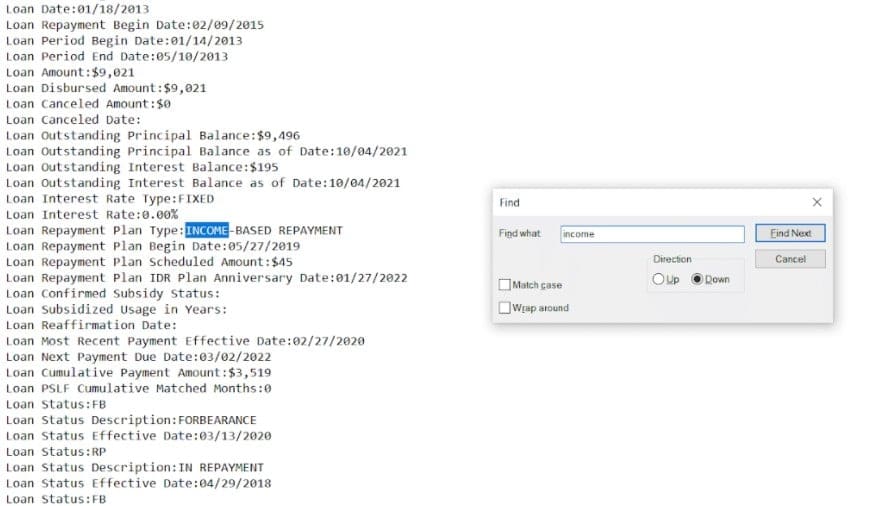
Navigating the world of Income-Driven Repayment (IDR) plans involves understanding the application process and implementing effective management strategies. Successfully applying and maintaining an IDR plan requires attention to detail and proactive engagement with your loan servicer. This section provides a clear roadmap for both applying and managing these crucial repayment options.
Applying for Income-Driven Repayment Plans
The application process for an IDR plan is straightforward, but requires careful preparation. The application is typically submitted online through the U.S. Department of Education’s Federal Student Aid website or directly through your loan servicer’s website. You’ll need to gather specific information to complete the application accurately.
First, you’ll need to provide your personal information, including your full name, Social Security number, date of birth, and contact details. Then, you’ll need to supply details about your federal student loans, such as the loan servicer and loan account numbers. The core of the application involves income and family size verification. You’ll be required to provide documentation to verify your income, such as your most recent federal income tax return. If you haven’t filed taxes recently, you can provide alternative documentation like pay stubs or a letter from your employer. You’ll also need to indicate your family size, which can affect your eligibility and monthly payment amount. You may need to provide supporting documentation for your family size, such as a marriage certificate or birth certificates for dependents. The application process will also ask you to select the IDR plan that you want. Be sure to review the various IDR plans, their eligibility criteria, and payment terms before selecting the one that best suits your financial situation. Finally, submit the completed application, carefully reviewing all information before submission to avoid any errors or delays. After submission, your loan servicer will review your application and notify you of your eligibility and the resulting monthly payment amount.
Managing Income-Driven Repayment Plans
Managing your IDR plan effectively requires ongoing attention and adherence to specific requirements. The most critical aspect of managing an IDR plan is annual recertification. This process ensures your eligibility for the plan remains valid and that your monthly payments are adjusted based on your current income and family size.
Recertification typically occurs annually, and your loan servicer will notify you when it’s time to recertify. You must recertify your income and family size to remain in the IDR plan. Failure to recertify on time could result in removal from the IDR plan and an increase in your monthly payments. The recertification process is similar to the initial application. You’ll need to provide updated income documentation, such as your most recent tax return or pay stubs. You’ll also need to confirm your current family size. It’s crucial to stay organized and keep track of the recertification deadlines. Your loan servicer will send reminders, but it’s your responsibility to ensure timely submission. If your income changes significantly during the year, you can update your income information with your loan servicer. This may result in a recalculation of your monthly payments. To update your income, you’ll need to provide documentation to support the change, such as updated pay stubs or a letter from your employer. Also, keep all records related to your IDR plan, including application confirmations, payment statements, and any correspondence with your loan servicer. These records can be essential if you encounter any issues or discrepancies. Proactively manage your loans and communicate with your loan servicer if you have any questions or concerns.
To avoid pitfalls, it’s essential to understand and steer clear of common mistakes:
- Missing Recertification Deadlines: This is one of the most common errors. Set reminders and respond promptly to your loan servicer’s notifications. Failure to recertify on time could lead to removal from the IDR plan.
- Providing Inaccurate Income Information: Ensure the information you provide is accurate and up-to-date. Inaccurate information could lead to incorrect payment calculations. Always use official documents to verify your income.
- Ignoring Loan Servicer Communications: Pay close attention to all communications from your loan servicer. These communications contain important information about your plan and any required actions.
- Failing to Update Income When Necessary: If your income changes, be sure to update your information with your loan servicer promptly. This will ensure your payments are adjusted appropriately.
- Not Understanding the Terms of the Plan: Take the time to fully understand the terms of your chosen IDR plan, including the repayment period, potential for loan forgiveness, and tax implications.
What are the potential benefits and drawbacks of Income-Driven Repayment plans, and what should borrowers consider?
Income-Driven Repayment (IDR) plans offer a lifeline to many federal student loan borrowers struggling with their payments. However, like any financial tool, they come with both significant advantages and potential downsides. Understanding these pros and cons is crucial for making an informed decision about whether an IDR plan is the right fit for your financial situation. Let’s delve into the benefits and drawbacks, providing you with the knowledge needed to navigate this complex landscape.
Advantages of Income-Driven Repayment Plans
The primary allure of IDR plans lies in their ability to make student loan repayment more manageable. These plans offer several key advantages that can significantly ease the financial burden on borrowers.
One of the most compelling benefits is significantly lower monthly payments. These payments are calculated based on your discretionary income, which is typically the difference between your adjusted gross income (AGI) and a percentage of the poverty guideline for your family size. This means that if your income is low, your payments will be significantly reduced, sometimes even to $0. For example, consider Sarah, a recent graduate with a modest income and a large student loan debt. By enrolling in an IDR plan, her monthly payments were reduced from $800 to just $150, freeing up much-needed cash flow for other essential expenses. This payment reduction provides immediate financial relief, preventing borrowers from falling behind on their loans and potentially avoiding default.
Another significant advantage is the potential for loan forgiveness. After a set number of years (typically 20 or 25, depending on the specific IDR plan), any remaining loan balance is forgiven. This can be a huge benefit for borrowers who are unlikely to pay off their loans in full, especially those with high debt burdens relative to their income. The amount forgiven can be substantial, offering a fresh start financially. For instance, imagine a borrower named John who has been struggling to pay off his loans for years. After 25 years in an IDR plan, John’s remaining balance of $50,000 is forgiven, eliminating a significant financial weight. However, it’s important to remember that forgiven debt under an IDR plan is often considered taxable income by the IRS, which can create its own set of financial challenges, as we’ll explore shortly. Furthermore, some IDR plans offer a pathway to Public Service Loan Forgiveness (PSLF), which can lead to loan forgiveness after only 10 years of qualifying employment in a public service job. This is an accelerated route to debt relief for those working in eligible fields.
IDR plans also provide flexibility and protection. If your financial situation changes—perhaps due to job loss, illness, or a significant decrease in income—your monthly payments can be adjusted to reflect your new circumstances. This flexibility is a critical safety net, helping borrowers avoid default and the associated negative consequences, such as damage to their credit score and wage garnishment. This adaptability is especially valuable in today’s uncertain economic climate. For example, if a borrower loses their job, they can request a recalculation of their IDR payment based on their new, lower income (or $0 if they are unemployed).
Disadvantages of Income-Driven Repayment Plans
While IDR plans offer considerable benefits, they also have potential drawbacks that borrowers should carefully consider before enrolling. These disadvantages can significantly impact the total cost of the loan and the borrower’s financial future.
One of the most significant drawbacks is the potential for increased loan costs over time. Because IDR plans often result in lower monthly payments, borrowers may end up paying more interest over the life of the loan. This is because a smaller payment means a longer repayment period, and interest continues to accrue on the outstanding balance. For instance, consider a borrower with a $50,000 loan at a 6% interest rate. Under a standard 10-year repayment plan, they might pay a total of $66,461. However, under an IDR plan with a 25-year repayment term, they could pay considerably more, potentially exceeding $80,000, depending on their income and payment fluctuations. This increased cost can erode the initial benefits of lower monthly payments, especially if the borrower does not ultimately qualify for loan forgiveness.
Another crucial consideration is the tax implications of forgiven debt. As mentioned earlier, any remaining loan balance forgiven under an IDR plan is typically considered taxable income by the IRS. This means that the borrower may owe income tax on the forgiven amount in the year the forgiveness occurs. This tax liability can be substantial, potentially leading to a large tax bill that the borrower may not be prepared to pay. For example, if a borrower has $30,000 in debt forgiven, they could face a significant tax liability, depending on their tax bracket. It’s crucial for borrowers to plan for this potential tax burden by saving a portion of their income each year or consulting with a tax professional. However, this is not applicable for those pursuing PSLF, where the forgiveness is not taxable.
Furthermore, the eligibility requirements and recertification processes can be complex and time-consuming. Borrowers must provide annual documentation of their income and family size to remain in the IDR plan. Failing to recertify on time can lead to the borrower being removed from the IDR plan and placed on a standard repayment plan, which could significantly increase their monthly payments. This recertification process requires borrowers to stay organized and attentive to deadlines.
Borrowers should also be aware that interest capitalization can occur under some IDR plans. This means that if the monthly payment doesn’t cover the accrued interest, the unpaid interest is added to the principal balance. This can lead to the loan balance growing over time, even if the borrower is making payments.
Factors to Consider When Choosing an Income-Driven Repayment Plan
Deciding whether an IDR plan is right for you requires careful consideration of various factors. Here’s a list of key elements to evaluate:
- Your Current Income and Debt-to-Income Ratio: Assess your current income and compare it to your total student loan debt. If your debt-to-income ratio is high, an IDR plan may provide immediate relief.
- Your Projected Future Income: Consider your career path and potential for future income growth. If you anticipate significant income increases, the benefits of lower payments may be offset by the increased interest paid over time.
- Your Family Size and Household Income: The size of your family impacts your payment calculation. A larger family might lead to lower payments, as the poverty guidelines are higher.
- Your Long-Term Financial Goals: Consider how an IDR plan aligns with your broader financial goals, such as buying a home, saving for retirement, or paying off other debts. The long-term impact on your financial future is important.
- The Potential for Loan Forgiveness: Evaluate whether you are likely to qualify for loan forgiveness under an IDR plan. If you are, factor in the potential tax implications of the forgiven debt.
- Your Tolerance for Risk: Consider your comfort level with the uncertainty of interest accrual and potential changes to the plan’s terms. The rules can change, so consider the long-term impact.
- The Specific IDR Plan Options: Each IDR plan has its own unique features and eligibility requirements. Research the different plans (IBR, PAYE, REPAYE, and SAVE) to determine which best suits your circumstances.
- Your Employment Status and Career Path: If you work in a public service job, consider whether PSLF is a better option, as it offers faster forgiveness and is not taxable.
- The Recertification Process: Evaluate your ability to manage the annual recertification requirements, including gathering documentation and meeting deadlines.
How does the Public Service Loan Forgiveness (PSLF) program intersect with Income-Driven Repayment plans for eligible borrowers?

The Public Service Loan Forgiveness (PSLF) program offers a powerful incentive for those dedicated to public service. It works in tandem with Income-Driven Repayment (IDR) plans, creating a pathway to potentially have their federal student loan debt forgiven. This intersection is crucial because IDR plans are often a prerequisite for PSLF eligibility. Understanding this relationship is vital for borrowers seeking debt relief while working in eligible public service roles.
Public Service Loan Forgiveness Program Requirements
The Public Service Loan Forgiveness (PSLF) program, established by the U.S. government, is designed to encourage individuals to pursue careers in public service. The program forgives the remaining balance on Direct Loans after a borrower has made 120 qualifying monthly payments under a qualifying repayment plan while working full-time for a qualifying employer. This forgiveness is tax-free, making it a significant benefit. However, navigating the requirements can be complex, and careful attention to detail is crucial for success. The program’s impact can be substantial, potentially erasing tens of thousands of dollars in debt for eligible borrowers.
Specific Requirements for PSLF Qualification
To qualify for PSLF, borrowers must meet specific requirements related to employment, loan type, and payment history. It’s a structured process, and missing even one detail can disqualify a borrower. Let’s break down the key elements:
- Eligible Employment: The borrower must be employed full-time (generally 30 hours per week or more) by a qualifying employer. Qualifying employers include government organizations at any level (federal, state, local, or tribal) and not-for-profit organizations that are tax-exempt under Section 501(c)(3) of the Internal Revenue Code. Some other not-for-profit organizations also qualify. Private sector employers, even if they provide public services, generally do not qualify. For example, a teacher at a public school would likely qualify, while a teacher at a private school generally would not. Similarly, a social worker employed by a state agency would qualify, while a social worker employed by a for-profit company would likely not.
- Qualifying Loans: Only Direct Loans are eligible for PSLF. This includes Direct Subsidized Loans, Direct Unsubsidized Loans, Direct PLUS Loans, and Direct Consolidation Loans. Loans from the Federal Family Education Loan (FFEL) Program or Perkins Loans do not qualify unless they are consolidated into a Direct Consolidation Loan. It is essential to confirm the loan type early in the process. Borrowers with FFEL loans must consolidate into a Direct Loan to be eligible, which resets the payment count.
- Qualifying Payment History: The borrower must make 120 qualifying monthly payments. These payments must be made under a qualifying repayment plan, such as an Income-Driven Repayment (IDR) plan. Payments made under other repayment plans, such as the Standard Repayment Plan or Graduated Repayment Plan, generally do not qualify, unless the borrower is on a 10-year Standard Repayment Plan. Payments must be made on time, in the full amount due, and after October 1, 2007. Missing or late payments can set back the process significantly.
- Full-Time Employment Throughout the Process: The borrower must be employed full-time by a qualifying employer at the time of each qualifying payment and at the time of forgiveness. This requirement ensures that the borrower remains committed to public service throughout the entire process. Changing employers can impact eligibility if the new employer is not qualifying.
- Annual Certification: Borrowers should submit an Employment Certification Form (ECF) annually or whenever they change employers. This form is used to verify employment and track qualifying payments. It is crucial to stay on top of this requirement, as it provides a clear record of progress and helps prevent any misunderstandings later.
An example of how this works is a teacher working at a public school who has Direct Loans. They enroll in an IDR plan, make their monthly payments on time, and submit the ECF annually. After 10 years (120 payments) of qualifying employment and payments, their remaining loan balance is forgiven. Conversely, a borrower with FFEL loans, who does not consolidate, will not qualify, even if they work for a qualifying employer and make on-time payments. Or, a borrower who has Direct Loans, works for a qualifying employer, but does not enroll in an IDR plan, will also not qualify. Another example would be someone working in public service, making payments under a non-qualifying repayment plan, like the Graduated Repayment Plan. Even with the qualifying employment, these payments would not count towards the 120 needed for PSLF. Therefore, a careful understanding and adherence to these requirements are critical for successful participation in the PSLF program.
Image Description
The image depicts a diverse group of individuals, each engaged in different public service roles, gathered around a table. A doctor is examining a patient, a teacher is interacting with a student, a firefighter is wearing their gear, and a social worker is assisting a client. The table is made of a wooden material, with a laptop, documents, and coffee mugs scattered around it. Overlaid on the image are subtle visual cues. The background showcases a collage of diverse communities, representing the impact of public service. Above the group, a transparent banner reads “PSLF & IDR: Your Path to Debt Relief.” Arrows point from each individual to the banner, visually linking their work to the benefits of PSLF and IDR. The color palette is warm and inviting, using soft lighting and muted tones to create a sense of trust and support. This emphasizes the financial relief and peace of mind provided by these programs, while also celebrating the dedication of public servants.
Epilogue

In conclusion, Income-Driven Repayment plans offer a vital resource for federal student loan borrowers, providing a path to more manageable payments and, in some cases, eventual loan forgiveness. By understanding the intricacies of these plans—from eligibility and application to management and potential pitfalls—borrowers can make informed decisions. We’ve explored the interplay between IDR and the Public Service Loan Forgiveness (PSLF) program, revealing how these options can work together to benefit those dedicated to public service. Consider all the variables and choose the plan that aligns with your financial goals and circumstances. Making the right choice empowers you to take control of your student loan debt and build a more secure financial future.