What is term life insurance explained? Well, imagine a safety net, woven with financial security, ready to catch your loved ones if the unexpected happens. Term life insurance is more than just a policy; it’s a promise, a commitment to protect those who depend on you. It’s designed to provide a lump-sum payment, a death benefit, to your beneficiaries, helping them cover essential expenses like mortgage payments, education costs, or daily living needs. Think of it as a financial lifeline, ensuring your family’s future remains secure, even when you’re no longer there to provide for them.
This comprehensive guide will unravel the mechanics of term life insurance, from understanding how premiums work to the crucial factors determining eligibility. We’ll delve into its benefits, compare it with other life insurance options, and explore the essential considerations when choosing the right term length. You’ll learn how to navigate the process of comparing quotes, understand policy terms, and avoid common misconceptions. Moreover, we’ll cover tax implications, adapting coverage to evolving needs, and the value of riders to enhance your policy. Get ready to transform from a casual observer to an informed decision-maker, empowering you to secure your family’s financial future with confidence.
How does term life insurance function to offer financial security for beneficiaries
Term life insurance is a straightforward financial tool designed to provide a lump-sum payment to your chosen beneficiaries if you pass away during the policy’s specified term. It offers a crucial safety net, especially for those with dependents, covering expenses like mortgage payments, education costs, and everyday living. Understanding the mechanics of term life insurance is the first step toward securing your loved ones’ financial future.
Basic Mechanics of Term Life Insurance
Term life insurance works on a simple premise: you pay premiums for a set period, and if you die within that period, your beneficiaries receive a death benefit. The process involves several key components that work in tandem.
First, you, as the policyholder, pay regular premium payments to the insurance company. These premiums are typically paid monthly, quarterly, or annually. The amount you pay is determined by factors like your age, health, the amount of coverage you choose, and the length of the term. Generally, the longer the term and the higher the death benefit, the higher the premium. It is important to remember that these premiums are the cost of maintaining the policy.
Second, the death benefit is the amount of money the insurance company will pay to your beneficiaries if you die while the policy is active. This benefit is a fixed amount chosen when you purchase the policy. This sum is intended to cover the financial needs of your beneficiaries after your passing.
Third, the term length defines the duration for which the policy is in effect. Common term lengths include 10, 15, 20, 25, or 30 years. If you outlive the term, the policy expires, and there is no payout. However, you might have the option to renew the policy, usually at a higher premium, or convert it to a permanent life insurance policy.
For example, consider a 35-year-old individual who purchases a 20-year term life insurance policy with a death benefit of $500,000. They pay an annual premium of $500. If the individual passes away 10 years into the policy, their beneficiaries would receive $500,000. However, if the individual lives beyond the 20-year term, no death benefit is paid. The insurance company would have collected a total of $10,000 in premiums over the 20 years.
Detailed Example of a Term Life Insurance Payout, What is term life insurance explained
Let’s illustrate how a term life insurance policy works with a concrete example. Suppose a 40-year-old, in good health, purchases a 25-year term life insurance policy with a death benefit of $750,000. They pay an annual premium of $750. After 15 years of consistently paying premiums, the policyholder unexpectedly passes away.
In this scenario, the insurance company would pay the $750,000 death benefit to the designated beneficiaries. The beneficiaries would then be able to use the money to cover various expenses, such as:
- Paying off the mortgage on the family home.
- Covering the cost of the children’s education.
- Replacing the deceased’s income for a period.
- Paying for funeral expenses and outstanding debts.
This lump-sum payment provides crucial financial stability during a difficult time.
Term Lengths and Premium Impact
The term length of a life insurance policy directly influences the premium you pay. Longer terms generally result in higher premiums, but they also provide coverage for a longer period. It’s crucial to select a term length that aligns with your financial obligations and future needs. The table below provides an example of how term lengths can impact premiums.
| Term Length | Death Benefit | Annual Premium (Estimated) | Considerations |
|---|---|---|---|
| 10 Years | $500,000 | $400 | Suitable for short-term needs, such as covering a mortgage or debts. |
| 20 Years | $500,000 | $600 | Provides coverage through the children’s education years or until retirement. |
| 25 Years | $500,000 | $750 | Often covers the period until children are financially independent. |
| 30 Years | $500,000 | $900 | Offers the longest coverage period, suitable for those with long-term financial obligations. |
This table illustrates the relationship between term length and premium cost. The estimated premiums are for illustrative purposes and will vary based on individual circumstances, such as age, health, and the insurance provider. The longer the term, the higher the premium, reflecting the increased risk for the insurance company.
What are the essential eligibility requirements for securing term life insurance coverage
Securing term life insurance is a significant step in financial planning, but it’s not simply a matter of signing a contract. Insurance companies carefully evaluate potential policyholders to assess risk. This ensures they can fulfill their obligations to beneficiaries. Understanding the eligibility criteria is crucial for a smooth application process and securing the coverage that meets your needs.
Factors Considered in Assessing Eligibility
Insurance companies utilize a multi-faceted approach to evaluate applicants. This comprehensive evaluation ensures they understand the potential risk associated with each individual.
Age is a primary factor. Generally, younger applicants qualify for lower premiums due to their longer life expectancy. Older applicants may still qualify, but their premiums will be higher. For example, a 30-year-old may pay significantly less for a 20-year term policy than a 50-year-old for the same coverage amount.
Health is a critical determinant. The applicant’s current health status and medical history play a significant role. This involves assessing any existing medical conditions and family history of serious illnesses. Companies also consider lifestyle choices such as smoking, alcohol consumption, and drug use, as these factors impact overall health and life expectancy.
Lifestyle choices are also under scrutiny. Risky activities, such as certain hobbies or occupations, can increase premiums. This is because they may pose a higher risk of accidents or health complications. For instance, a person who works in a high-risk profession might face higher premiums than someone with a desk job.
The Medical Examination Process
The medical examination is a standard part of the application process for many term life insurance policies, particularly for larger coverage amounts. This examination helps the insurer accurately assess the applicant’s current health.
The examination typically involves a paramedical professional who conducts a brief physical exam. This includes taking vital signs like blood pressure and pulse, collecting blood and urine samples for testing, and recording height and weight. The results of these tests, along with the applicant’s medical history, provide a comprehensive overview of their health.
Preparation is key to a successful medical exam. Applicants should be honest and upfront about their health history, including any medications they are taking. It’s also advisable to avoid smoking or excessive alcohol consumption in the days leading up to the exam. Furthermore, applicants should be prepared to provide a detailed medical history and list of any medications they are taking.
Implications of Pre-existing Health Conditions
Pre-existing health conditions can influence both the approval of a term life insurance application and the premium rates offered. Understanding these implications is vital.
- Approval: The insurance company will assess the severity and management of the pre-existing condition. Some conditions may lead to policy denial, especially if they are life-threatening or poorly controlled. Others may result in a policy with standard terms.
- Premium Rates: The presence of pre-existing conditions often results in higher premiums. This reflects the increased risk associated with the applicant. The extent of the premium increase depends on the severity of the condition and the insurer’s risk assessment. For example, an individual with well-controlled diabetes might pay a higher premium than a healthy individual, but potentially less than someone with uncontrolled diabetes.
- Policy Riders: In some cases, insurers may offer policy riders to address specific health concerns. These riders can provide additional coverage or benefits related to the pre-existing condition.
- Waiting Periods: Some policies may include a waiting period before coverage for a pre-existing condition becomes effective. This is to protect the insurer from immediate claims related to the condition.
What are the primary benefits associated with choosing term life insurance policies

Term life insurance offers a straightforward and budget-friendly approach to securing your loved ones’ financial future. It’s designed to provide a death benefit if you pass away during the policy’s term, offering peace of mind knowing your family will be protected. Understanding the advantages of term life insurance is crucial for making an informed decision about your financial planning.
Key Advantages of Term Life Insurance
Term life insurance stands out due to its affordability, simplicity, and flexibility, making it an attractive option for many individuals and families.
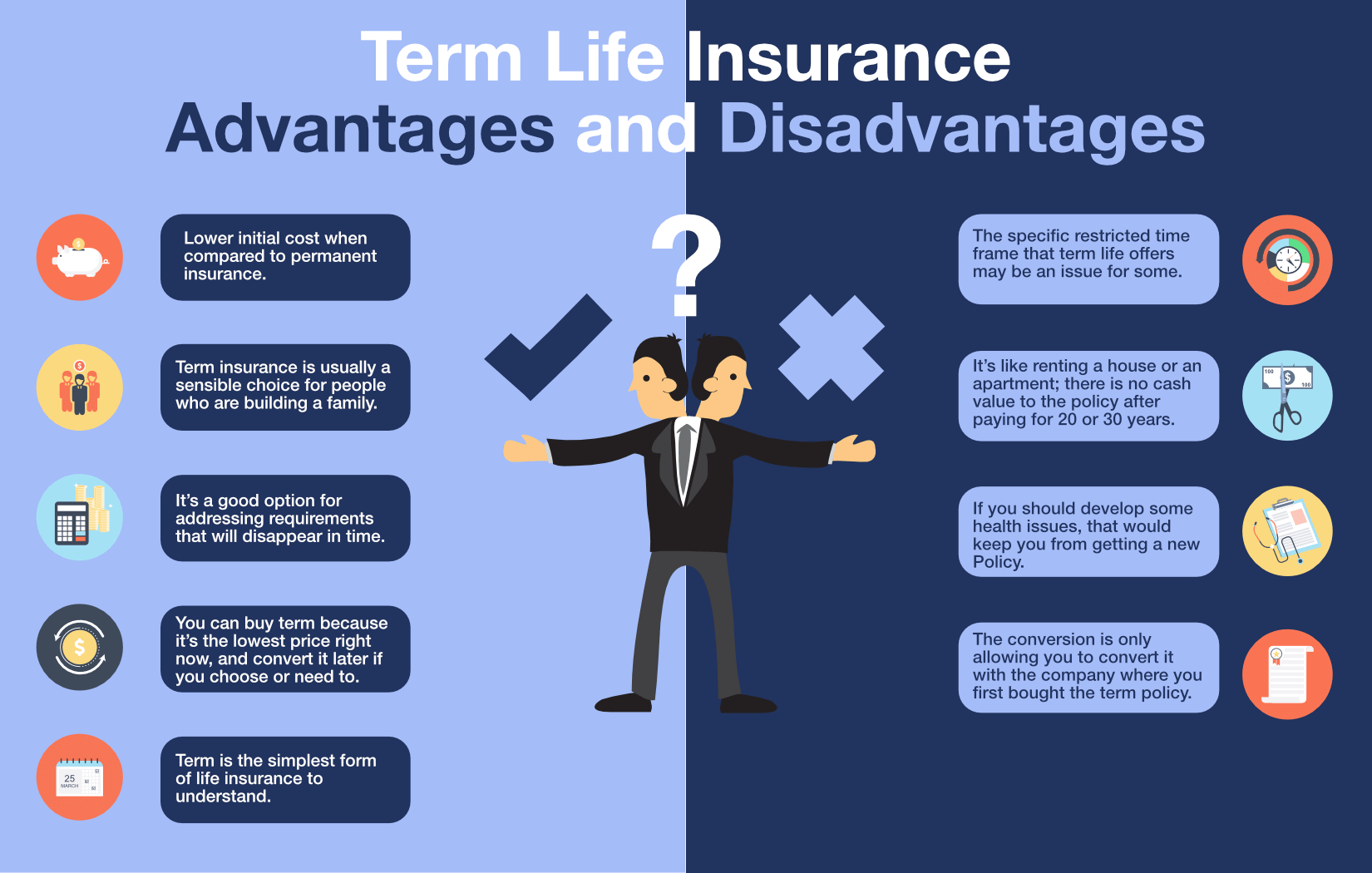
Affordability is a major draw. Premiums for term life insurance are generally much lower than those for permanent life insurance policies, such as whole life or universal life. This makes it accessible to a wider range of people, allowing them to secure a substantial death benefit without breaking the bank. For example, a healthy 35-year-old might be able to purchase a $500,000 term life policy for less than $30 per month.
Simplicity is another key benefit. Term life insurance is easy to understand. The concept is straightforward: you pay premiums for a set period, and if you die during that term, your beneficiaries receive a death benefit. There are no complex investment components or cash value accumulation features to navigate, simplifying the decision-making process. This clear structure makes it easier to assess your needs and choose the right coverage amount and term length.
Flexibility is a crucial aspect. Term life insurance policies come in various term lengths, typically ranging from 10 to 30 years. This allows you to tailor the policy to your specific needs and financial goals. For instance, if you have young children, you might choose a longer term to cover their education and upbringing. If you’re primarily concerned about covering a mortgage, you could select a term length that aligns with the mortgage term.
Real-life scenarios highlight the importance of term life insurance. Consider the case of a young couple, Sarah and John, who have a mortgage and two small children. If John, the primary breadwinner, were to pass away unexpectedly, the death benefit from his term life insurance policy would provide Sarah with the financial resources to pay off the mortgage, cover living expenses, and ensure the children’s continued care and education. This support can be invaluable during a difficult time. Another example is a single parent, Maria, who uses her term life insurance to ensure her children can afford to complete their education. Without it, the children would have a difficult time covering living expenses and tuition fees.
Here are five key benefits of term life insurance:
- Affordable Premiums: Term life insurance offers lower premiums compared to permanent life insurance policies, making it more accessible.
- Straightforward Coverage: The concept is simple: pay premiums for a set term, and your beneficiaries receive a death benefit if you die during that term.
- Customizable Terms: You can select a term length that aligns with your specific needs and financial goals, from 10 to 30 years or more.
- Financial Protection: It provides a lump-sum death benefit to your beneficiaries, helping them cover expenses such as mortgage payments, childcare, and living costs.
- Peace of Mind: Knowing that your loved ones will be financially secure in the event of your death offers significant peace of mind.
How does term life insurance compare with permanent life insurance options

Deciding on life insurance can feel overwhelming, especially when you consider the variety of options available. Understanding the key differences between term life insurance and permanent life insurance policies like whole life and universal life is crucial. This information helps you choose the coverage that best fits your financial situation and long-term goals.
Comparing Term, Whole, and Universal Life Insurance
Term life insurance provides coverage for a specific period, typically 10, 20, or 30 years. If the insured dies within this term, the beneficiaries receive a death benefit. Whole life insurance, on the other hand, offers lifelong coverage, provided premiums are paid. Universal life insurance is also permanent but provides more flexibility, allowing adjustments to the death benefit and premium payments within certain limits.
The primary difference lies in cost and investment features. Term life is generally the most affordable because it only covers a specific period. Whole life is more expensive due to its lifelong coverage and the inclusion of a cash value component that grows over time. Universal life premiums also include a cash value component, which can earn interest based on market performance or a fixed rate, providing more flexibility than whole life. However, this flexibility can also mean more complexity in managing the policy.
For instance, consider a 35-year-old individual. A 20-year term life policy might cost them around $30-$50 per month for $500,000 of coverage. A whole life policy with the same death benefit could cost several hundred dollars monthly. The cash value growth in a whole life policy is often tied to a guaranteed rate, while universal life’s growth can fluctuate.
Here’s a breakdown in a table:
| Feature | Term Life Insurance | Whole Life Insurance | Universal Life Insurance |
|---|---|---|---|
| Coverage Duration | Specific term (e.g., 10, 20, 30 years) | Lifetime | Lifetime |
| Cost | Lowest premiums | Higher premiums | Premiums can vary |
| Cash Value | None | Yes, guaranteed growth | Yes, growth can fluctuate |
| Flexibility | Limited | Limited | More flexible with premiums and death benefit |
Term life insurance is often the most suitable choice for individuals with budget constraints or those needing coverage for a specific financial obligation, such as a mortgage or children’s education. Permanent life insurance, like whole or universal life, might be more appropriate for individuals seeking lifelong coverage, estate planning purposes, or those who want a savings component alongside their insurance.
What are the crucial considerations when determining the appropriate term length
Choosing the right term length for your life insurance policy is a crucial decision. It directly impacts the level of protection you have and the affordability of your coverage. Selecting the incorrect term can leave you underinsured, or paying for coverage you no longer need. This section delves into the key factors to consider when deciding on the optimal term length for your term life insurance policy.
Financial Obligations and Needs
Determining the right term length involves carefully assessing your current and future financial responsibilities. These obligations should be the primary driver of your decision.
- Outstanding Debts: Consider your mortgage, student loans, car loans, and any other significant debts. The term length should ideally cover the duration of these debts, ensuring your beneficiaries can pay them off without financial hardship.
- Dependent Needs: Evaluate the financial needs of your dependents. This includes expenses like childcare, education, and daily living costs. The term should align with the years your dependents will rely on your financial support. For example, if you have young children, you might opt for a 20- or 30-year term to provide coverage until they are financially independent.
- Income Replacement: Calculate the amount of income your family would need to maintain their current lifestyle if you were no longer around. This is a critical factor, and the term should be long enough to provide that income replacement.
- Future Goals: Think about future financial goals like your children’s college education or your spouse’s retirement. Factor these into your coverage needs and term length.
Calculating Coverage Amount
Here’s a simplified step-by-step procedure to calculate the appropriate coverage amount, incorporating financial needs and future projections:
- Assess Current Debts: List all outstanding debts (mortgage, loans, credit cards).
- Estimate Annual Expenses: Calculate your family’s annual living expenses, including housing, food, transportation, healthcare, and other costs.
- Project Future Expenses: Estimate future expenses, such as college tuition, considering inflation.
- Determine Income Replacement Need: Calculate the annual income your family needs to maintain their standard of living. This can be based on your current salary and future income projections.
- Factor in Other Assets: Consider other assets that could be used to support your family, such as savings, investments, and other insurance policies.
- Calculate Coverage Amount: Sum your outstanding debts, a multiple of annual expenses (e.g., 5-10 times), and projected future expenses. Subtract any assets that can be used to offset these costs. This final number is the approximate coverage amount you need.
Coverage Amount = (Outstanding Debts + (Annual Expenses x Factor) + Future Expenses) – Assets
Impact of Term Length on Premium Costs and Coverage
The term length significantly influences premium costs and the total amount of coverage provided. Generally, longer term lengths result in higher premiums due to the increased risk for the insurance company. Conversely, shorter term lengths have lower premiums but provide coverage for a shorter period.
Example:
Imagine a 35-year-old male seeking $500,000 of term life insurance.
- A 10-year term might cost $30 per month.
- A 20-year term might cost $45 per month.
- A 30-year term might cost $70 per month.
This demonstrates how premiums increase with term length. The longer the term, the higher the cost, but the longer your beneficiaries are protected. Choosing the right term length is a balance between affordability and the level of financial protection required.
How can individuals effectively shop for and compare term life insurance quotes
Navigating the world of term life insurance can seem daunting, but finding the right policy at the best price doesn’t have to be. The key is knowing how to shop strategically and compare quotes effectively. This involves utilizing various resources, understanding policy specifics, and recognizing reputable insurance providers. Let’s break down the process to make it easier for you.
To secure the most advantageous term life insurance policy, it’s essential to understand the tools and strategies at your disposal. This includes leveraging online resources, consulting with professionals, and carefully evaluating policy details. By taking these steps, you can confidently compare quotes and make an informed decision.
Strategies and Resources for Comparing Term Life Insurance Quotes
The most effective way to shop for term life insurance involves a multi-pronged approach. You should use a combination of online tools, professional advice, and direct contact with insurance companies.
* Online Comparison Websites: These websites, like Policygenius or NerdWallet, aggregate quotes from multiple insurers. You enter your information once, and they provide a range of quotes, making it easy to compare premiums and policy features. Remember, these sites may not include every insurer, so it’s wise to supplement with other methods.
* Independent Insurance Brokers: Brokers work with multiple insurance companies and can provide unbiased advice. They can shop around on your behalf and present you with a selection of quotes, saving you time and effort. They understand the nuances of different policies and can help you find the best fit for your needs.
* Direct Contact with Insurance Companies: Some insurers, like Northwestern Mutual or State Farm, offer direct quotes through their websites or agents. This allows you to explore specific policies and potentially find competitive rates. Contacting insurers directly can also give you a more in-depth understanding of their offerings.
* Financial Advisors: Financial advisors can assess your overall financial situation and insurance needs. They can help you determine the appropriate coverage amount and term length and may have relationships with insurance providers. Their expertise can be invaluable in making a well-informed decision.
* Use of Quote Calculators: Many websites offer quote calculators that provide an estimated premium based on your age, health, and coverage amount. These calculators can give you a preliminary idea of what to expect, but remember that actual quotes may vary based on the underwriter’s assessment.
Understanding Policy Terms, Conditions, and Exclusions
It’s crucial to thoroughly review the policy documents before making a decision. Pay close attention to the fine print to avoid surprises later.
* Coverage Amount and Term Length: Ensure the coverage amount meets your financial needs, considering debts, income replacement, and future expenses. The term length should align with your long-term financial goals.
* Premiums and Payment Schedule: Understand the premium payment schedule and whether the premiums are level or increase over time. Note any late payment penalties or grace periods.
* Beneficiary Designation: Clearly designate your beneficiaries and understand how to update them if necessary. Review the policy’s rules for beneficiary changes.
* Policy Riders: Explore any available riders, such as a waiver of premium rider (which waives premiums if you become disabled) or a child term rider (which provides coverage for your children).
* Exclusions: Be aware of any exclusions, which are situations where the policy won’t pay out. Common exclusions include death due to suicide within the first two years, misrepresentation on the application, and death resulting from certain hazardous activities.
* Review the Policy for Contestability Period: The contestability period, typically two years, is when the insurance company can investigate the information you provided in your application.
Identifying Reputable Insurance Companies and Avoiding Potential Scams
Selecting a reputable insurance company is essential for ensuring your beneficiaries receive the promised benefits.
* Check Financial Strength Ratings: Look for companies with high ratings from independent rating agencies like A.M. Best, Standard & Poor’s, Moody’s, and Fitch. These ratings assess the insurer’s ability to meet its financial obligations.
* Verify Licensing and Credentials: Confirm that the insurance company and the agent or broker are licensed to sell insurance in your state. You can usually find this information on your state’s insurance department website.
* Research the Company’s Reputation: Read online reviews and check with the Better Business Bureau (BBB) to see if there are any complaints against the company. Look for companies with a history of prompt and fair claims payments.
* Avoid High-Pressure Sales Tactics: Be wary of agents who pressure you to buy a policy immediately or make unrealistic promises. Take your time to review the policy and compare quotes from multiple providers.
* Understand the Agent’s Compensation: Ask how the agent is compensated. Is the agent paid a commission, or are they a fee-based advisor? This transparency can help you understand any potential conflicts of interest.
* Beware of Unsolicited Offers: Be cautious of unsolicited offers, especially those that seem too good to be true. Verify the legitimacy of the offer before providing any personal information.
What are the common misconceptions people have about term life insurance

Term life insurance, despite its straightforward nature, is often misunderstood. Many people harbor misconceptions that can significantly impact their financial planning decisions. These misunderstandings can lead individuals to either avoid term life insurance altogether or make choices that don’t align with their actual needs. Recognizing and dispelling these myths is crucial for making informed decisions about securing your financial future.
Lack of Investment Value
One of the most pervasive misconceptions is that term life insurance lacks investment value. Unlike permanent life insurance policies, term life insurance doesn’t accumulate cash value. Some view this as a disadvantage, believing they are “wasting” money on premiums that won’t provide a return if they outlive the policy term. However, the primary purpose of term life insurance is to provide financial protection in the event of death, not to serve as an investment vehicle. Its affordability allows individuals to secure substantial coverage at a lower cost than permanent policies, enabling them to protect their loved ones without straining their budget.
Simplicity as a Drawback
Another common misconception is that the simplicity of term life insurance is somehow a negative aspect. Some people believe that because it’s “just” insurance, it must be less valuable or less sophisticated than other financial products. In reality, the simplicity of term life insurance is one of its greatest strengths. It’s easy to understand, easy to compare, and easy to manage. This straightforwardness allows individuals to focus on the essential goal: providing financial security for their beneficiaries. The focus is on protection, not complex financial instruments, which is a significant advantage for many people.
Debunking Common Myths
To address these misconceptions and provide clarity, here’s a list debunking the most common myths about term life insurance:
- Myth: Term life insurance is a waste of money if you don’t die during the term. Fact: Term life insurance provides essential financial protection for your loved ones during the policy’s term. While you may not receive a payout if you outlive the policy, you’ve gained peace of mind knowing your family is protected. Think of it like auto insurance; you don’t get your premiums back if you don’t have an accident, but the protection is invaluable.
- Myth: Term life insurance is too expensive. Fact: Term life insurance is generally the most affordable type of life insurance, especially for younger individuals. The cost is often significantly less than permanent life insurance, allowing you to secure a larger death benefit for the same premium. For example, a healthy 30-year-old might be able to get a $500,000 policy for under $30 a month.
- Myth: It’s difficult to get term life insurance. Fact: The application process for term life insurance is typically straightforward. You’ll need to provide some basic personal information and answer health-related questions. While a medical exam may be required, the process is generally quick and efficient. Many companies now offer online applications, making the process even more convenient.
- Myth: Term life insurance is only for young people. Fact: While it’s generally more affordable for younger people, term life insurance can be a valuable tool for individuals of all ages. Older adults may use it to cover debts, final expenses, or supplement other financial plans. The key is to assess your needs and choose a term length that aligns with your financial goals.
- Myth: All term life insurance policies are the same. Fact: There are variations in term life insurance policies, including the term length (e.g., 10, 20, or 30 years), the death benefit amount, and the features offered by different insurers. It’s essential to compare policies from multiple companies to find the best coverage and value for your specific needs.
What are the tax implications associated with term life insurance policies
Understanding the tax implications of term life insurance is crucial for policyholders and beneficiaries alike. These implications affect how death benefits are received and how premiums are treated, potentially impacting financial planning and estate management. This information helps ensure that you can make informed decisions about your coverage.
Tax Treatment of Death Benefits
Generally, the death benefit from a term life insurance policy is paid to the beneficiary income-tax-free. This is one of the most significant advantages of term life insurance. This means the beneficiary receives the full face value of the policy without having to pay income tax on it. However, there are some exceptions to this rule.
- Tax-Free Status: In most cases, the death benefit is not considered taxable income by the IRS.
- Exceptions: If the policy was transferred for valuable consideration (e.g., sold to another party), the death benefit might be partially taxable. Also, if the policy is owned by a business and the business is the beneficiary, there may be different tax implications.
- Estate Tax Considerations: While the death benefit is usually not subject to income tax, it may be included in the deceased’s taxable estate, potentially subject to estate taxes if the estate’s value exceeds the federal estate tax exemption. This is particularly relevant for large policies.
Tax Treatment of Premiums
In most situations, the premiums paid for term life insurance are not tax-deductible. This is different from some other types of insurance, such as certain types of health insurance, where premiums may be deductible.
- Non-Deductible Premiums: Generally, premiums paid for personal term life insurance are considered a personal expense and are not deductible from federal income taxes.
- Business-Owned Policies: There are exceptions. For example, if a business owns a term life insurance policy on an employee, the premiums may be deductible, but the death benefit would then be taxable to the business.
- Employer-Sponsored Plans: In some cases, employer-sponsored group term life insurance may have some tax implications, particularly if the coverage exceeds a certain threshold. The cost of coverage above the threshold may be considered taxable income to the employee.
Examples of Tax Implications for Beneficiaries
Let’s consider a few scenarios to illustrate how these tax rules work.
- Scenario 1: Standard Death Benefit: Sarah purchased a $500,000 term life insurance policy. Upon her death, her beneficiary, her husband, receives the full $500,000. He does not have to pay any federal income tax on this amount. This helps him to cover the expenses, without tax burden.
- Scenario 2: Estate Tax Implications: John had a large estate, including a $2 million term life insurance policy. While the $2 million is not subject to income tax, it is included in his estate’s value. If the total estate value exceeds the estate tax exemption threshold (which varies annually), his estate may owe estate taxes.
- Scenario 3: Business-Owned Policy: A company purchases a term life insurance policy on its CEO. The company pays the premiums, which may be deductible. When the CEO dies, the company receives the death benefit. In this case, the death benefit is generally taxable income to the company.
Potential Tax Benefits and Considerations
While term life insurance offers significant tax advantages, it’s essential to consider the following:
- Tax-Free Death Benefit: The primary benefit is the tax-free death benefit, providing financial security to beneficiaries without income tax implications.
- Estate Tax Planning: Term life insurance can be used as part of an estate planning strategy to cover estate taxes, ensuring beneficiaries receive the intended inheritance.
- Irrevocable Life Insurance Trust (ILIT): Establishing an ILIT can remove the life insurance proceeds from the taxable estate, potentially reducing estate taxes.
- Consult with a Tax Advisor: Due to the complexity of tax laws, it’s essential to consult with a qualified tax advisor or financial planner to understand the specific tax implications based on your individual circumstances. They can provide personalized advice and help you optimize your financial planning.
How can individuals adapt term life insurance to suit their evolving financial needs

Life is a journey of constant change, and your financial needs are no exception. As you navigate different stages, from starting a family to paying off a mortgage, your term life insurance coverage should evolve with you. Fortunately, term life insurance offers flexibility, allowing you to adjust your policy to better protect your loved ones as your circumstances change.
Increasing Coverage Amounts
As your financial obligations grow, so might your need for a larger death benefit. Imagine you recently had a child. This is a common time to reassess your coverage. The additional expenses associated with raising a child, such as childcare, education, and healthcare, necessitate a larger policy to ensure their financial security if something were to happen to you. Similarly, if you take on a larger mortgage, you might need to increase your coverage to cover the outstanding debt.
Decreasing Coverage Amounts
Conversely, there may be times when you need less coverage. For example, once your children are grown and financially independent, or after you’ve paid off your mortgage, your financial responsibilities might decrease. In such cases, you might consider lowering your coverage amount to reduce your premium payments.
Here’s a breakdown of how you can modify your term life insurance policy:
- Purchase a new policy: This is the most straightforward way to increase coverage. You’ll go through the application process again, including medical underwriting. This allows you to obtain a higher death benefit if your needs have increased significantly.
- Add a rider: Riders are add-ons to your existing policy. Some riders, like the “guaranteed insurability” rider, allow you to purchase more coverage at specific intervals or life events without needing to go through medical underwriting again.
- Convert to permanent life insurance: If your policy allows, you can convert your term life insurance to a permanent policy, like whole life or universal life. While this typically increases your premiums, it provides lifelong coverage and can build cash value.
- Review your needs annually: Make it a habit to review your life insurance needs every year. Consider changes in your income, debts, and dependents. This helps you stay proactive in adjusting your coverage to meet your current and future needs.
- Cancel your policy: If your financial obligations have decreased significantly and you no longer require coverage, you can cancel your term life insurance policy. However, remember that you won’t receive any cash back for the premiums you’ve already paid.
What are the potential riders available to enhance term life insurance policies
Adding riders to your term life insurance policy is like customizing a car – you’re adding features to better suit your needs. While the core benefit of term life insurance is a death benefit, riders provide extra layers of protection and flexibility, addressing specific life circumstances and potential financial challenges. These add-ons can significantly increase the value of your policy, offering peace of mind beyond the standard coverage.
Common Riders and Their Functions
Riders are optional add-ons that can be included with your term life insurance policy for an additional premium. They enhance the base coverage by providing benefits for specific situations. Choosing the right riders depends on your individual circumstances and financial goals.
| Rider | Function | Example | Benefit |
|---|---|---|---|
| Accidental Death Benefit Rider | Pays an additional death benefit if the insured dies due to an accident. | If the insured dies in a car accident, the beneficiary receives the standard death benefit plus an extra payout. | Increased financial protection for beneficiaries in the event of accidental death. |
| Critical Illness Rider | Provides a lump-sum payment if the insured is diagnosed with a covered critical illness (e.g., cancer, heart attack, stroke). | If the insured is diagnosed with cancer, they receive a payout to cover medical expenses and other costs. | Financial support during a critical illness, allowing the insured to focus on recovery. |
| Disability Income Rider | Provides a monthly income if the insured becomes disabled and unable to work. | If the insured becomes disabled due to an injury and cannot work, they receive a monthly income to replace lost earnings. | Income replacement during a period of disability, helping to cover living expenses. |
| Child Rider | Provides coverage for the insured’s children. | If a covered child passes away, the beneficiary receives a lump-sum payment to cover expenses. | Financial protection for the insured’s children, covering funeral costs and other related expenses. |
For instance, consider a family with young children. Adding a Child Rider can provide financial support if something were to happen to one of the children. Similarly, a person with a family history of heart disease might find a Critical Illness Rider particularly valuable. These riders can be especially useful during the policy’s term, offering a safety net for unexpected events. Remember that the availability and specific features of riders can vary between insurance companies. Always carefully review the details of any rider before adding it to your policy.
Last Word: What Is Term Life Insurance Explained
![What Is Term Life Insurance? [Explained]](https://www.collidu.com/media/catalog/product/img/1/9/19825650faf236201e435556099c3b5b7547a0d18df0fd162a3e1c3f4a1d822c/term-life-insurance-slide1.png "What Is Term Life Insurance? [Explained]")
In conclusion, understanding what is term life insurance explained is the key to providing a solid foundation for your loved ones. We’ve explored the ins and outs, from the basics to the nuances, empowering you to make informed decisions. By understanding its affordability, flexibility, and the potential for crucial financial support, you can confidently choose a policy that fits your needs. Remember, term life insurance isn’t just about insurance; it’s about peace of mind. It’s about securing your family’s tomorrow. Armed with this knowledge, you are now ready to confidently navigate the world of term life insurance, ensuring that your legacy is one of love, care, and lasting financial stability. So, take action today, and build a future your family will be grateful for.