How to budget as a college student is not just about crunching numbers; it’s about taking control of your financial destiny. This journey starts with understanding the financial landscape you’re navigating, from juggling part-time jobs and scholarships to keeping track of your expenses, which can be a wild ride. It’s about learning to make informed choices that will serve you well today and lay a solid foundation for your future.
We’ll dive into the core components of building a budget that works for you. You’ll learn the ropes of different budgeting methods, like the popular 50/30/20 rule, and create your own personalized budget template. You’ll discover smart spending habits that will help you reduce expenses, differentiate between needs and wants, and avoid those impulse buys that can derail your plans. Plus, we’ll explore how to save and invest, even with limited resources, and how to utilize the financial tools and resources available to you.
Understanding the Financial Landscape Faced by a College Student is Essential
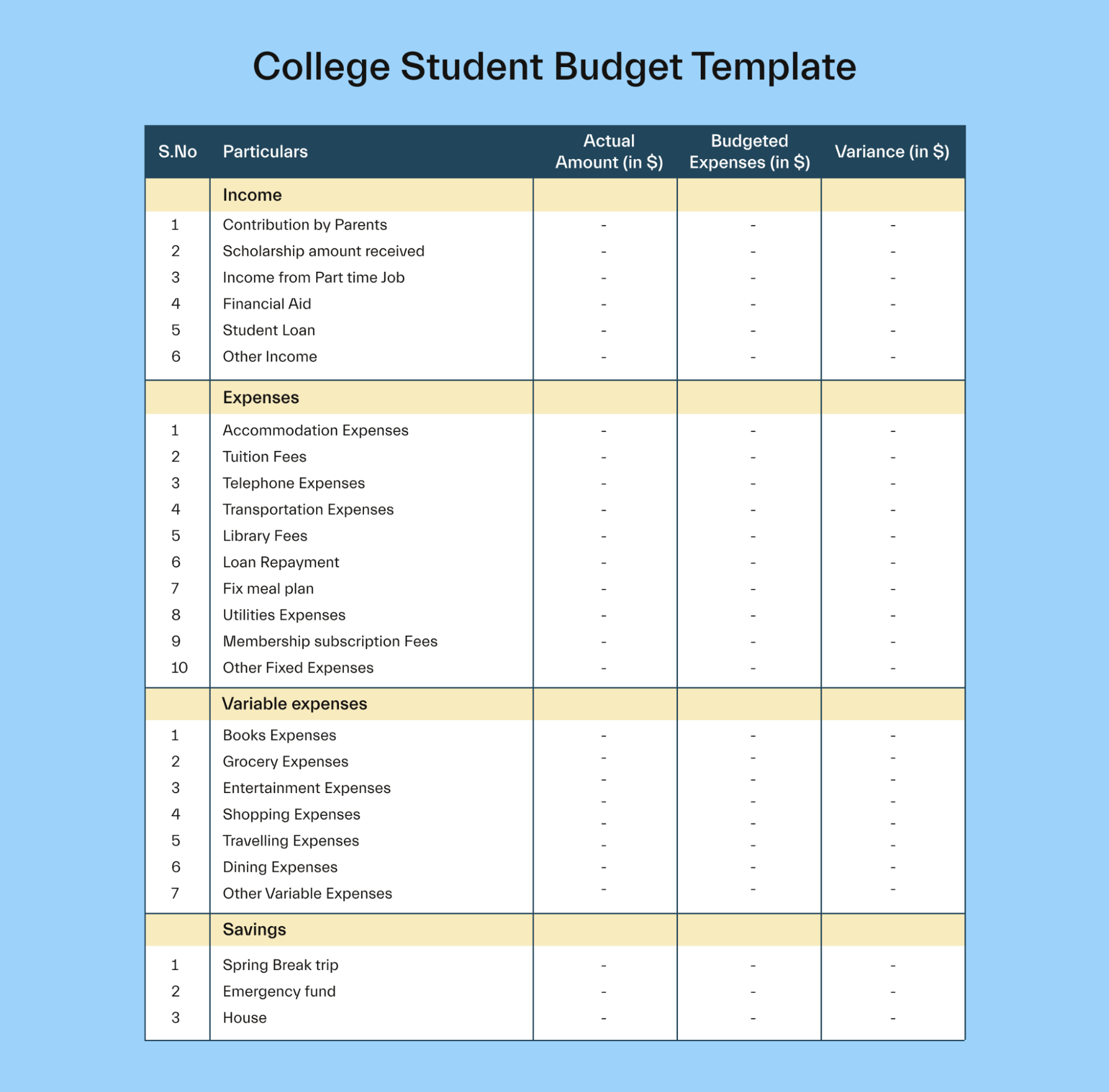
Navigating the financial world as a college student can feel like learning a new language. It’s a crucial skill to master, and understanding where your money comes from and where it goes is the first step toward financial stability. This section breaks down the common sources of income, typical expenses, and a simple plan to manage your finances effectively. This knowledge will set you up for success, not just in college, but also in your future financial endeavors.
Income Sources for College Students
College students typically juggle various income streams to cover their expenses. It’s a balancing act, but with careful planning, it’s definitely manageable.
A significant source of income is part-time employment. Many students work in retail, food service, or on-campus jobs like tutoring or library assistants. These jobs provide a steady income, allowing students to cover day-to-day expenses and build some savings. The number of hours worked per week varies depending on the individual’s course load and other commitments. Consider, for example, a student working 15 hours a week at a job paying $15 per hour. This generates a weekly income of $225, which, after taxes, contributes significantly to their financial needs.
Scholarships are another essential component of a student’s financial plan. These awards, which don’t need to be repaid, can come from universities, private organizations, or government programs. The amount varies greatly, from a few hundred dollars to cover books to full tuition and living expenses. Scholarships are typically awarded based on academic merit, financial need, or specific talents. For instance, a student awarded a $5,000 scholarship annually for academic achievement significantly reduces their tuition burden, freeing up resources for other expenses.
Parental support also plays a significant role for many students. This can include direct financial contributions, such as paying tuition, rent, or providing a monthly allowance. The extent of parental support varies based on the family’s financial situation and the student’s needs. For some students, parental support might cover the majority of their expenses, while for others, it might be a smaller contribution. For example, a student whose parents cover their rent and utilities, which could be around $1,000 per month, can dedicate their other income sources to tuition, books, and personal expenses.
Typical Expenses Incurred by College Students
College life comes with a unique set of expenses, which can be broadly categorized into essential and discretionary spending. Understanding these categories is vital for creating a realistic budget.
Essential spending includes those costs that are non-negotiable and necessary for survival and academic success. This category includes:
- Tuition and Fees: This is the largest expense for most students. Tuition costs vary significantly depending on the institution (public vs. private, in-state vs. out-of-state). For example, annual tuition at a public in-state university can range from $8,000 to $10,000, while a private university can easily cost $40,000 or more.
- Books and Supplies: Textbooks, software, and other required materials can be surprisingly expensive. Students can explore options like renting textbooks or purchasing used books to save money. On average, students can expect to spend $500 to $1,000 per semester on books and supplies.
- Rent and Utilities: Housing costs vary greatly depending on location and type of accommodation (dorm, apartment, etc.). Utilities, such as electricity, water, and internet, add to the overall cost. Rent in a city might easily be $1,000 to $1,500 per month, excluding utilities.
- Food: Eating regularly is essential. This includes groceries if you’re cooking your own meals, or the cost of eating out if you rely on restaurants or campus dining halls. A student could spend $300 to $500 per month on groceries.
Discretionary spending covers those expenses that are not strictly necessary but can enhance the college experience. This category includes:
- Entertainment: Going to movies, concerts, or social events. This spending is easily controlled and can be adjusted based on the student’s budget.
- Transportation: The cost of getting around, whether it’s gas for a car, public transportation, or ride-sharing services.
- Personal Care: This includes items like toiletries, haircuts, and other personal grooming expenses.
- Miscellaneous: This can cover a variety of things, from clothes and gifts to subscriptions and hobbies.
A Structured Plan for Tracking Income and Expenses
Tracking your income and expenses is essential to staying on top of your finances. It provides a clear picture of where your money is going and helps identify areas where you can save.
Here’s a simple, step-by-step plan:
- Identify All Income Sources: List every source of income, including part-time jobs, scholarships, parental support, and any other financial contributions. Record the amount and frequency (weekly, monthly, etc.). For example:
- Part-time job: $800/month
- Scholarship: $500/semester (or $167/month)
- Parental Support: $200/month
- Track All Expenses: Categorize your expenses (essential vs. discretionary) and record every transaction. Use a budgeting app, spreadsheet, or a notebook. Be diligent about tracking every purchase, no matter how small. For instance:
- Rent: $1,000/month
- Groceries: $300/month
- Books: $100
- Entertainment: $50
- Choose a Recording Method: Several methods are available to track income and expenses.
- Budgeting Apps: Apps like Mint, YNAB (You Need a Budget), or PocketGuard automatically track transactions by linking to your bank accounts and credit cards.
- Spreadsheets: Creating a spreadsheet in Google Sheets or Microsoft Excel allows for greater customization. You can create categories, track spending, and calculate totals.
- Notebook: A simple notebook can be used to manually record income and expenses. This method requires more time but can be effective.
- Review and Adjust Regularly: At the end of each month, review your income and expenses. Compare your actual spending to your budget and identify areas where you exceeded your planned spending. Make adjustments for the following month to stay on track.
Remember: Budgeting is not about restricting yourself, but about making informed choices about how you spend your money.
Creating a Personalized Budgeting Plan is Important for Financial Stability: How To Budget As A College Student
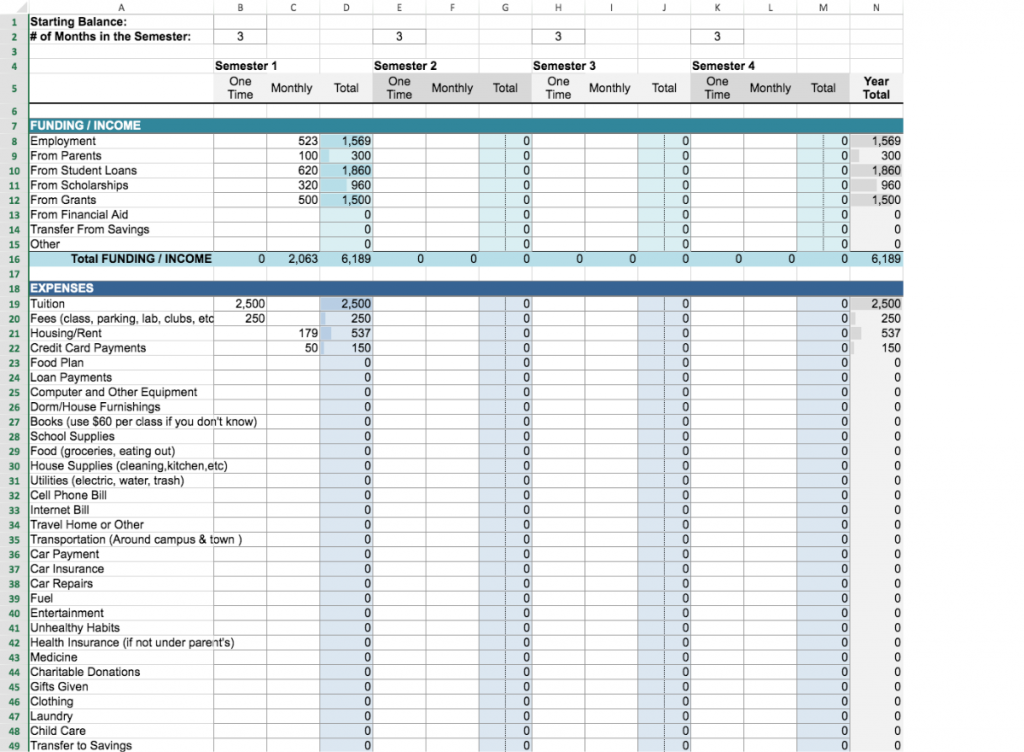
Alright, so you’ve got a handle on the financial landscape, which is fantastic! Now, let’s dive into the nuts and bolts: crafting a budget that actually works for *you*. It’s not about deprivation; it’s about control. A personalized budget isn’t just a spreadsheet; it’s your financial roadmap, guiding you toward your goals and helping you avoid those “oops” moments that can derail your finances.
Budgeting Methods and Their Applications
There are several ways to approach budgeting, and the “best” method really depends on your personality, spending habits, and financial goals. Let’s break down a few popular options.
- The 50/30/20 Rule: This is a simple, broad-stroke approach. It allocates your income like this: 50% for needs (housing, food, transportation), 30% for wants (entertainment, dining out, hobbies), and 20% for savings and debt repayment. The beauty of this method is its ease of use. It’s a great starting point for beginners. The downside? It might not be granular enough for detailed tracking, especially if you have very specific financial goals. For example, if you’re trying to aggressively pay off student loans, 20% might not be enough.
- Zero-Based Budgeting: This method assigns every dollar of your income a specific purpose. At the end of the month, your income minus your expenses equals zero. This forces you to be incredibly mindful of where your money is going. The main advantage is that it gives you maximum control. However, it can be time-consuming and requires meticulous tracking. If you’re someone who finds detailed tracking overwhelming, this might not be the best fit.
- Envelope Budgeting: This is a more tactile approach, where you allocate cash to different spending categories and put it in physical envelopes. Once the money in an envelope is gone, you can’t spend any more in that category until the next budgeting period. This is excellent for curbing overspending and making you consciously aware of your spending. The main drawback is that it’s less convenient for online transactions and requires carrying cash. It’s also harder to track spending accurately if you use this method.
Setting Financial Goals and Influencing Budgeting, How to budget as a college student
Financial goals are the driving force behind your budget. They give you something to aim for and provide motivation.
- Short-Term Goals: These are typically goals you want to achieve within a year. Think saving for a spring break trip, buying a new laptop, or building an emergency fund of a few hundred dollars. These goals influence your budget by prioritizing certain spending categories and allocating funds accordingly. For example, if you’re saving for a laptop that costs $1,000, and you plan to buy it in six months, you need to save approximately $167 per month.
- Long-Term Goals: These are goals that take longer than a year to achieve, such as paying off student loans, saving for a down payment on a house, or investing for retirement. These goals will significantly impact your budget by requiring you to allocate a larger percentage of your income to savings and debt repayment. Consider student loans, which might require payments for several years. Your budget must include these payments, impacting your available funds for other categories.
Creating a Personalized Budget Template
Building your own budget template is a powerful way to understand and control your finances. Here’s a step-by-step procedure:
First, gather all your financial information, including income, expenses, and debts. Then, use this table as a template:
| Category | Estimated Cost | Actual Cost | Difference |
|---|---|---|---|
| Income (e.g., Part-time job, allowance) | Enter your estimated monthly income. | Record your actual income for the month. | Calculate the difference (Actual – Estimated). |
| Housing (e.g., Rent, Utilities) | Estimate your monthly housing expenses. | Record the actual cost of rent, utilities, etc. | Calculate the difference (Actual – Estimated). |
| Food (e.g., Groceries, Dining Out) | Estimate your monthly food expenses. | Record the actual cost of groceries and dining. | Calculate the difference (Actual – Estimated). |
| Transportation (e.g., Bus Pass, Gas) | Estimate your monthly transportation expenses. | Record the actual cost of transportation. | Calculate the difference (Actual – Estimated). |
| Education (e.g., Tuition, Books) | Estimate your monthly education expenses. | Record the actual cost of tuition, books, etc. | Calculate the difference (Actual – Estimated). |
| Debt Payments (e.g., Student Loans, Credit Cards) | Estimate your monthly debt payments. | Record the actual amount paid. | Calculate the difference (Actual – Estimated). |
| Savings (e.g., Emergency Fund, Investments) | Estimate the amount you plan to save. | Record the actual amount saved. | Calculate the difference (Actual – Estimated). |
| Other Expenses (e.g., Entertainment, Personal Care) | Estimate all other expenses. | Record the actual costs. | Calculate the difference (Actual – Estimated). |
| Total Expenses | Sum all your estimated expenses. | Sum all your actual expenses. | Calculate the difference (Actual – Estimated). |
| Net Income (Income – Expenses) | Calculate your estimated net income. | Calculate your actual net income. | Calculate the difference (Actual – Estimated). |
Here’s how to use it:
- Category: List all your income sources and spending categories. Be as specific as possible.
- Estimated Cost: Based on your previous spending habits (or estimates if you’re just starting), project how much you *think* you’ll spend in each category.
- Actual Cost: At the end of the month, track your actual spending. Use your bank statements, receipts, and any budgeting apps you might be using.
- Difference: Calculate the difference between your estimated and actual costs. This is where you see where you’re overspending or underspending.
This template can be created using a spreadsheet program like Google Sheets or Microsoft Excel. Remember to review and adjust your budget regularly (monthly or even weekly) to stay on track and adapt to any changes in your financial situation.
Developing Smart Spending Habits Can Improve Financial Management
Mastering your finances as a college student involves more than just creating a budget; it also means cultivating smart spending habits. This shift in mindset allows you to make conscious choices that align with your financial goals, ultimately leading to greater financial stability and peace of mind. Developing these habits can be challenging initially, but the rewards—less financial stress and more opportunities—are well worth the effort.
Effective Strategies for Reducing Expenses
Finding ways to reduce your expenses is crucial for stretching your budget further. There are several effective strategies you can employ to achieve this, from making smarter choices about food to taking advantage of the many discounts available to students. These adjustments, when consistently applied, can significantly impact your overall financial health.
One of the most effective strategies is cooking meals at home. Eating out regularly can quickly drain your funds. According to a 2023 study by the Bureau of Labor Statistics, the average cost of a meal purchased away from home is significantly higher than the cost of a home-cooked meal. Planning your meals for the week and preparing your own food can lead to substantial savings. For example, a home-cooked pasta dish might cost $5, while the same meal at a restaurant could easily be $15 or more. This difference adds up rapidly.
Another excellent way to save money is by utilizing student discounts. Many businesses, from retail stores to entertainment venues, offer discounts specifically for students. Always ask about student discounts when making purchases. Websites and apps dedicated to student discounts, like UNiDAYS and Student Beans, can help you find deals in your area and online.
Finally, explore free entertainment options. College campuses often host free events, such as movie nights, concerts, and lectures. Libraries and community centers also offer a wealth of free resources, including books, movies, and workshops. Taking advantage of these opportunities not only saves money but also provides enriching experiences.
Differentiating Between Needs and Wants and Its Budget Impact
Understanding the difference between needs and wants is fundamental to budgeting. Your needs are essential for survival, such as food, housing, and necessary transportation. Wants, on the other hand, are desires that improve your quality of life but are not essential for survival. Making conscious choices about wants can have a significant impact on your budget.
Consider the example of transportation. A need might be getting to and from classes, which could be achieved through public transportation, walking, or biking, all of which are generally less expensive than owning a car. A want, however, might be a brand-new car. The ongoing costs of owning a car—including car payments, insurance, gas, and maintenance—can be substantial. Choosing public transportation, when available, can free up funds for other essential needs or even savings.
Another example is entertainment. A need might be a way to de-stress and relax, perhaps by going for a walk in a park. A want might be a subscription to a premium streaming service or frequent trips to the movies. Choosing the free option of a park over a subscription service saves money.
By carefully evaluating your spending habits and distinguishing between needs and wants, you can make informed decisions that align with your financial goals.
Ways to Avoid Impulse Purchases
Impulse purchases can quickly derail even the most carefully crafted budget. Developing strategies to avoid these spontaneous buys is crucial for maintaining financial control. These techniques encourage mindful spending and prevent unnecessary expenditures.
Here’s a list of ways to avoid impulse purchases:
- Create a Shopping List and Stick to It: Before you go shopping, make a list of what you need. Stick to that list and resist the urge to buy anything else. This prevents you from wandering aimlessly and being tempted by items you don’t really need.
- Implement a Waiting Period: If you see something you want, wait a set period (e.g., 24 hours, a week) before buying it. Often, the desire will fade. This gives you time to consider whether the purchase is truly necessary.
- Compare Prices: Before making a purchase, compare prices from different retailers. This ensures you’re getting the best deal and can save money. Websites and apps that compare prices can be very helpful.
- Unsubscribe from Promotional Emails: Promotional emails are designed to tempt you to spend money. Unsubscribing from these emails can reduce the temptation to buy things you don’t need.
- Avoid Shopping When You’re Stressed or Bored: Emotional states can lead to impulsive spending. Recognize your triggers and avoid shopping when you’re feeling stressed, bored, or lonely. Find alternative activities to manage your emotions.
- Use the “Cash-Only” Method: Take out a specific amount of cash for discretionary spending and leave your credit cards at home. This can help you stay within your budget, as you can only spend what you have.
Mastering the Art of Saving and Investing for the Future is a Beneficial Skill

Saving and investing, even while in college, might seem like a distant concept, but starting early can significantly impact your financial well-being. Developing these habits now can provide a solid foundation for your future financial goals, such as buying a home, traveling, or retiring comfortably. The key is to make it a consistent practice, regardless of the amount you can set aside.
Building a Solid Foundation: The Importance of Saving and Emergency Funds
Saving, even small amounts regularly, can build a financial safety net and teach you valuable financial discipline. It’s about making conscious choices and prioritizing your financial future. Unexpected expenses are a part of life, and having an emergency fund can prevent you from going into debt when these situations arise.
An emergency fund should ideally cover 3-6 months of essential living expenses. For a college student, this might include tuition, housing, food, and transportation. Here’s why it’s important:
* Covering Unexpected Expenses: A medical bill, car repair, or unexpected travel home can quickly derail your budget. An emergency fund can provide the necessary financial cushion.
* Avoiding Debt: Without an emergency fund, you might be forced to rely on high-interest credit cards or loans, leading to increased debt and financial stress.
* Peace of Mind: Knowing you have a financial buffer can reduce stress and allow you to focus on your studies and personal growth.
* Building a Foundation for Future Financial Goals: Saving, even small amounts, demonstrates financial responsibility and builds the habit of putting money aside, making it easier to save for larger goals later in life.
Exploring Investment Basics: Navigating the Financial Landscape
Investing can seem daunting, but understanding the basics can empower you to make informed decisions. Start with low-risk options to learn the ropes without significant financial exposure. This allows you to gradually understand the market and its dynamics.
Here’s a basic plan to get started:
* Understand Investment Options: Familiarize yourself with different investment vehicles.
* Stocks: Represent ownership in a company. Their value can fluctuate significantly. Consider starting with fractional shares to invest small amounts.
* Bonds: Loans to governments or corporations. Generally considered lower risk than stocks, providing a steady income stream.
* Mutual Funds: Pools of money from multiple investors, managed by professionals, and invested in a diversified portfolio of stocks, bonds, or other assets.
* Exchange-Traded Funds (ETFs): Similar to mutual funds but traded on exchanges like stocks. They offer diversification and can have lower expense ratios.
* Assess Your Risk Tolerance: Determine how comfortable you are with the possibility of losing money. Younger investors with a longer time horizon can typically tolerate more risk.
* Start Small and Stay Consistent: Begin with a small amount you are comfortable with and invest regularly.
* Research and Educate Yourself: Read books, articles, and websites to learn more about investing.
* Consider Professional Advice: Consult a financial advisor if you need personalized guidance.
Visualizing Financial Allocation: A Pie Chart Illustration
A pie chart is a great visual tool to understand how to allocate your income. Imagine a pie representing your monthly income. The slices represent how you spend, save, and invest.
Here’s an example of how a college student might allocate their income, assuming a hypothetical monthly income of $2,000:
* Spending (60% – $1,200):
* Housing: 30% ($600)
* Food: 15% ($300)
* Transportation: 5% ($100)
* Entertainment and Personal: 10% ($200)
* Saving (20% – $400):
* Emergency Fund: 10% ($200)
* Short-Term Goals (e.g., travel): 10% ($200)
* Investing (20% – $400):
* Low-Risk Investments (e.g., index funds or bonds): 20% ($400)
This pie chart visually demonstrates the importance of balancing spending, saving, and investing. It shows that even with limited income, you can allocate a portion towards your future financial goals. This structured approach, combined with financial discipline, helps you build a solid foundation for financial success. The allocation percentages are merely suggestions and should be adjusted to fit your individual financial situation, income, and risk tolerance.
Utilizing Financial Tools and Resources is Necessary for Budgeting Success
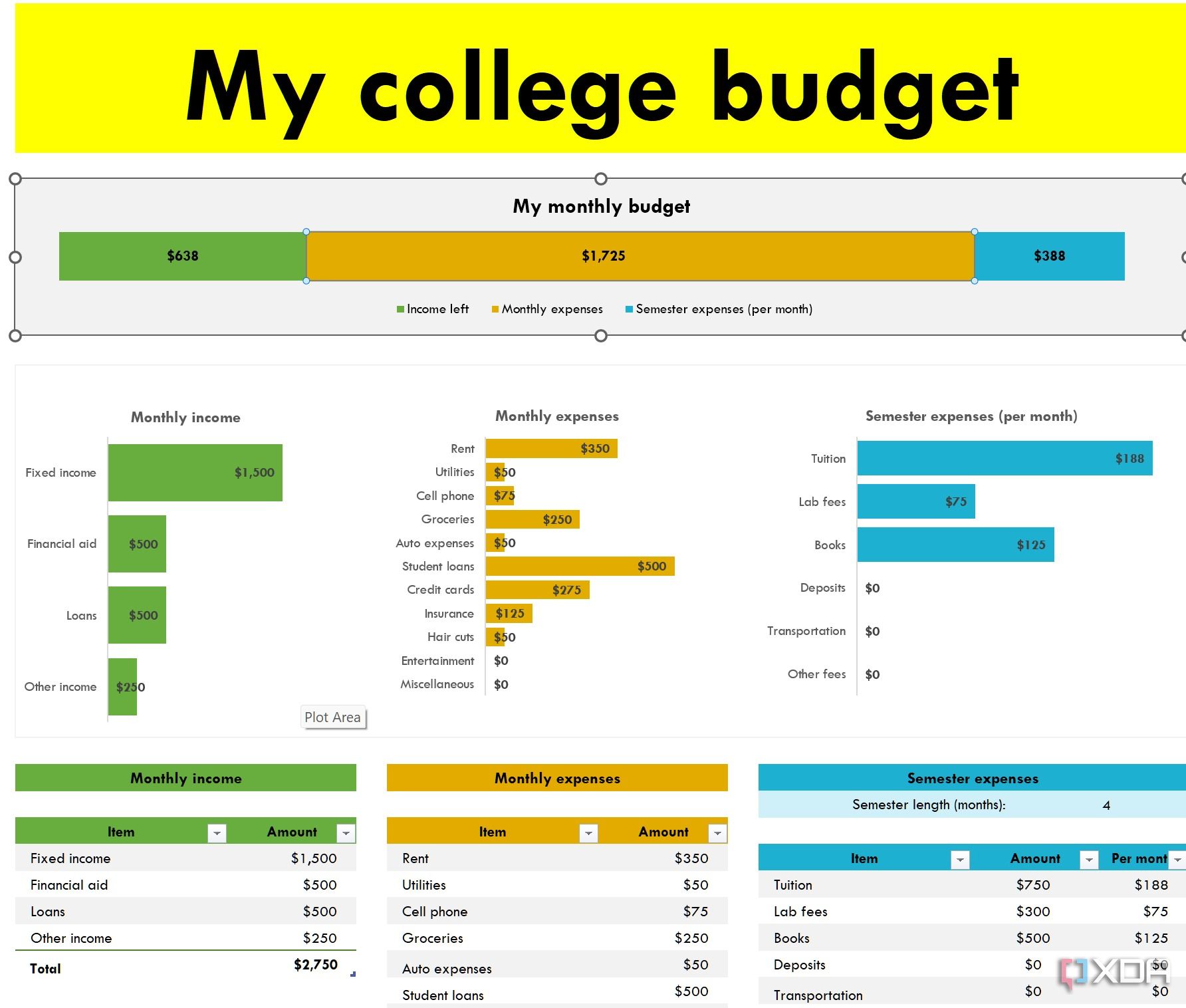
Navigating the financial landscape as a college student can be tricky, but fortunately, a wealth of tools and resources are available to help you stay on track. From budgeting apps that track your spending to credit score education and financial literacy workshops, these resources are designed to empower you to make informed decisions and build a solid financial foundation. Utilizing these tools is not just beneficial; it’s essential for long-term financial health.
Comparing Budgeting Apps and Online Tools
Numerous budgeting apps and online tools cater specifically to college students, offering a range of features, pricing models, and levels of user-friendliness. Understanding the pros and cons of each can help you choose the best fit for your needs.
Here’s a comparison of several popular options:
| Tool | Features | User-Friendliness | Cost |
|---|---|---|---|
| Mint | Tracks spending, sets budgets, monitors bills, provides credit score monitoring, investment tracking. | Intuitive interface, automatic transaction categorization. | Free, with optional paid features. |
| YNAB (You Need A Budget) | Zero-based budgeting, goal setting, debt tracking, robust reporting. | Steeper learning curve, requires active participation. | Subscription-based. |
| Personal Capital | Tracks investments, net worth, cash flow, provides financial planning tools. | User-friendly, integrates with investment accounts. | Free, with optional financial advisor services. |
| PocketGuard | Automatic categorization, tracks spending against income, calculates “safe-to-spend” amount. | Simple interface, good for beginners. | Free and paid options. |
Mint offers a comprehensive, free platform with automatic transaction categorization and bill tracking. YNAB, a subscription-based service, uses a zero-based budgeting approach, where every dollar has a purpose. Personal Capital focuses on investment tracking and financial planning, also offering a free version alongside paid advisory services. PocketGuard is a straightforward app that helps you understand how much you can spend after accounting for bills and savings goals. Each tool provides unique features and varying levels of user-friendliness, so try out a few to see which aligns best with your financial habits and goals. Remember to prioritize security and privacy when choosing a financial tool.
Understanding Credit Scores and Responsible Credit Card Usage
A credit score is a numerical representation of your creditworthiness, playing a significant role in various financial aspects, including loan approvals, interest rates, and even renting an apartment. Building a good credit history early on is crucial for future financial success.
Here’s how responsible credit card usage can help build a good credit history and how to avoid potential pitfalls:
* Make timely payments: Paying your credit card bills on time is the single most important factor in building a good credit score. Even one late payment can significantly damage your score.
* Keep credit utilization low: Credit utilization refers to the percentage of your available credit that you’re using. Aim to keep this percentage below 30%, and ideally lower. For example, if you have a credit limit of $1,000, try to keep your balance below $300.
* Avoid opening too many accounts at once: Opening multiple credit accounts simultaneously can sometimes signal financial distress to lenders, potentially lowering your score.
* Use credit cards responsibly: Consider using a credit card for small, everyday purchases that you can easily afford to pay off in full each month. This demonstrates responsible credit behavior.
* Understand the terms and conditions: Read the fine print of your credit card agreement, including interest rates, fees, and grace periods.
To avoid debt traps:
* Only spend what you can afford to repay.
* Avoid carrying a balance from month to month.
* Be wary of high-interest rates.
* Regularly review your credit card statements for any errors or unauthorized charges.
By understanding and practicing responsible credit card usage, you can build a positive credit history, which will benefit you in the long run.
Financial Literacy Resources for College Students
Numerous resources are available to help college students enhance their financial literacy. Taking advantage of these resources can significantly improve your ability to manage your finances effectively.
Here’s a list of valuable resources:
- College Workshops and Seminars: Many colleges offer workshops on budgeting, saving, credit management, and student loan repayment. Check your college’s website or student services department for schedules.
- Online Financial Literacy Courses: Platforms like Coursera, edX, and Khan Academy provide free or low-cost courses on personal finance topics.
- Financial Literacy Websites: Websites such as the Consumer Financial Protection Bureau (CFPB), the Federal Trade Commission (FTC), and NerdWallet offer valuable articles, calculators, and tools to help you learn about various financial concepts.
- Financial Advisors: Some colleges have partnerships with financial advisors who offer free or low-cost consultations to students.
- College Counseling Services: Utilize your college’s counseling services for stress management, which can impact your spending habits.
By actively engaging with these resources, college students can gain the knowledge and skills necessary to navigate their finances confidently and make informed decisions that will benefit them throughout their lives.
Navigating Unexpected Financial Challenges Requires Preparedness
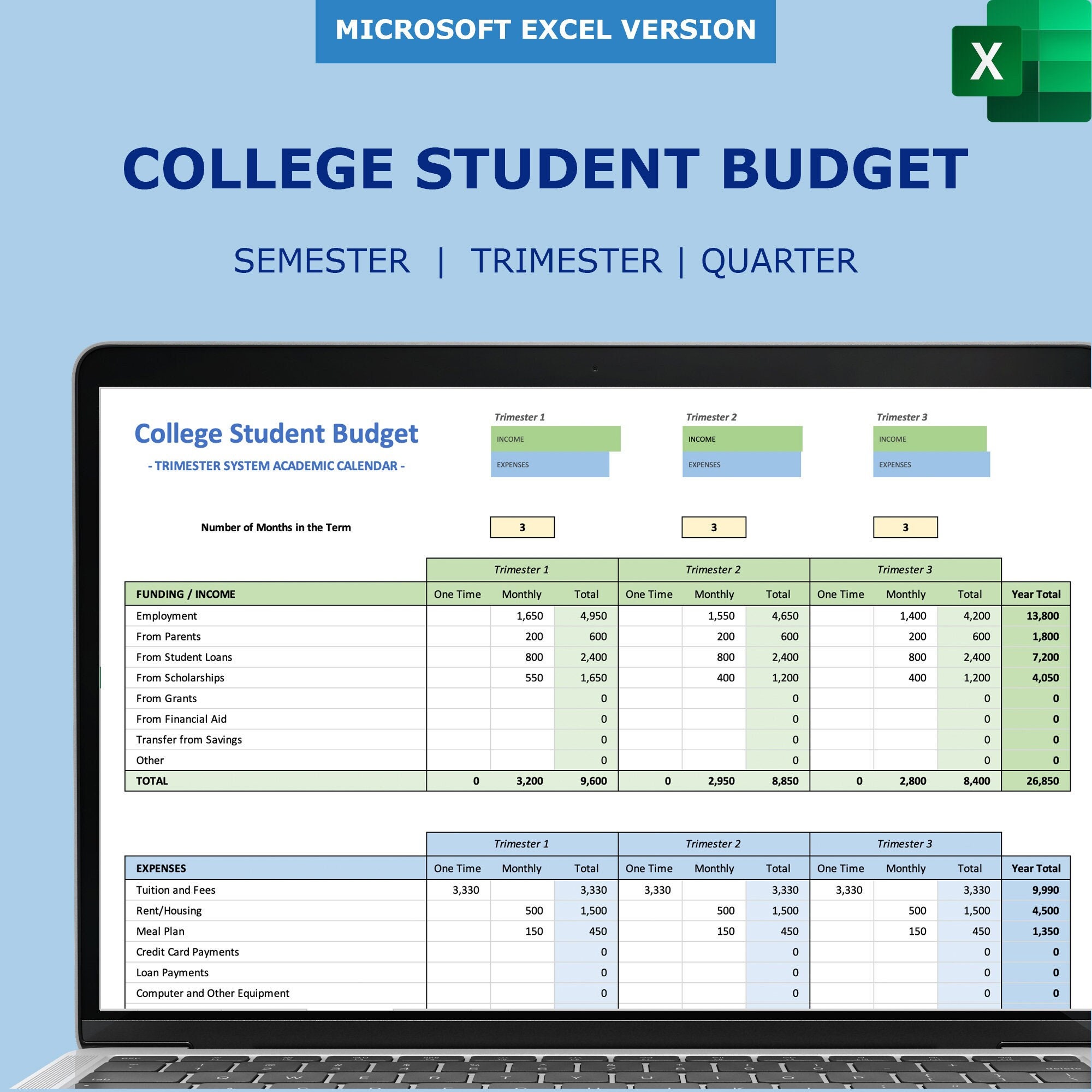
Life as a college student can be unpredictable, and financial emergencies can arise when you least expect them. Whether it’s a medical bill, job loss, or a sudden car repair, being prepared for these situations is crucial for maintaining your financial stability and academic progress. Having a plan in place will help you navigate these challenges more effectively and minimize their impact.
Handling Financial Emergencies
Unexpected financial burdens can be stressful. Here’s how to handle them effectively.
If you encounter an unexpected medical bill, first, review the bill carefully. Ensure all services listed are accurate. Contact the healthcare provider or insurance company to understand the charges. You may be able to negotiate a payment plan or seek financial assistance. Many hospitals and clinics offer financial aid programs. Explore these options to reduce your out-of-pocket expenses.
Job loss can be another significant financial setback. Immediately apply for unemployment benefits. These benefits can provide temporary income while you search for a new job. Update your resume and start your job search immediately. Consider part-time work or freelance opportunities to supplement your income. Explore emergency financial aid options through your college or university. They often have resources available to help students in need.
If your car needs an unexpected repair, compare quotes from different mechanics to get the best price. Consider whether the repair is essential for your transportation needs. If the cost is significant, look into emergency loans or credit options, but only if absolutely necessary. Explore whether your college has any programs for emergency transportation assistance.
Student Loan Repayment Process
Understanding the student loan repayment process is vital for managing your debt effectively after graduation. Several repayment plans and resources are available to help you.
The standard repayment plan typically involves fixed monthly payments over a 10-year period. This plan results in the least amount of interest paid over time but requires higher monthly payments.
Income-driven repayment (IDR) plans base your monthly payments on your income and family size. These plans can significantly reduce your monthly payments, making them more manageable. However, the repayment period is typically longer, and the total interest paid may be higher. At the end of the repayment period, any remaining loan balance may be forgiven, but the forgiven amount could be taxed as income.
Loan forgiveness programs are available for certain professions or circumstances. For example, the Public Service Loan Forgiveness (PSLF) program forgives the remaining balance on Direct Loans after 120 qualifying monthly payments while working full-time for a qualifying employer.
Consider these strategies for effective student loan management:
- Create a detailed budget to track your income and expenses.
- Make payments on time to avoid late fees and penalties.
- Explore refinancing options to potentially lower your interest rate.
- Consolidate your loans if it simplifies repayment.
- Contact your loan servicer if you are struggling to make payments. They may be able to help you explore different repayment options.
Creating a Contingency Plan
Developing a contingency plan will help you prepare for potential financial setbacks. This plan should Artikel the steps you’ll take in various scenarios.
Here is an example:
Scenario: Sudden Drop in Income
Action Plan:
- Immediately assess current income and expenses.
- Reduce discretionary spending, such as entertainment and dining out.
- Explore additional income sources, such as part-time work or freelance opportunities.
- Contact your landlord or utility providers to discuss potential payment arrangements.
- Review your budget and prioritize essential expenses.
Scenario: Unexpected Expenses
Action Plan:
- Assess the nature of the expense and its urgency.
- Review your emergency fund to see if you have funds available.
- If no emergency fund is available, determine if the expense can be postponed.
- If the expense is critical, explore options such as a short-term loan, credit card use (if necessary), or borrowing from a trusted family member or friend.
- Adjust your budget to accommodate the unexpected expense.
End of Discussion
In essence, mastering the art of budgeting as a college student equips you with the skills and knowledge to navigate the financial challenges of student life and beyond. From creating a personalized budget to making informed spending decisions, and from building an emergency fund to understanding investment basics, you’re now well-equipped to manage your finances with confidence. Embrace the journey, and remember that every small step you take towards financial literacy is a step toward a brighter, more secure future.