Welcome to the world of tax tips for small business owners, where understanding the intricacies of taxation can be the key to unlocking financial success and ensuring your business stays on the right side of the law. This guide isn’t just about crunching numbers; it’s about empowering you, the entrepreneur, with the knowledge to make informed decisions and strategically manage your finances. We’ll delve into the essentials, from choosing the right business structure and maximizing deductions to planning for estimated taxes and exploring valuable tax credits.
Consider this your personalized roadmap through the often-confusing landscape of business taxation. We’ll break down complex topics into manageable pieces, providing clear explanations, practical examples, and actionable steps. Whether you’re a seasoned business owner or just starting out, this resource aims to equip you with the tools and insights needed to navigate tax regulations, understand payroll obligations, and ultimately, build a thriving and compliant business. Get ready to transform your tax anxieties into a sense of control and confidence.
Understanding the Basics of Small Business Taxation is crucial for financial success and legal compliance.

Starting a small business is an exciting venture, but navigating the world of taxes can seem daunting. Understanding your tax obligations is not just about fulfilling legal requirements; it’s a critical component of financial planning and ensuring the long-term viability of your business. This guide will break down the fundamentals of small business taxation, providing you with the knowledge you need to succeed.
Business Structures and Their Tax Implications
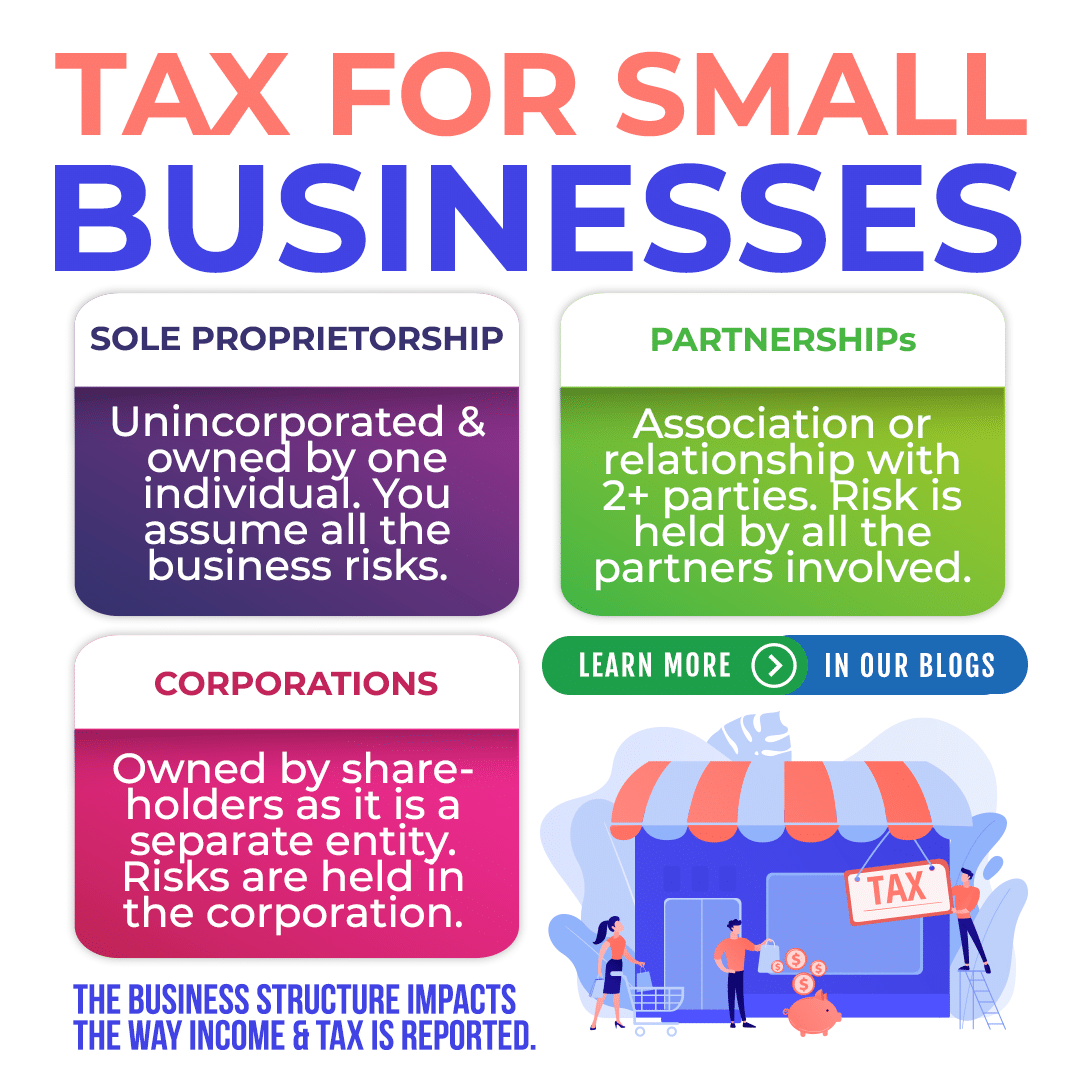
The structure of your business significantly impacts how you pay taxes. Choosing the right structure is a critical decision, and each option comes with its own set of advantages and disadvantages regarding taxation. Understanding these differences can help you minimize your tax liability and optimize your financial strategy.
Let’s explore the tax implications of the most common business structures:
* Sole Proprietorship: This is the simplest structure, where the business is owned and run by one person, and there is no legal distinction between the owner and the business. The owner reports business income and expenses on Schedule C (Form 1040), which is attached to their personal income tax return.
* Tax Implications: The owner pays income tax and self-employment tax (Social Security and Medicare) on the business’s profits.
* Example: Sarah runs a freelance graphic design business. She reports her income and deductible business expenses on Schedule C. Her profits are subject to both income tax and self-employment tax. If Sarah’s net profit is $60,000, she will pay both income tax based on her tax bracket and self-employment tax (currently 15.3%) on this amount.
* Partnership: A partnership involves two or more individuals who agree to share in the profits or losses of a business. Partnerships are required to file an informational return (Form 1065) with the IRS, but the partnership itself generally doesn’t pay income tax.
* Tax Implications: Partners report their share of the partnership’s income, losses, deductions, and credits on their individual tax returns (Schedule K-1, Form 1065). Each partner pays income tax and self-employment tax on their share of the profits.
* Example: John and Mark form a partnership to run a consulting business. The partnership earns $100,000 in profit. John and Mark have agreed to share profits equally. They each receive a K-1 showing $50,000 of profit, and they each pay income tax and self-employment tax on their $50,000 share.
* Limited Liability Company (LLC): An LLC provides liability protection similar to a corporation while offering the pass-through taxation of a sole proprietorship or partnership (unless the LLC elects to be taxed as a corporation). LLCs are popular because of their flexibility.
* Tax Implications: By default, a single-member LLC is taxed as a sole proprietorship, and a multi-member LLC is taxed as a partnership. The owners report business income and expenses on their personal tax returns, paying income tax and self-employment tax on the profits. An LLC can also elect to be taxed as a corporation (S corporation or C corporation), which can affect tax liability.
* Example: Emily starts an online store and forms an LLC. If Emily is the only owner (single-member LLC), she reports the business income and expenses on Schedule C. If she has partners (multi-member LLC), the partnership rules apply. If the LLC elects to be taxed as an S corporation, Emily would be considered an employee and receive a salary subject to payroll taxes.
* Corporation: A corporation is a separate legal entity from its owners (shareholders). Corporations can be either C corporations or S corporations. C corporations are subject to corporate income tax, and shareholders pay taxes on dividends. S corporations are pass-through entities, meaning the profits and losses are passed through to the shareholders’ personal income tax returns.
* Tax Implications: C corporations pay corporate income tax on their profits. Shareholders pay taxes on dividends received. S corporations pass profits and losses to shareholders, who report them on their personal tax returns. Shareholders who are also employees of the S corporation typically receive a salary subject to payroll taxes.
* Example: A group of investors forms a C corporation to run a restaurant. The corporation pays corporate income tax on its profits. If the corporation pays dividends to its shareholders, the shareholders must pay taxes on the dividends. Alternatively, if a group forms an S corporation to run a software company, the profits and losses pass through to the shareholders, who report them on their personal tax returns. The shareholders who are also employees of the S corporation receive a salary subject to payroll taxes.
Essential Tax Forms for Small Business Owners
Small business owners must be familiar with various tax forms to ensure compliance with tax laws. The forms needed will vary depending on the business structure, the number of employees, and the specific activities of the business. Here’s an overview of some key forms:
* Form 1040-ES (Estimated Tax for Individuals): Used by sole proprietors, partners, and LLC members (taxed as sole proprietors or partnerships) to pay estimated quarterly taxes on their income, including self-employment tax.
* Schedule C (Form 1040) (Profit or Loss from Business (Sole Proprietorship)): Used by sole proprietors to report business income and expenses.
* Form 1065 (U.S. Return of Partnership Income): Filed by partnerships to report income, deductions, gains, and losses. Partners receive a Schedule K-1.
* Schedule K-1 (Form 1065) (Partner’s Share of Income, Deductions, Credits, etc.): Provided to partners, showing their share of the partnership’s income, deductions, credits, etc., which they report on their personal tax returns.
* Form 1120 (U.S. Corporation Income Tax Return) or Form 1120-S (U.S. Income Tax Return for an S Corporation): Used by corporations to report income, deductions, gains, and losses.
* Form W-2 (Wage and Tax Statement): Used to report wages paid to employees and the taxes withheld from their paychecks.
* Form W-3 (Transmittal of Wage and Tax Statements): Filed by employers to transmit copies of Form W-2 to the Social Security Administration.
* Form 941 (Employer’s Quarterly Federal Tax Return): Used by employers to report wages paid, federal income tax withheld, and the employer’s and employee’s share of Social Security and Medicare taxes.
* Form 940 (Employer’s Annual Federal Unemployment (FUTA) Tax Return): Used by employers to report and pay federal unemployment taxes.
* Form 1099-NEC (Nonemployee Compensation): Used to report payments of $600 or more to independent contractors.
* Form 1099-MISC (Miscellaneous Information): Used to report various types of miscellaneous income payments, such as rent, royalties, and payments to attorneys.
Key Differences in Taxation: Business Structures
Understanding the key differences in taxation among various business structures is crucial for making informed decisions. The following table provides a comparison of the key aspects of taxation for sole proprietorships, partnerships, LLCs, and corporations:
| Business Structure | Taxation of Profits | Self-Employment Tax | Liability Protection | Complexity |
|---|---|---|---|---|
| Sole Proprietorship | Reported on owner’s personal income tax return (Schedule C). | Owner pays self-employment tax (Social Security and Medicare) on profits. | Owner is personally liable for business debts and obligations. | Simplest structure. |
| Partnership | Reported on partners’ personal income tax returns (Schedule K-1). | Partners pay self-employment tax on their share of profits. | Partners are generally liable for business debts and obligations. | More complex than a sole proprietorship. |
| LLC |
|
Members pay self-employment tax on profits (if taxed as a sole proprietorship or partnership). | Members are generally not personally liable for business debts and obligations (limited liability). | Varies depending on tax election; generally more complex than sole proprietorship. |
| Corporation (C or S) |
|
Shareholders who are also employees pay payroll taxes on their salaries. | Shareholders are generally not personally liable for business debts and obligations (limited liability). | Most complex structure. |
Maximizing Deductions is a significant strategy for reducing tax liability for entrepreneurs.
Reducing your tax burden is a key component of financial success for any small business owner. One of the most effective strategies for achieving this is to take advantage of all available tax deductions. Understanding what expenses qualify as deductions and how to properly document them can significantly impact your bottom line. This information is designed to help you navigate the often-complex world of business deductions.
Identifying Common Tax-Deductible Business Expenses
Many everyday business expenses can be deducted, lowering your taxable income and, consequently, your tax liability. However, it’s crucial to understand the specific requirements for each deduction to ensure compliance.
- Office Supplies: This category includes items necessary for the day-to-day operation of your business, such as pens, paper, printer ink, and staplers. To deduct office supplies, you must be able to demonstrate that these items were purchased for business use and are ordinary and necessary for your business. Keep receipts and records of all purchases, and be prepared to justify the business purpose if questioned by the IRS.
- Utilities: If you have a dedicated office space, you can deduct the costs of utilities, including electricity, gas, water, and internet. If you use a portion of your home for business (home office), you may be able to deduct a portion of your utility expenses. To claim the home office deduction, the space must be used exclusively and regularly for business purposes. The deductible amount is calculated based on the percentage of your home used for business. For example, if your home office occupies 10% of your home, you can deduct 10% of your utility bills.
- Marketing Costs: Expenses related to promoting your business are generally deductible. This includes advertising costs (online and print), website design and maintenance, business cards, and promotional materials. Keep records of all marketing expenditures, including invoices, contracts, and proof of payment. Ensure that your marketing efforts are directly related to your business and are aimed at generating revenue.
- Rent or Mortgage Interest (for business space): If you rent or own a dedicated office space, you can deduct the rent payments or mortgage interest. If you use a portion of your home for business, you can deduct a portion of the mortgage interest or rent, as explained in the home office deduction. Documentation requirements include lease agreements, mortgage statements, and receipts for rent payments.
- Employee Salaries and Wages: Salaries, wages, and benefits paid to employees are deductible business expenses. Keep accurate records of employee compensation, including W-2 forms, payroll records, and any related tax filings. Be sure to comply with all federal and state employment tax laws.
- Business Travel: Travel expenses for business purposes, such as transportation, lodging, and meals, are often deductible. Keep detailed records of your travel expenses, including the date, destination, business purpose, and amount spent. Remember that meal expenses are generally only 50% deductible.
Tracking and Documenting Business Expenses
Effective expense tracking and documentation are critical for maximizing deductions and ensuring compliance with tax regulations.
Here are several methods and procedures to implement:
- Use Accounting Software: Software like QuickBooks, Xero, or FreshBooks can automate expense tracking, categorization, and reporting. These tools allow you to link your bank accounts and credit cards, automatically importing transactions and making it easier to track expenses in real-time.
- Separate Business and Personal Finances: Open a separate bank account and credit card for your business. This makes it easier to track business expenses and avoid commingling business and personal funds, which can complicate tax filings.
- Maintain Detailed Records: Keep detailed records of all business expenses, including receipts, invoices, and other supporting documentation. These records should include the date of the expense, the vendor, the amount spent, and the business purpose.
- Categorize Expenses: Properly categorize your expenses to ensure accurate reporting. Common expense categories include office supplies, marketing, travel, and utilities. Use your accounting software to create custom categories if needed.
- Reconcile Accounts Regularly: Reconcile your bank and credit card statements with your expense records regularly. This helps you identify any discrepancies and ensure that all expenses are accounted for.
- Store Records Securely: Keep your expense records organized and stored securely, whether in digital or physical form. Consider using cloud storage or a secure filing system to protect your records from loss or damage. The IRS generally recommends keeping records for at least three years after filing your tax return.
Overlooked Tax Deductions for Small Business Owners
Small business owners sometimes miss out on valuable deductions. Being aware of these less common deductions can result in significant tax savings.
- Home Office Deduction: As previously mentioned, this deduction allows you to deduct expenses related to the business use of your home. To qualify, the home office must be used exclusively and regularly for business. There are two methods for calculating the deduction: the simplified method and the actual expense method. The simplified method allows you to deduct a set amount per square foot of home office space (up to a certain limit), while the actual expense method allows you to deduct a portion of your home-related expenses, such as mortgage interest, rent, utilities, and insurance.
- Health Insurance Premiums: Self-employed individuals can often deduct the premiums they pay for health insurance for themselves, their spouses, and their dependents. This deduction is claimed as an adjustment to gross income, which means you can take the deduction even if you don’t itemize. To qualify, you must not be eligible to participate in an employer-sponsored health plan.
- Business Use of Your Car: You can deduct expenses for the business use of your car. There are two methods for calculating the deduction: the standard mileage rate and the actual expense method. The standard mileage rate is a set amount per mile driven for business purposes, while the actual expense method allows you to deduct the actual costs of operating your car, such as gas, oil, repairs, and insurance. You must keep detailed records of your mileage and expenses to claim this deduction.
- Startup Costs: New businesses can deduct up to $5,000 of startup costs in their first year of operation. Startup costs include expenses incurred before the business opens, such as market research, training, and advertising. Any startup costs exceeding $5,000 are amortized over 180 months.
- Bad Debt: If you have uncollectible business debts (bad debt), you may be able to deduct them. To claim this deduction, the debt must be directly related to your business and must have been previously included in your income. You must be able to prove that you took reasonable steps to collect the debt.
Strategic Planning for Estimated Taxes ensures compliance and avoids penalties throughout the tax year.
Understanding how to manage estimated taxes is a critical aspect of financial planning for small business owners. Neglecting this area can lead to unexpected tax bills and penalties. Proactive planning helps ensure you meet your tax obligations on time, allowing you to maintain better control over your cash flow and avoid unpleasant surprises.
Making Quarterly Estimated Tax Payments
Quarterly estimated tax payments are essentially how you pay your income tax and self-employment tax throughout the year, rather than waiting until the annual tax filing deadline. This approach helps the government receive tax revenue more steadily and prevents you from facing a large tax bill when you file your return.
Generally, you are required to make estimated tax payments if you expect to owe at least $1,000 in taxes after subtracting your withholding and credits. This typically applies to self-employed individuals, sole proprietors, partners in a partnership, and S corporation shareholders. If you receive income that isn’t subject to withholding, such as income from the gig economy or investments, you are also likely required to pay estimated taxes.
Calculating your estimated taxes involves several steps. First, estimate your expected gross income for the year. Then, calculate your adjusted gross income (AGI) by subtracting above-the-line deductions, such as contributions to a traditional IRA or health savings account (HSA). Next, estimate your itemized deductions or standard deduction, whichever is greater. You will also need to estimate any tax credits you are eligible for.
From your estimated AGI, subtract your estimated deductions and credits to arrive at your taxable income. Use the appropriate tax brackets for your filing status to calculate your estimated income tax liability. Additionally, you will need to calculate your self-employment tax, which covers Social Security and Medicare taxes for self-employed individuals. This is calculated by multiplying your net earnings from self-employment by 92.35% and then multiplying that amount by 15.3%.
Finally, subtract any credits you are eligible for to arrive at your total estimated tax liability. Divide this amount by four to determine your quarterly payments.
For example, let’s say a small business owner estimates their gross income to be $100,000, and their above-the-line deductions are $5,000. They opt to use the standard deduction of $14,600 (for single filers in 2024). They anticipate a qualified business income (QBI) deduction of $10,000 and have no tax credits.
Their AGI would be $95,000 ($100,000 – $5,000). Their taxable income would be $70,400 ($95,000 – $14,600 – $10,000). Using the 2024 tax brackets, their estimated income tax would be approximately $8,446. Their net earnings from self-employment are $60,000, so their self-employment tax would be calculated as:
$60,000 * 0.9235 = $55,410
$55,410 * 0.153 = $8,485.53
Their total estimated tax liability would then be the sum of the income tax and self-employment tax. This total is divided by four to determine the quarterly payment amount.
Potential Penalties for Underpayment and How to Avoid Them
Failing to pay your estimated taxes on time or paying too little can result in penalties from the IRS. These penalties are designed to encourage taxpayers to meet their tax obligations throughout the year.
The penalty for underpayment of estimated taxes is usually calculated as an interest charge on the underpaid amount for the period the underpayment remains outstanding. The interest rate is determined quarterly and is based on the federal short-term rate plus 3%. The penalty is applied to the underpaid amount, not the total tax due.
There are several methods you can use to avoid these penalties:
- Paying on Time: The most straightforward way to avoid penalties is to make your estimated tax payments by the due dates. These dates are typically April 15, June 15, September 15, and January 15 of the following year. If any of these dates fall on a weekend or holiday, the due date is moved to the next business day.
- Paying Enough: Aim to pay at least 90% of the tax you owe for the current year, or 100% of the tax shown on your prior year’s return. If your prior year’s adjusted gross income was more than $150,000, you must pay 110% of your prior year’s tax.
- Annualized Income Installment Method: If your income fluctuates significantly throughout the year, you may be able to use the annualized income installment method. This method allows you to calculate your estimated tax liability based on your income for each quarter. If your income is higher in certain quarters, this method can help you avoid penalties by matching your payments to your income.
- Exceptions: In some cases, the IRS may waive the penalty. This can happen if the underpayment was due to a casualty, disaster, or other unusual circumstance. The IRS may also waive the penalty if you retired after age 62 or became disabled during the tax year, and the underpayment was due to reasonable cause and not willful neglect.
Step-by-Step Guide to Estimating Quarterly Taxes, Tax tips for small business owners
Accurately estimating your quarterly taxes requires a systematic approach and the use of readily available resources. Following these steps will help you stay compliant and avoid penalties.
- Gather Your Financial Records: Begin by gathering all relevant financial documents. This includes:
- Income statements (e.g., profit and loss statements)
- Bank statements
- Invoices
- Receipts
- Prior year’s tax return (for reference)
- Calculate Your Estimated Income: Project your total income for the year. This includes all sources of income, such as sales revenue, service fees, and any other income your business generates. Be realistic and consider any anticipated changes in your business operations or market conditions.
- Determine Your Deductions: Identify all potential business deductions you can claim. Common deductions include:
- Business expenses (e.g., office supplies, advertising, travel)
- Health insurance premiums
- Self-employment tax deduction (one-half of the self-employment tax paid)
- Home office deduction (if applicable)
- Estimate Your Adjusted Gross Income (AGI): Calculate your AGI by subtracting above-the-line deductions from your gross income.
- Estimate Your Taxable Income: Choose either the standard deduction or itemized deductions (whichever is greater) and subtract this amount, along with any other applicable deductions, from your AGI to arrive at your taxable income.
- Calculate Your Estimated Tax Liability: Use the appropriate tax brackets for your filing status to calculate your estimated income tax. Also, calculate your self-employment tax.
- Determine Your Quarterly Payments: Divide your total estimated tax liability (income tax + self-employment tax) by four to determine your quarterly payment amount.
- Make Your Payments: Make your estimated tax payments by the due dates. The IRS offers several payment options, including:
- Online payments through the IRS website
- Electronic Funds Withdrawal (EFW)
- Mail-in payments (using Form 1040-ES)
- Review and Adjust: Regularly review your estimates throughout the year. If your income or expenses change significantly, adjust your estimated payments accordingly to avoid underpayment penalties.
Resources Needed:
- IRS Forms and Publications: Form 1040-ES (Estimated Tax for Individuals), Publication 505 (Tax Withholding and Estimated Tax).
- Tax Software or Tax Professional: Consider using tax software or consulting with a tax professional, especially if your financial situation is complex.
- Accounting Software: Software like QuickBooks or Xero can help you track your income and expenses, making it easier to estimate your taxes.
- Spreadsheet Software: Excel or Google Sheets can be used to organize your financial data and perform calculations.
Exploring Tax Credits and Incentives can significantly benefit small business owners.

Understanding and utilizing tax credits and incentives can significantly lower your tax bill and boost your business’s financial health. These benefits are often overlooked, but they can provide substantial savings, especially for small business owners who are constantly looking for ways to improve their bottom line. It’s essential to stay informed about the various options available and how to take advantage of them.
Available Tax Credits and Incentives
Several tax credits and incentives are specifically designed to help small businesses. Knowing which ones apply to your business can make a considerable difference in your tax liability.
- Work Opportunity Tax Credit (WOTC): This credit encourages employers to hire individuals from specific targeted groups who often face barriers to employment.
- Eligibility Criteria: Businesses must hire individuals from qualified groups, such as veterans, individuals receiving food stamps (SNAP), or ex-felons. The employee must also work a minimum number of hours.
- Benefits: The credit can range from a few hundred to several thousand dollars per eligible employee, depending on the targeted group and the hours worked. For example, hiring a qualified veteran can result in a significant tax credit.
- Research and Development (R&D) Tax Credit: This credit supports businesses that invest in research and development activities.
- Eligibility Criteria: Businesses must incur qualified research expenses, which include wages, supplies, and contract research expenses. The research must be technological in nature and intended to discover new information or improve existing products or processes.
- Benefits: The R&D tax credit can be a significant benefit, often offsetting a substantial portion of R&D expenses. The amount varies based on the expenses incurred, but it can be a substantial amount, especially for businesses in the technology, manufacturing, or pharmaceutical sectors.
- Small Business Health Care Tax Credit: This credit helps small businesses that provide health insurance to their employees.
- Eligibility Criteria: The business must have fewer than 25 full-time equivalent employees, and the average annual wages paid to the employees must be below a certain threshold. The business must also pay at least 50% of the premium costs for employee health insurance.
- Benefits: The credit can cover up to 50% of the employer’s health insurance premium costs. This can significantly reduce the cost of providing health benefits to employees, making it easier for small businesses to attract and retain talent.
- Energy Efficient Commercial Buildings Deduction (Section 179D): This deduction incentivizes businesses to invest in energy-efficient improvements to their buildings.
- Eligibility Criteria: The building must meet certain energy efficiency standards, and the improvements must be made to the building’s interior lighting, HVAC systems, or building envelope. The building must be owned by the small business.
- Benefits: Businesses can deduct up to $1.88 per square foot for qualifying energy-efficient improvements. This deduction can be a considerable benefit for businesses that own their buildings and are committed to energy efficiency.
Claiming Tax Credits and Incentives
Successfully claiming these tax credits and incentives requires careful documentation and adherence to specific IRS guidelines. Here’s a step-by-step guide.
- Determine Eligibility: Carefully review the eligibility criteria for each credit or incentive to determine if your business qualifies. Gather the necessary documentation to support your claim.
- Calculate the Credit: Accurately calculate the amount of the credit you are eligible to claim. This may involve tracking expenses, hours worked, or other relevant data.
- Complete the Required Forms: The IRS provides specific forms for claiming each credit and incentive. For example, Form 3800, General Business Credit, is often used to claim multiple credits. Ensure you use the correct form and follow the instructions carefully.
- Keep Accurate Records: Maintain detailed records to support your claims. This includes invoices, payroll records, and any other documentation that demonstrates your eligibility and the amount of the credit.
- File with Your Tax Return: Attach the completed forms and supporting documentation to your business tax return. Submit your return by the tax filing deadline.
Financial Impact of Utilizing Tax Credits and Incentives
The financial impact of utilizing tax credits and incentives can be substantial. Let’s look at some hypothetical examples.
- Example 1: Work Opportunity Tax Credit (WOTC): A small manufacturing company hires five qualified veterans. The company is eligible for a WOTC of $2,400 per veteran. The total tax credit would be $12,000, significantly reducing their tax liability. This allows the company to reinvest the savings in equipment upgrades or employee training.
- Example 2: Research and Development (R&D) Tax Credit: A software development company spends $200,000 on qualified R&D expenses. Assuming they qualify for a 10% credit, they can claim a credit of $20,000. This credit can be used to offset taxes owed, which helps the company to allocate resources to innovation and expansion.
- Example 3: Small Business Health Care Tax Credit: A small retail business with 15 employees spends $50,000 annually on health insurance premiums. If they meet the eligibility criteria and are eligible for a 50% credit, they can claim a credit of $25,000. This frees up funds that can be used for salary increases or marketing initiatives.
Navigating Tax Regulations and Compliance is essential for long-term business stability.: Tax Tips For Small Business Owners
Keeping your small business on the right side of the law when it comes to taxes isn’t just about avoiding penalties; it’s about building a solid foundation for growth and stability. Understanding and adhering to tax regulations might seem daunting, but it’s a critical component of responsible business ownership. Failing to do so can lead to costly mistakes, audits, and even legal issues, ultimately hindering your company’s potential.
Staying Updated on Changes in Tax Laws and Regulations
Tax laws are dynamic, constantly evolving due to legislative changes, court rulings, and updates from tax authorities. Staying informed is key to compliance. Here’s a look at key areas small business owners should monitor regularly:
- Federal Tax Laws: Keep an eye on changes to the Internal Revenue Code (IRC). The IRS website is a primary resource for updates, including new tax rates, deduction limits, and changes to tax forms. For instance, the Tax Cuts and Jobs Act of 2017 significantly impacted many aspects of business taxation, from the corporate tax rate to individual income tax brackets. Understanding these shifts is crucial.
- State and Local Tax Laws: Each state and locality has its own tax regulations, which can vary widely. These can include income tax, sales tax, property tax, and franchise tax. Check your state’s Department of Revenue website regularly for updates, particularly regarding sales tax rates and nexus rules (the requirement to collect sales tax based on your business’s connection to a state).
- Employment Tax Laws: If you have employees, you’re responsible for payroll taxes, including Social Security and Medicare taxes, federal and state unemployment taxes, and income tax withholding. Changes to minimum wage laws, overtime regulations, and employee benefits can affect your tax obligations.
- Tax Credits and Incentives: Governments often introduce new tax credits and incentives to encourage specific business activities, such as research and development, hiring veterans, or investing in renewable energy. Regularly reviewing available credits can help you reduce your tax liability.
- IRS Guidance and Publications: The IRS provides numerous publications, rulings, and notices that clarify tax laws and provide guidance on specific situations. These resources can help you understand how tax laws apply to your business. For example, IRS Publication 334, “Tax Guide for Small Business,” is a comprehensive resource.
The Role of a Tax Professional or Accountant
Navigating the complexities of tax regulations can be challenging, especially for small business owners who often wear many hats. A tax professional or accountant can provide invaluable support in ensuring compliance and minimizing tax liability. Their contributions include:
- Tax Planning: Tax professionals help you develop a strategic tax plan tailored to your business’s specific circumstances. This involves analyzing your financial situation, identifying potential deductions and credits, and implementing strategies to minimize your tax obligations legally.
- Tax Preparation: They prepare and file your tax returns accurately and on time, ensuring compliance with all applicable tax laws. This includes gathering financial information, calculating taxable income, and completing the necessary tax forms.
- Staying Updated on Tax Laws: Tax professionals stay current on changes in tax laws and regulations. They monitor legislative updates, court rulings, and IRS guidance to ensure your business remains compliant.
- Audit Representation: If your business is selected for a tax audit, a tax professional can represent you before the IRS or other tax authorities. They can handle communications, gather documentation, and negotiate with tax officials on your behalf.
- Financial Analysis and Advice: Beyond tax matters, tax professionals can provide valuable financial advice, such as helping you make informed decisions about business investments, budgeting, and cash flow management.
- Bookkeeping Support: Some tax professionals offer bookkeeping services, which can help you maintain accurate financial records throughout the year. This makes tax preparation easier and more efficient.
Process of Dealing with a Tax Audit
A tax audit can be a stressful experience, but understanding the process can help you navigate it effectively. Here’s a flowchart illustrating the steps involved, with explanations for each stage:
Step 1: Notification
The process begins when you receive a letter from the IRS or a state tax authority informing you that your tax return has been selected for an audit. The letter will specify the tax year(s) under examination, the issues being examined, and the documentation needed. It is essential to read the letter carefully and understand its contents. This initial notification might come via mail or, in some cases, electronically.
Step 2: Gathering Documentation
The tax authority will request specific documents to support the items under review. These can include receipts, invoices, bank statements, canceled checks, and other financial records. The scope of documentation depends on the audit’s focus. It’s crucial to organize these documents thoroughly and ensure they are readily available. For instance, if the audit focuses on business expenses, you will need to provide detailed records of those expenses.
Step 3: Audit Examination
The tax authority will examine the documentation you provide. This may involve an in-person meeting with the auditor, a correspondence audit (conducted via mail or email), or a field audit (where the auditor visits your business premises). The auditor will review your records to verify the accuracy of the information reported on your tax return. They might ask clarifying questions and request additional documentation during this phase.
Step 4: Preliminary Findings
Once the examination is complete, the auditor will inform you of their preliminary findings. They may propose adjustments to your tax return based on their review. These adjustments could involve disallowing deductions, increasing your taxable income, or assessing penalties. The auditor will usually provide a report summarizing their findings and the proposed changes.
Step 5: Response and Negotiation
You have the opportunity to respond to the auditor’s findings. You can agree with the proposed adjustments, disagree with them, or negotiate a settlement. If you disagree, you can provide additional documentation or explanations to support your position. If you have a tax professional, they can represent you during this negotiation process. For example, if the auditor disallows a business expense, you might provide additional receipts or clarify the business purpose of the expense.
Step 6: Resolution
The audit concludes when a resolution is reached. This can happen in several ways:
- Agreement: You agree with the auditor’s findings and accept the proposed adjustments. You will then sign an agreement form.
- Settlement: You and the auditor reach a compromise on the issues. This might involve agreeing to some adjustments while disputing others.
- Appeal: If you cannot reach an agreement with the auditor, you have the right to appeal the decision to a higher level within the tax authority.
Step 7: Payment or Refund
After the resolution, you may owe additional taxes, penalties, and interest. If so, you will receive a bill and be required to make a payment by the due date. Conversely, if the audit results in a reduction in your tax liability, you will receive a refund. It is critical to make payments promptly to avoid further penalties and interest. If you are entitled to a refund, it is essential to monitor its processing and ensure it is received.
Understanding Payroll Taxes is crucial for businesses with employees.

Payroll taxes are a significant aspect of running a business with employees, representing a substantial financial obligation and requiring meticulous adherence to regulations. These taxes encompass various withholdings and contributions, which, if mismanaged, can lead to penalties and legal issues. Understanding the components of payroll tax and the procedures for compliance is paramount for the financial health and legal standing of your small business.
Payroll Tax Obligations for Small Business Owners
Small business owners with employees have several payroll tax obligations. These obligations include withholding taxes from employee wages and contributing employer taxes. Both are essential for legal compliance and avoiding penalties. The specifics can seem daunting, but breaking them down makes the process more manageable.
Federal Income Tax Withholding:
* Employers are required to withhold federal income tax from each employee’s wages.
* The amount withheld depends on the employee’s W-4 form (Employee’s Withholding Certificate), which indicates their filing status and any allowances claimed.
* Tax rates vary based on the employee’s income level and the tax brackets set by the IRS.
* Employers must remit these withheld taxes to the IRS on a schedule that depends on the total tax liability.
* The IRS provides resources and tools, such as the IRS Tax Withholding Estimator, to help employees and employers accurately determine the appropriate withholding amount.
Social Security and Medicare Taxes:
* These taxes are mandated under the Federal Insurance Contributions Act (FICA).
* Both employers and employees contribute to these taxes.
* For Social Security, the rate is 6.2% each for the employer and employee, up to a wage base that changes annually.
* For Medicare, the rate is 1.45% each for the employer and employee, applied to all wages.
* If an employee earns over $200,000 in a year, an additional 0.9% Medicare tax is withheld from their wages, but only the employee pays this extra amount. The employer doesn’t match this additional Medicare tax.
* The employer is responsible for matching the employee’s contribution for both Social Security and Medicare taxes.
* The combined employer and employee contributions are remitted to the IRS.
Additional Considerations:
* State and Local Taxes: In addition to federal taxes, employers may also be responsible for withholding and remitting state and local income taxes, unemployment taxes, and other payroll-related taxes. These vary significantly by location.
* Wage Base: There is a wage base limit for Social Security tax. For example, in 2024, the Social Security wage base is $168,600. Wages above this amount are not subject to Social Security tax.
* Payment Schedules: The IRS specifies different payment schedules (monthly or semi-weekly) for remitting payroll taxes, based on the employer’s total tax liability.
Calculating and Remitting Payroll Taxes Accurately and On Time
Calculating and remitting payroll taxes accurately and on time is critical to avoid penalties and interest. This process involves several steps, from determining gross wages to filing tax forms.
Calculating Payroll Taxes:
1. Determine Gross Wages: This includes all taxable compensation, such as salary, hourly wages, bonuses, and commissions.
2. Calculate Federal Income Tax Withholding: Use the employee’s W-4 form and the IRS tax tables to determine the federal income tax to withhold.
3. Calculate Social Security and Medicare Taxes:
* Social Security: Multiply the employee’s gross wages (up to the annual wage base) by 6.2% for the employee’s portion and 6.2% for the employer’s portion.
* Medicare: Multiply the employee’s gross wages by 1.45% for the employee’s portion and 1.45% for the employer’s portion. If the employee’s wages exceed $200,000, withhold an additional 0.9% for the employee’s portion.
4. Calculate State and Local Taxes: Follow the specific guidelines for your state and local jurisdictions.
5. Determine Net Pay: Subtract all withholdings from gross wages to arrive at the employee’s net pay.
6. Calculate Employer’s Total Tax Liability: Add up all the employer’s portions of Social Security, Medicare, state, and local taxes.
Methods and Procedures for Remitting Payroll Taxes:
* Electronic Federal Tax Payment System (EFTPS): The IRS mandates that most businesses use EFTPS to deposit federal taxes. This system allows for convenient and secure electronic payments.
* Payroll Service Providers: Many businesses outsource payroll to third-party providers. These providers handle tax calculations, filings, and payments on behalf of the business.
* IRS Forms:
* Form 941 (Employer’s Quarterly Federal Tax Return): Used to report wages, tips, and federal income, Social Security, and Medicare taxes withheld. This is filed quarterly.
* Form 940 (Employer’s Annual Federal Unemployment (FUTA) Tax Return): Used to report the annual federal unemployment tax.
* Form W-2 (Wage and Tax Statement): Provided to employees and the Social Security Administration, detailing wages and taxes withheld. This is issued annually.
* Form W-3 (Transmittal of Wage and Tax Statements): Summarizes the information from all W-2 forms and is submitted to the Social Security Administration.
* Payment Schedules: The frequency of tax payments depends on the employer’s tax liability. The IRS assigns either a monthly or semi-weekly schedule. Adhering to these schedules is crucial to avoid penalties.
* Recordkeeping: Maintain detailed records of all payroll transactions, including wages, withholdings, and tax payments. These records are essential for compliance and in case of an IRS audit.
Payroll Service vs. In-House Payroll: A Comparison
Choosing between using a payroll service and handling payroll in-house is a significant decision. Each approach has advantages and disadvantages, depending on the size of the business, its resources, and its comfort level with payroll processes.
| Feature | Payroll Service | In-House Payroll | Considerations | Example |
|---|---|---|---|---|
| Cost | Typically involves monthly fees, per-employee charges, and setup fees. | May involve the cost of payroll software, training, and employee time. | Payroll service costs are predictable. In-house costs can vary based on the time required. | A small business with 5 employees might pay around $100-$200 per month for a payroll service. |
| Time Commitment | Requires minimal time commitment; the service handles most tasks. | Demands significant time for calculation, tax filings, and compliance. | Payroll services save time. In-house requires dedicated time and resources. | A business owner spends several hours per pay period calculating payroll in-house. |
| Accuracy | High accuracy due to specialized software and expertise. | Accuracy depends on the business owner’s knowledge and attention to detail. | Payroll services reduce the risk of errors. In-house requires careful calculations and double-checking. | Payroll service providers often guarantee the accuracy of tax filings. |
| Compliance | Ensures compliance with federal, state, and local tax laws. | Requires the business owner to stay updated on all tax law changes. | Payroll services handle compliance updates. In-house requires continuous learning. | Payroll services automatically update tax rates and regulations. |
End of Discussion
In conclusion, the journey through tax tips for small business owners reveals a path paved with understanding, strategic planning, and proactive compliance. From the fundamental building blocks of business structures to the intricacies of payroll and the opportunities presented by tax credits, the knowledge gained here is designed to be a catalyst for financial health and sustained growth. Remember, staying informed, seeking professional guidance when needed, and consistently applying the principles Artikeld here will not only help you meet your tax obligations but also position your business for long-term prosperity. Embrace the challenge, and let these tips guide you toward a brighter financial future.