The core concept of difference between needs and wants in budgeting is the linchpin of sound financial management, forming the foundation upon which you build a stable financial future. This isn’t just about crunching numbers; it’s about understanding the very essence of your spending habits and making informed choices that align with your long-term goals. We’re talking about the fundamental differences between what you *require* to live and what you simply *desire* for added comfort or pleasure. This seemingly simple distinction has profound implications for how you allocate your resources, achieve your savings targets, and ultimately, secure your financial well-being.
Imagine your needs as the essential building blocks: housing, food, and utilities – the things you absolutely can’t do without. Wants, on the other hand, are the extras: that new gadget, the fancy vacation, or the designer clothes. Mistaking wants for needs can lead to a slippery slope of overspending, debt accumulation, and a constant feeling of financial strain. Consider a scenario where you classify a daily coffee purchase as a “need.” Over time, this seemingly small expense can snowball, eating into your budget and hindering your ability to save for more significant goals, like a down payment on a house or retirement. By learning to differentiate between these two categories, you gain control over your finances, paving the way for a more secure and fulfilling life.
Understanding the Fundamental Distinction Between Needs and Wants in Personal Finance is Crucial for Budgeting Success
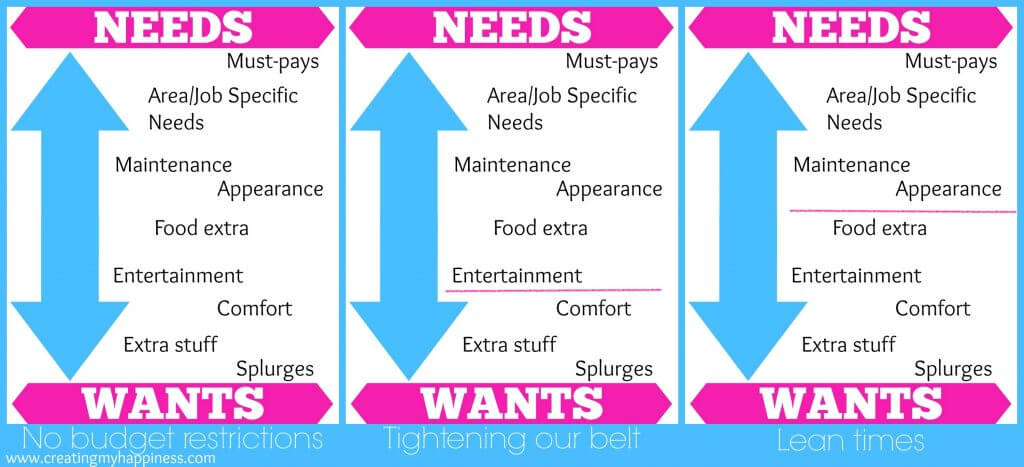
Understanding the difference between needs and wants is the cornerstone of effective budgeting. This seemingly simple distinction shapes how we allocate our financial resources, impacting everything from our short-term spending habits to our long-term financial goals. Recognizing the difference is not just about categorizing expenses; it’s about making conscious choices that align with our priorities and build a solid financial foundation.
Core Differences Between Needs and Wants
Needs are essential for survival and well-being. These are the things we absolutely require to live, such as food, shelter, and basic clothing. Wants, on the other hand, are things that we desire but are not essential for survival. They enhance our lives and provide enjoyment, but we could theoretically live without them. The ability to differentiate between these two categories is fundamental to creating a budget that works for you.
For example, consider these scenarios:
* Needs: Rent or mortgage payments are a fundamental need because they provide shelter. Similarly, groceries are a need because they provide sustenance. Utilities like electricity and water are also essential for basic living. Basic healthcare, including doctor visits when ill, is also a critical need.
* Wants: A new gaming console is a want. While it can provide entertainment, it is not essential for survival. Dining at a fancy restaurant is a want; while enjoyable, it is not necessary for your physical health. Designer clothing is another example of a want; basic clothing provides the necessary protection and comfort, but the brand name is not essential. Subscription services for streaming entertainment also fall into the wants category.
Understanding these distinctions shapes our financial priorities by influencing how we allocate our money. When we prioritize needs, we ensure our basic necessities are covered first. This creates a stable financial base. Only after needs are met can we allocate funds to wants. By doing so, we prevent overspending and the potential for financial instability. It’s about building a financial framework that allows us to enjoy life while also planning for the future.
Financial Instability and Misidentifying Wants as Needs
Misidentifying wants as needs can have serious financial consequences. It often leads to overspending, accumulating debt, and ultimately, financial instability. When we blur the lines between essential and non-essential expenses, we risk prioritizing wants over needs. This can result in:
* Debt Accumulation: If we consistently spend more than we earn on wants, we might resort to credit cards or loans, leading to debt. This debt accumulates interest, making it more difficult to pay off over time.
* Delayed Financial Goals: Saving for retirement, buying a house, or even just building an emergency fund becomes more difficult when a significant portion of income is spent on wants.
* Stress and Anxiety: Financial instability creates stress and anxiety. Worrying about how to pay bills or manage debt can significantly impact mental health.
* Missed Opportunities: When funds are tied up in wants, we miss out on opportunities for investment or education, which could improve our financial situation in the long run.
A common budgeting pitfall is the *lifestyle creep*. This occurs when our spending increases as our income increases, often on wants. For example, a salary increase might lead to buying a more expensive car or moving to a larger apartment, effectively erasing the benefits of the raise. Another example is the tendency to subscribe to numerous streaming services, thinking each is a necessity for entertainment. Similarly, frequent takeout meals or expensive coffee habits can quickly drain a budget. Failing to differentiate between needs and wants creates an environment where financial stability is constantly threatened.
Needs vs. Wants: A Comparative Table
The following table provides a clear contrast between needs and wants, including examples, their impact on budgeting, and strategies for managing each type of expense.
| Category | Needs (Examples) | Wants (Examples) | Impact on Budgeting | Strategies for Managing |
|---|---|---|---|---|
| Definition | Essential for survival and well-being. | Desirable but not essential for survival. | Determines how funds are allocated and impacts financial stability. | Prioritization and conscious decision-making. |
| Examples |
|
|
|
|
| Budgeting Implications |
|
|
|
|
Identifying Needs is the Cornerstone of a Solid Budgeting Strategy and Should be Prioritized First
Understanding your needs is the essential first step in creating a budget that actually works. Before you can even think about where your money is going, you have to figure out where it *needs* to go. This process isn’t just about listing expenses; it’s about understanding what’s truly vital for your well-being and financial stability. It’s the foundation upon which all other budgeting decisions are built.
Identifying Essential Needs
Identifying your essential needs is the critical first step in building a budget. These are the things that are absolutely necessary for your survival and basic quality of life. Without these, you’re going to struggle. To effectively identify your needs, start by creating a comprehensive list of all your expenses. Then, categorize each expense based on its importance.
The process of identifying needs begins with a thorough examination of your current spending habits. You can start by reviewing your bank statements and credit card bills for at least the past three months. This will give you a clear picture of where your money is currently going. Once you have this data, categorize each expense. Common categories include:
* Housing: Rent or mortgage payments, property taxes, homeowner’s or renter’s insurance.
* Utilities: Electricity, water, gas, internet (often considered essential in today’s world).
* Food: Groceries and essential food items.
* Transportation: Car payments, public transportation fares, gas, and car insurance.
* Healthcare: Health insurance premiums, doctor’s visits, and prescription medications.
* Debt Payments: Minimum payments on loans and credit cards.
After categorizing your expenses, assess each one to determine if it’s truly a need. Ask yourself: “Could I live without this, and what would the consequences be?” For example, while dining out might be a frequent expense, it’s generally considered a want, not a need. Your housing costs, on the other hand, are almost always a need. The key is to be honest with yourself about what is truly essential. Some expenses might seem like needs but could be reduced or eliminated. For instance, a very expensive phone plan might be a need for communication, but a less expensive plan could fulfill the same basic need.
Differentiating needs from wants involves a critical assessment of each expense’s impact on your well-being. Consider the following examples:
* Example 1: Streaming Services: While entertainment is important, multiple streaming services are typically considered wants. The core need is for entertainment, which can be satisfied through a single, more affordable service or free alternatives like public libraries. This helps free up funds to cover essential needs.
* Example 2: Designer Clothing: Although clothing is a need, designer brands represent a want. The need is for clothing to protect you from the elements and maintain decency. Buying more affordable, functional clothing is sufficient to meet this need. Choosing less expensive clothing allows more financial flexibility.
* Example 3: Eating Out Frequently: While food is a fundamental need, eating out frequently is often a want. The need is for sustenance. Cooking at home provides the same sustenance at a lower cost, freeing up money for other needs or savings goals. This change helps you stay within your budget.
Here are five key steps for accurately assessing and prioritizing needs in your budgeting process:
- Track Your Spending Meticulously: Begin by tracking every single expense, no matter how small. This can be done manually with a notebook or spreadsheet, or by using budgeting apps that automatically categorize your transactions. Accurate tracking provides the raw data needed to identify spending patterns.
- Categorize All Expenses: Group your expenses into broad categories like housing, food, transportation, and entertainment. This helps you visualize where your money is going and identify potential areas for adjustment. Categorization allows for a clearer picture of your spending habits.
- Distinguish Needs from Wants: Critically evaluate each expense to determine if it’s essential for your survival and well-being. Ask yourself if you could live without it or if a more affordable alternative exists. This step requires honest self-assessment.
- Prioritize Your Needs: Once you’ve identified your needs, prioritize them based on their importance and the consequences of not meeting them. Housing and food will always be at the top of the list. Prioritization ensures the most critical expenses are always covered.
- Regularly Review and Adjust: Your needs and priorities will change over time, so review your budget regularly (monthly or quarterly) and make adjustments as needed. This ensures your budget remains relevant and effective. Flexibility is crucial for long-term budgeting success.
The Role of Wants in Budgeting

Incorporating wants into your budget is about finding the sweet spot between enjoying life and staying financially secure. It’s not about denying yourself everything you desire, but rather, making conscious choices about how you spend your money. This balance is key to creating a budget that you can actually stick to and that supports your overall financial well-being.
Balancing your desires with financial stability means making informed decisions about how you spend your money. This involves allocating funds for discretionary spending, which are the wants, without jeopardizing your financial goals, like saving for retirement, paying off debt, or building an emergency fund. It’s a continuous process of evaluation and adjustment. If you’re constantly depriving yourself, you might find yourself feeling resentful and more likely to abandon your budget altogether. On the other hand, if you let your wants run wild, you risk falling into debt or delaying your financial goals. The goal is to find a system that allows you to enjoy life while still making progress towards your financial objectives.
Approaches to Managing Wants
There are various strategies for incorporating wants into a budget. Let’s look at a couple of popular methods and examine their pros and cons.
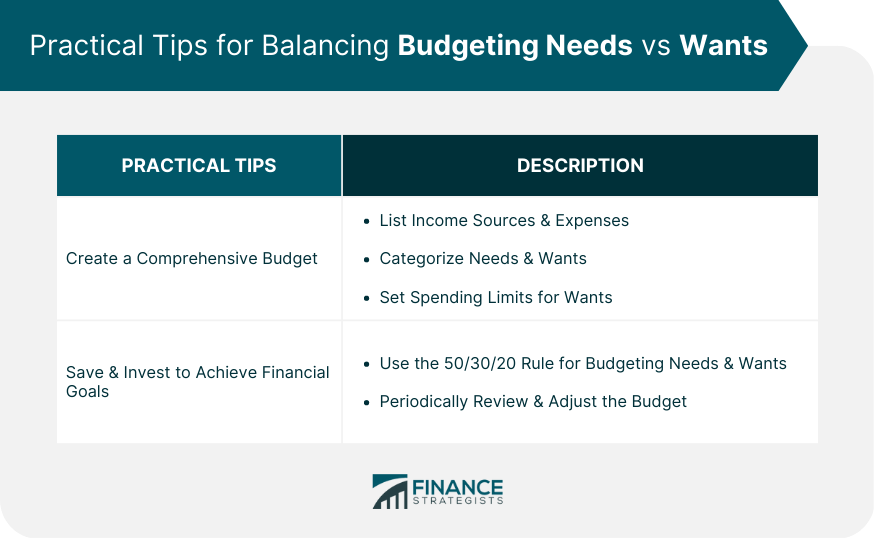
The 50/30/20 rule is a widely used budgeting approach. It suggests allocating your after-tax income as follows:
- 50% for needs (housing, food, transportation, etc.)
- 30% for wants (entertainment, dining out, hobbies, etc.)
- 20% for savings and debt repayment
This method offers simplicity and ease of use. It provides a clear framework for spending and can be a good starting point for those new to budgeting. However, the 50/30/20 rule may not be suitable for everyone. For individuals with high housing costs or significant debt, allocating 50% to needs might be insufficient. Conversely, those with lower expenses might find that they have more flexibility in the wants and savings categories. Additionally, the definition of ‘needs’ and ‘wants’ can be subjective, potentially leading to disagreements within a household about how to categorize certain expenses.
Another approach involves prioritizing financial goals first. This means allocating funds for savings, debt repayment, and other financial objectives before considering wants. This approach is useful for those who need to catch up on retirement savings or pay off high-interest debt. This approach requires more careful tracking of expenses and may require regular adjustments to ensure that spending on wants doesn’t derail financial progress.
Budgeting Strategies for Wants
Needs-First Approach: This strategy prioritizes financial security. The primary focus is on ensuring all essential needs are met and that savings and debt repayment goals are on track. Once these are covered, the remaining funds are allocated to wants. This approach is beneficial for those aiming to achieve specific financial milestones quickly, such as paying off debt or building a significant emergency fund. The allocation for wants is variable and depends on how much is left after needs and financial goals are addressed. This may mean that the amount available for wants fluctuates each month.
Balanced Approach: This method attempts to balance needs, wants, and savings equally. It involves setting specific spending limits for each category, including wants, at the beginning of each budgeting period. This provides a clear guideline for spending and helps prevent overspending in any single area. A balanced approach can provide greater flexibility than a needs-first strategy, allowing for more enjoyment of discretionary spending. It is suitable for those who have a stable income and want to balance their spending on both needs and wants while still working towards their financial goals. It might use the 50/30/20 rule or other allocation methods, adjusted to fit personal financial situations.
Long-Term Financial Planning: Difference Between Needs And Wants In Budgeting
Understanding the distinction between needs and wants is not just a budgeting exercise; it’s the bedrock of effective long-term financial planning. It allows you to build a financial future aligned with your aspirations, providing the framework for saving, investing, and ultimately, achieving your financial goals. By consciously choosing to prioritize needs over wants, you lay the foundation for a secure and prosperous tomorrow.
Influencing Future Goals and Savings
The ability to differentiate between needs and wants is paramount in shaping your long-term financial objectives. It directly impacts your saving and investment strategies, particularly concerning retirement planning. When you are able to clearly identify your needs, you can allocate resources more efficiently towards essential financial goals. This focused approach enables you to make informed decisions that promote long-term financial stability. Consider these key areas:
- Retirement Savings: Determining your essential living expenses in retirement (your needs) allows you to calculate the necessary savings target. Understanding your wants helps to refine your retirement lifestyle expectations. This distinction ensures you save adequately for your essential needs while potentially accommodating some discretionary spending.
- Investment Strategy: Prioritizing needs allows for a more aggressive investment strategy. By minimizing spending on wants, you free up capital to invest, potentially yielding higher returns over time. This can involve diversifying your investment portfolio, which could include stocks, bonds, and real estate.
- Debt Management: Controlling spending on wants is crucial for debt reduction. Paying down high-interest debt, like credit card balances, frees up cash flow. This is because reducing debt lowers the amount of money needed to cover monthly expenses, which in turn frees up more money for savings and investments.
- Emergency Fund: A well-funded emergency fund is a critical need. Savings allocated to this fund protect against unexpected expenses, such as medical bills or job loss. This cushion prevents the need to tap into long-term investments or accumulate debt.
Accelerating Progress Toward Financial Goals, Difference between needs and wants in budgeting
Prioritizing needs over wants is a powerful strategy for accelerating your financial journey. By consistently making conscious choices, you can amplify your savings and investment capabilities. This can be achieved through several approaches:
- Automated Savings: Set up automatic transfers from your checking account to your savings and investment accounts. Treat these transfers as non-negotiable needs, similar to paying essential bills.
- Budgeting and Tracking: Regularly track your spending to identify areas where you can reduce spending on wants. Use budgeting apps or spreadsheets to monitor your progress and make adjustments as needed.
- Delayed Gratification: Practice delaying the purchase of non-essential items. Evaluate whether a want is truly necessary or if it can be postponed. This can significantly increase your savings potential.
- Investing in Yourself: Consider investing in education or skills development to increase your earning potential. This can lead to higher income, allowing you to save and invest more aggressively.
Consider the following example. Sarah earns $60,000 per year. She identifies her needs (housing, food, transportation, healthcare) as costing $30,000 annually. She chooses to limit her spending on wants to $10,000 per year. The remaining $20,000 is allocated to savings and investments. If she invests this amount wisely, over time, her investments can grow substantially. Conversely, if she prioritizes wants and spends $30,000 annually, she would have significantly less to invest, delaying her progress toward financial goals.
Visual Illustration of Long-Term Impact
The following illustration visually demonstrates the impact of prioritizing needs over wants.
| Year | Scenario A: Prioritizing Needs | Scenario B: Prioritizing Wants |
|---|---|---|
| 0 | Starting Balance: $0 | Starting Balance: $0 |
| 1 | Savings: $10,000; Investments: $10,000 (earning 7% annually) | Savings: $2,000; Investments: $2,000 (earning 7% annually) |
| 5 | Investments: $57,500 | Investments: $11,000 |
| 10 | Investments: $138,500 | Investments: $25,000 |
| 20 | Investments: $485,000 | Investments: $80,000 |
| 30 | Investments: $1,200,000 | Investments: $180,000 |
The table illustrates two hypothetical scenarios, assuming an annual investment return of 7%. Scenario A shows an individual who consistently prioritizes needs, saving and investing $10,000 annually. Scenario B shows an individual who prioritizes wants, saving and investing only $2,000 annually. The impact over 30 years is dramatic. In Scenario A, the investor accumulates $1.2 million, whereas in Scenario B, the investor has only $180,000. This example highlights the power of consistent saving and investment, emphasizing the significance of prioritizing needs to maximize long-term financial success. The difference is significant, even with the same rate of return, due to the substantial difference in the amount invested. This difference illustrates the power of compound interest and the importance of disciplined saving habits.
Final Thoughts
In essence, mastering the difference between needs and wants in budgeting isn’t just a financial skill; it’s a life skill. It empowers you to make conscious choices, prioritize your financial goals, and build a solid foundation for the future. By carefully assessing your spending, identifying your needs, and thoughtfully incorporating your wants, you can create a budget that supports your aspirations and brings you closer to financial freedom. Remember, a well-crafted budget is not about deprivation; it’s about empowerment. It allows you to enjoy life’s pleasures while ensuring your long-term financial stability. So, take the time to understand the nuances of needs and wants, and you’ll be well on your way to achieving your financial dreams.